
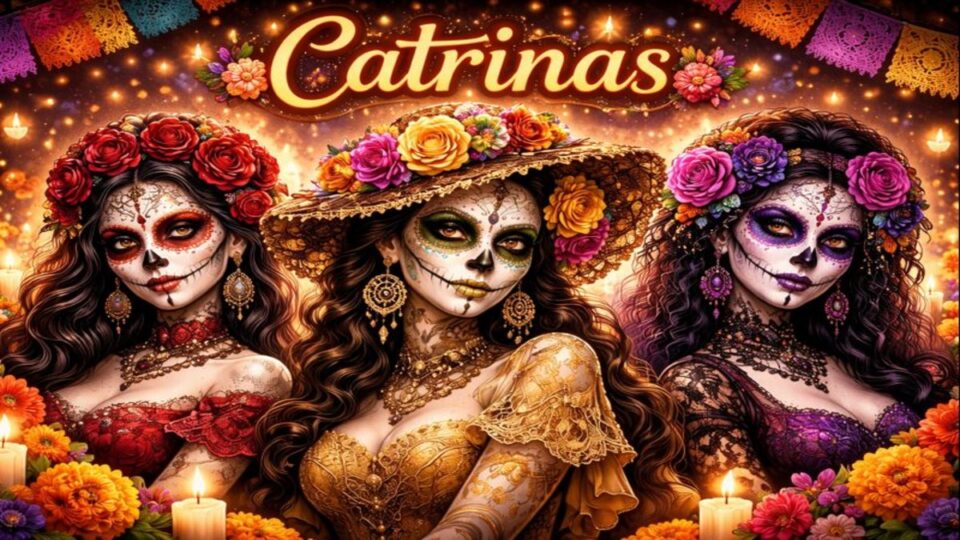
When you see a beautifully painted skull with roses in her hair and elegance in her posture, you’re not just looking at makeup—you’re witnessing history, satire, and celebration rolled into one unforgettable image: the Catrina.
Catrinas are the glamorous skeleton icons of Día de los Muertos, blending elegance with deep cultural meaning. With painted skull faces, colorful flowers, and luxurious dresses, they celebrate life while honoring the dead. Originally created as social satire, Catrinas now symbolize equality, reminding everyone that death erases social class. Today, they appear in parades, art, makeup, and fashion across the world, turning remembrance into a joyful spectacle filled with color, respect, and beauty.

Introduction to Catrinas
What Are Catrinas?
Catrinas are female skeleton figures, typically dressed in lavish clothes and decorated with vibrant face paint. They’re a central icon of Mexico’s Día de los Muertos, reminding us that death doesn’t erase beauty, class, or personality.
Why Catrinas Matter in Mexican Culture
Catrinas turn something many fear—death—into something to admire. They say, “We all end up the same, so why not celebrate?”
The History Behind Catrinas
José Guadalupe Posada and La Calavera Catrina
The original Catrina was born in the early 1900s as a satirical illustration by José Guadalupe Posada.
From Satire to Symbol
What started as social criticism of the elite evolved into a national symbol of cultural pride.
Cultural Significance of Catrinas
Representation of Life and Death
Catrinas dance between worlds. They honor the dead but remind the living to live fully.
Catrinas in Día de los Muertos
Every altar, parade, and face painting session seems incomplete without her presence.
How Catrinas Are Portrayed Today
Traditional Styles
White skull bases, black eyes, floral crowns.
Modern Interpretations
Neon colors, glitter, steampunk hats—you name it.
Iconic Elements of a Catrina Look
Face Paint Designs
Intricate swirls, petal shapes around eyes.
Flowers, Hats, and Jewelry
Marigolds are a must—they’re the bridge between worlds.
Colors and Their Meanings
Symbolic Color Choices
- Purple: grief
- Orange: remembrance
- Pink: celebration
Using Color in Face Art
Each shade whispers a story.
Dressing Like a Catrina
Traditional Dresses
Long flowing skirts with lace details.
Contemporary Fashion Twists
Leather jackets meet lace—tradition meets rebellion.
DIY Catrina Makeup Guide
Tools You Need
Face paint, brushes, sponges, patience.
Step-by-Step Application
Start with a white base, define the eyes, add florals.
Catrinas in Art and Media
Paintings, Murals, and Sculptures
Entire city walls bloom with their faces.
Catrinas in Movies and Animation
They’ve crossed borders through films like Coco.
Catrinas in Festivals and Parades
Major Celebrations in Mexico
Mexico City’s parade is a river of Catrinas.
Global Popularity
From LA to Tokyo, the world now celebrates her.
Catrinas as Symbols of Equality
Breaking Social Class Barriers
Once rich, once poor—now we’re all bones.
Political and Social Messages
They still whisper rebellion in bright colors.
Creating Your Own Catrina Artwork
Sketching Tips
Start simple—skull, eyes, flowers.
Choosing Your Medium
Digital, watercolor, acrylic—the spirit remains.
Common Mistakes to Avoid
Cultural Sensitivity
This is heritage, not a costume gimmick.
Overdoing the Design
Let beauty breathe—don’t suffocate it with glitter.
The Future of Catrinas
Trends in Modern Celebrations
Augmented reality filters and digital murals.
Keeping Tradition Alive
Teach kids why she exists—not just how she looks.
Conclusion
Catrinas aren’t just painted skulls—they’re stories, songs, and centuries of culture smiling back at us. They remind us that death isn’t the end of beauty—it’s just another chapter.
FAQs
1. Are Catrinas only for Día de los Muertos?
Mostly, but they appear year-round in Mexican art.
2. Can anyone dress as a Catrina?
Yes, with respect and understanding.
3. What flowers are best for Catrina crowns?
Marigolds are traditional.
4. Is La Catrina always female?
Traditionally yes, but male versions exist.
5. Why are they smiling?
Because death, like life, deserves joy.
Catrinas Beyond Day of the Dead
La Catrina has grown far beyond her original Day of the Dead setting. She now appears at Halloween parties, art exhibitions, fashion shoots, and even tattoo studios around the world, because her image is instantly recognisable and rich with meaning. This spread brings a responsibility: the figure comes from a specific Mexican tradition about death, equality, and remembrance, and wearing the look without knowing that story can feel careless to people for whom the day is sacred. If you borrow the style for another occasion, take a moment to learn the history first — the famous image began as a satirical etching by José Guadalupe Posada, mocking the wealthy who pretended death did not apply to them. Knowing that turns a costume into a tribute.
Famous Catrina Artworks to Know
If the Catrina look interests you, a few artworks are worth knowing. José Guadalupe Posada’s original etching, La Calavera Catrina, created around 1910, is the starting point — a simple skeleton in a wide, elegant hat. Diego Rivera later painted her into his mural Dream of a Sunday Afternoon in Alameda Park, giving her the full body and fine dress most people picture today. Modern artists have since reimagined her in painting, sculpture, and street art, from traditional sugar-skull styles to bold contemporary portraits. Looking at these works in order shows how a political satire became a cultural icon, and it gives anyone painting or dressing as a Catrina a deeper reference than a quick internet search.
How to Photograph a Catrina Look
A Catrina look deserves a good photograph, and a few simple choices make a large difference. Shoot in soft natural light, near a window or outdoors in shade, because harsh flash flattens the makeup and washes out the colours. Take close-ups of the face from slightly above, which flatters the makeup, and wider shots that include the hat and dress so the whole look reads. A plain background — a dark wall, marigolds, or candles — keeps the attention on the face instead of clutter. Ask the person to look slightly away from the camera rather than straight at it, which adds a thoughtful, elegant mood that suits the character. Take many frames: makeup this detailed rewards patience, and the best shot is rarely the first.
Catrinas in Film and Television
The Catrina image has appeared in films and television around the world, most famously in the world of Day of the Dead stories. Animated films have introduced her to children as a friendly, elegant figure, while dramas and documentaries use her to talk about Mexican identity, family, and memory. Fashion and music videos have borrowed the look for its visual power. When you spot a Catrina on screen, look at how she is used: is she a respectful nod to the tradition, or just a striking costume? The better productions treat her as a symbol of remembrance and equality, not decoration, and that distinction is what separates a thoughtful portrayal from a shallow one.
