
Introduction to the Caravel
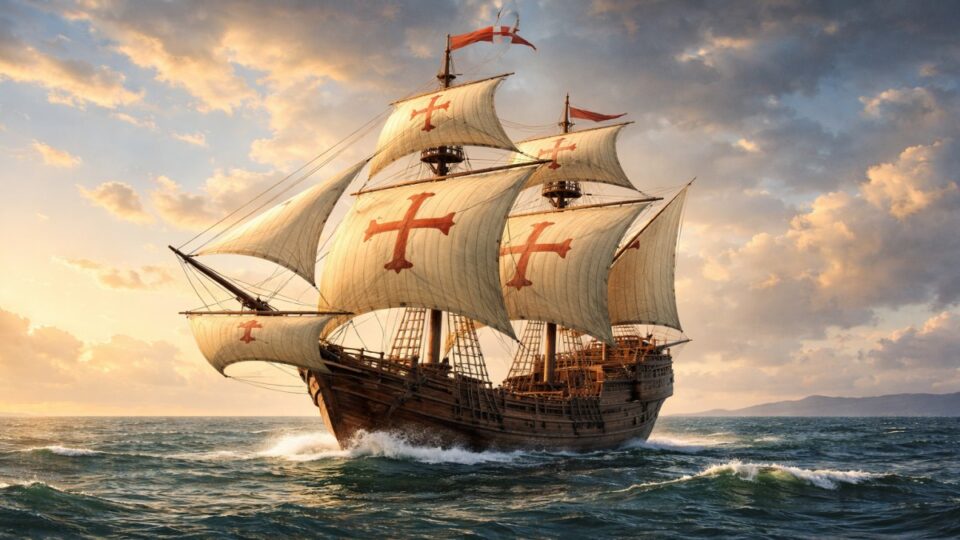
Caravel Ship. Imagine a small wooden ship, dancing over wild Atlantic waves like a fearless bird. That was the caravel. This modest-looking vessel became the backbone of the Age of Discovery, opening doors to continents that Europe had only dreamed about.
Economic Impact of the Caravel Era
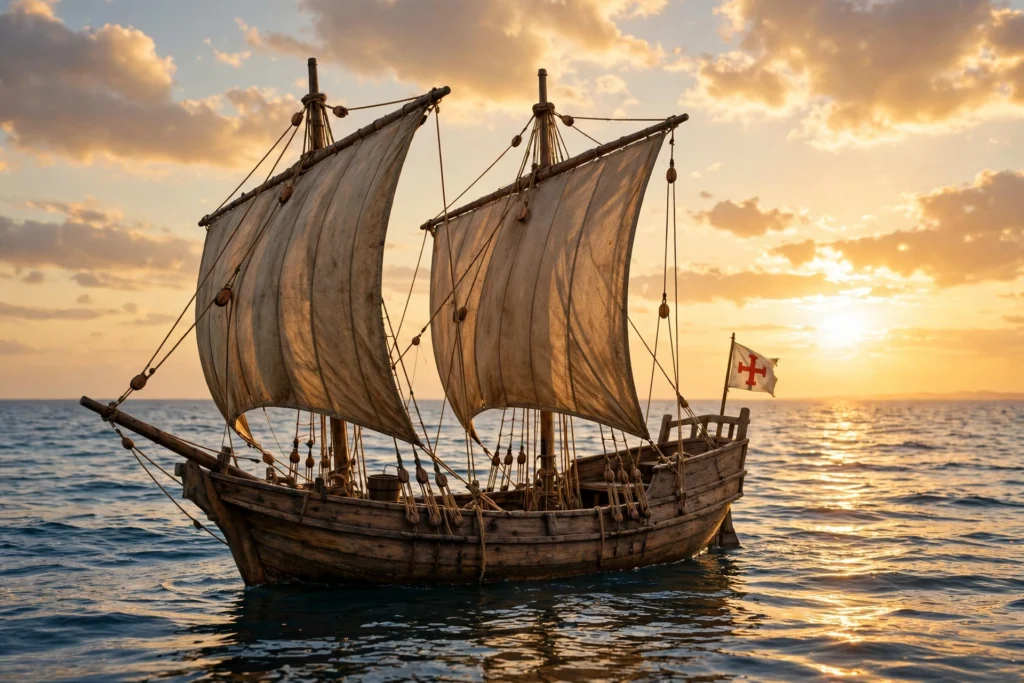
The arrival of the caravel didn’t just redraw maps—it rewired economies. Before this nimble ship entered the scene, trade was slow, expensive, and limited to familiar waters. Once caravels began slicing through the Atlantic, everything changed. Suddenly, spices from Asia, gold from Africa, and new crops from the Americas flowed into European ports like never before. Prices dropped, markets expanded, and small coastal towns transformed into booming trade hubs.
Environmental Consequences of Caravel Voyages
Of course, every revolution leaves footprints. The caravel opened doors to global exchange, but it also carried invasive species, altered ecosystems, and intensified resource extraction. New animals and plants crossed oceans, sometimes flourishing, sometimes wreaking havoc. Forests were cut to build fleets, and coastlines were reshaped to accommodate trade ports.
While people of the 15th century celebrated discovery, today we see the long-term environmental ripple effects. It’s a reminder that technology, no matter how brilliant, always carries responsibility.
The Caravel in Art, Literature, and Folklore
Over the centuries, the caravel has sailed far beyond the sea—straight into human imagination. Painters captured its graceful silhouette against golden sunsets. Writers described it as a floating promise, a wooden arrow pointing toward the future. Even today, the word “caravel” stirs something poetic, like a whisper from an age when the world was still full of blanks waiting to be filled.
Why the Caravel Was a Game-Changer
Before caravels, most ships hugged the coastline like nervous kids. The caravel was different—it dared to sail into the unknown.
A Quick Snapshot of Its History
Developed in the 15th century by Portuguese shipbuilders, the caravel was the Ferrari of medieval sailing.
Origins of the Caravel Ship
Birth in the Iberian Peninsula
Portugal, hungry for new trade routes, needed a ship that could go farther and faster. The caravel was their answer.
Influence of Moorish and Mediterranean Design
Arab sailing knowledge blended beautifully with European craftsmanship, creating a hybrid masterpiece.
Design and Structure of the Caravel
Hull Shape and Materials
Built mainly from oak and pine, the caravel was both strong and flexible.
Lightweight Construction
Its lighter frame meant less drag, more speed, and better handling.
Shallow Draft Advantages
This allowed caravels to explore rivers and coastlines where bigger ships would get stuck like a beached whale.
The Revolutionary Sail System
Lateen Sails Explained
These triangular sails made it possible to sail against the wind—something earlier ships struggled to do.
Square Sails for Ocean Voyages
Later versions added square sails for better performance on long ocean routes.
Types of Caravels
Caravela Latina
Perfect for coastal exploration, fitted with lateen sails.
Caravela Redonda
A hybrid model designed for deep-sea travel.
Navigation Features
Rudder and Steering Innovations
With a stern-mounted rudder, caravels could turn like sports cars of the sea.
Use of Compass and Astrolabe
Navigation tools transformed guesswork into science.
Speed and Maneuverability
Why Caravels Could Sail Against the Wind
Thanks to their sail design, they zigzagged smartly—like a clever chess move on water.
Famous Voyages Using Caravels
Christopher Columbus
The Niña and Pinta were caravels that helped uncover the New World.
Bartolomeu Dias
First European to round the Cape of Good Hope.
Vasco da Gama
Connected Europe to India by sea.
Life on Board a Caravel
Crew Size and Roles
Typically 20–30 sailors, each multitasking like a one-man army.
Daily Challenges at Sea
Limited food, cramped space, storms—adventure wasn’t glamorous.
Military and Trade Use
Defense Capabilities
Light cannons provided basic protection.
Trade Expansion
Spices, gold, and exotic goods flooded Europe.
Comparison with Other Ships
Caravel vs Carrack
Carracks were bigger but clumsy.
Caravel vs Galleon
Galleons replaced caravels for war and trade.
Decline of the Caravel
Rise of Larger Ships
As empires grew, so did their ships.
Cultural and Historical Legacy
How the Caravel Shaped the Modern World
Without the caravel, globalization might have taken centuries longer.
Modern Replicas and Tourism
Caravels in Museums
Portugal and Spain proudly display replicas today.
What Is a Caravel? A Simple Answer
What is a caravel? It is a small, fast sailing ship developed in Portugal in the 1400s, built for exploring unknown coasts rather than for war or heavy cargo. The facts that matter most are its size — about 20 to 30 metres long — and its lateen sails, triangular sails that let it sail against the wind. It carried a crew of about 20 men and could stay at sea for weeks, which is why it became the ship of the Age of Discovery.
Caravel Ship History: From Portugal to the World
The story of these ships starts in Portugal, where Prince Henry the Navigator funded ships that could explore the African coast. The portuguese caravel combined Mediterranean shipbuilding with Arab sail designs, creating a vessel that could sail close to the wind and return home against it. By the 1480s, caravels had rounded the Cape of Good Hope, and by the 1490s they were crossing the Atlantic. Within a century, the design had spread to Spain, England and the Netherlands.
Caravel Ship: Columbus and the Famous Voyages
The Columbus connection is famous: two of his three ships in 1492, the Niña and the Pinta, were caravels. Columbus chose them because they were fast, shallow-drafted and easy to handle with a small crew — perfect for exploring unknown shores. The Niña was his favourite and the ship he sailed home on. Caravels also carried Bartolomeu Dias around Africa and Vasco da Gama to India, making them the most important exploration ships of their century.
Caravel vs Carrack: How the Two Ships Differ
The caravel vs carrack comparison shows two different jobs. A carrack was a big, heavy merchant ship built to carry cargo across oceans, with square sails and a deep hull. A caravel was smaller, lighter and faster, built to explore and to scout. The caravel ship design used lateen sails for sailing into the wind, while carracks relied on square sails and the wind behind them. Explorers used caravels to find the routes, and carracks followed later to carry the trade.
Conclusion
The caravel was small in size but massive in impact. It was the spark that lit the fire of exploration and reshaped world history.
FAQs
1. What made the caravel unique?
Its ability to sail against the wind.
2. How many people were on a caravel?
Usually 20–30 sailors.
3. Were caravels used for war?
Yes, but mostly for exploration.
4. Who built the first caravel?
Portuguese shipbuilders in the 15th century.
5. Can I see a real caravel today?
Yes, in maritime museums across Europe.
.
