
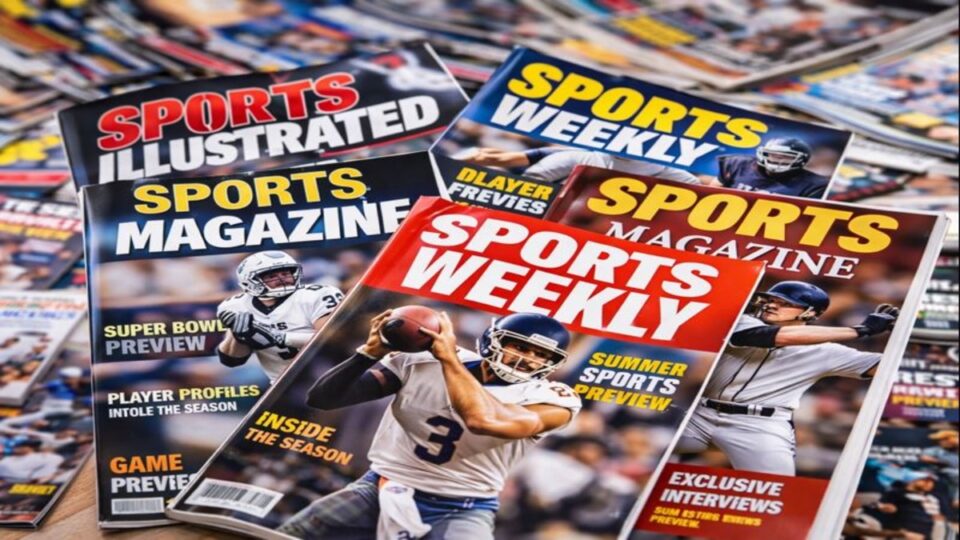
Introduction to Sports Magazines
For sports lovers, few things match the excitement of flipping through a fresh sports magazine. The smell of ink, the bold action shots, the in-depth stories—it’s like stepping into the stadium without leaving your couch. Even in the digital age, sports magazines continue to hold a special place in the hearts of fans worldwide.

What Are Sports Magazines?
Purpose and Scope
Sports magazines are periodical publications dedicated to covering sports events, athletes, teams, and the culture surrounding sports. They go beyond scores and stats, diving deep into stories, strategies, and the human side of competition.
Evolution of Sports Magazines
Early Print Era
Sports magazines began as simple publications reporting match results and athlete achievements. Over time, they evolved into detailed storytelling platforms, combining journalism with photography.
Digital Transformation
Today, many sports magazines offer digital editions, blending traditional reporting with multimedia content. Still, print editions remain popular for their collectible and immersive value.
Why Sports Magazines Still Matter Today
In a world flooded with instant updates, sports magazines slow things down. They provide thoughtful analysis, expert opinions, and storytelling you won’t find in breaking news alerts. It’s the difference between fast food and a home-cooked meal.
Types of Sports Magazines
General Sports Magazines
These cover multiple sports like football, basketball, cricket, tennis, and more. They’re perfect for fans who enjoy a wide range of athletic action.
Sport-Specific Magazines
Focused on one sport, these magazines dig deeper into techniques, leagues, and player profiles. Think football-only or cricket-only publications.
Athlete-Focused Magazines
These spotlight athletes’ lifestyles, training routines, and personal journeys, offering inspiration beyond the field.
Popular Sports Magazines Around the World
International Sports Magazines
Globally recognized magazines have shaped sports journalism with high-quality reporting and iconic covers.
Regional and Local Publications
Local sports magazines connect deeply with regional teams and grassroots sports, keeping community spirit alive.
Key Content Found in Sports Magazines
Match Analysis and Reports
Unlike quick online summaries, sports magazines break down matches play-by-play, offering tactical insights.
Interviews and Features
Athlete Life Stories
From rising stars to legendary icons, these stories humanize athletes, showing the grit behind the glory.
Role of Sports Journalism
Sports journalists act as storytellers, analysts, and critics. Their work preserves sporting history and shapes public opinion.
Sports Magazines vs Online Sports Media
Online media is fast and convenient, but sports magazines offer depth and credibility. They’re crafted, not rushed.
Benefits of Reading Sports Magazines
- Deep insights and expert analysis
- High-quality photography
- Inspiration and motivation
- Offline, distraction-free reading
Sports Magazines for Young Readers
Youth-focused sports magazines encourage fitness, teamwork, and discipline while nurturing a love for reading.
Collectible Value of Sports Magazines
Iconic covers and historic moments make some sports magazines valuable collectibles—time capsules of sporting history.
Advertising and Branding in Sports Magazines
Brands use sports magazines to reach passionate audiences. Ads blend seamlessly with content, enhancing credibility.
How to Choose the Right Sports Magazine
Choose based on:
- Your favorite sport
- Depth of coverage
- Print vs digital preference
Future of Sports Magazines
The future lies in hybrid models—print for collectors and fans, digital for accessibility. Storytelling will always win.
Conclusion
Sports magazines are more than publications; they’re companions for fans who crave stories beyond the scoreboard. In a fast-paced digital world, they offer depth, nostalgia, and a richer connection to the games we love.
FAQs
1. Are sports magazines still popular today?
Yes, especially among dedicated fans and collectors.
2. Do sports magazines offer digital versions?
Most modern sports magazines provide both print and digital editions.
3. Which sports magazines are best for beginners?
General sports magazines are ideal for new readers.
4. Are sports magazines suitable for kids?
Yes, many are designed specifically for young readers.
5. Can sports magazines be collected?
Absolutely—many editions become valuable collectibles.
Digital Sports Magazines and Apps
Print is no longer the only way to read a sports magazine. Most major titles now publish a digital edition that looks like the print magazine but adds video clips, live statistics, and links to full match reports. Apps add push notifications for breaking news and let you save articles for offline reading, which print never could. The trade-off is focus: a printed magazine is read cover to cover, while an app encourages jumping between headlines and rarely finishing a long feature. Many readers now use both — the app for daily news and the print or digital edition for the long interviews and analysis. If you only read on a phone, look for a magazine whose app lets you read long articles comfortably, with large text and no pop-up interrupting every paragraph.
How to Choose the Right Sports Magazine for You
Choosing a magazine starts with how you follow sport. If you follow one team closely, a club or sport-specific magazine gives deeper coverage than a general title. If you love tactics and data, look for magazines known for analysis rather than celebrity stories. Check the writing quality in a sample issue before subscribing: are the interviews original, or do they repeat press conferences? Does it cover women’s sport and smaller leagues, or only the biggest names? Price matters too — a monthly print subscription costs far more than a digital one over a year. Many magazines offer a free trial issue, so read one properly before committing, and cancel any subscription you stop reading within a month.
Collecting Sports Magazines
Old sports magazines are collected for the same reason as old programmes: they freeze a moment in sporting history. Issues covering famous finals, title wins, or a player’s debut are the ones collectors want, and condition matters enormously — a creased, marked copy is worth little, while a clean copy in a protective sleeve keeps its value. Store them upright, out of sunlight and damp, and never fold them. Special editions and first issues of a title are usually the most valuable. But collect what you love rather than what might gain value: a collection built around your own team and memories is worth keeping even if it never makes money, and it is far more enjoyable to own.
Sports Magazines for Coaches and Young Players
Coaches and young players read sports magazines differently from fans. For a coach, the valuable parts are training features, tactical breakdowns, and interviews where managers explain their decisions in detail. For young players, the best magazines mix inspiration with practical advice — how professionals train, eat, and recover, told in plain language. Parents choosing a magazine for a child should check the reading level and whether the content is genuinely encouraging rather than focused on fame and money. A good magazine for a young athlete teaches the sport, not just the celebrity around it, and that difference shapes how a young player thinks about their game.
