
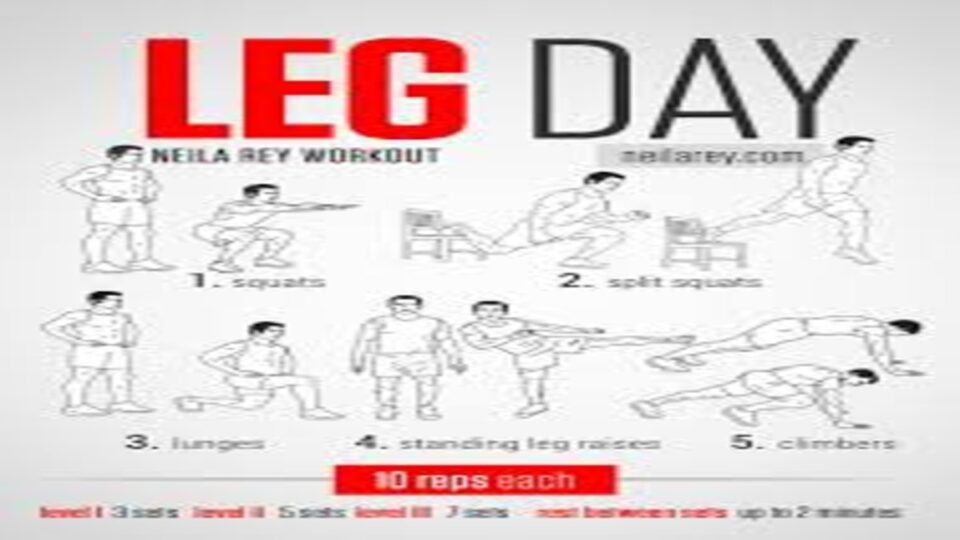
Introduction to Leg Workouts
Let’s be honest how many times have you been tempted to skip leg day?
Upper body workouts are fun. Chest, arms, shoulders—they give you that instant mirror pump. But legs? They’re tough. They burn. They leave you walking like a penguin the next day.
But here’s the truth: leg workouts are the foundation of total-body strength. If your legs are weak, everything else suffers.
Why You Should Never Skip Leg Day
Your legs contain some of the largest muscles in your body. When you train them, you don’t just build muscle—you trigger massive strength and metabolic benefits.
Skipping leg day is like building a house on a weak foundation. It might look good for a while, but it won’t last.
Benefits of Strong Legs Beyond Aesthetics
Strong legs help you:
- Run faster
- Jump higher
- Lift heavier
- Improve balance
- Prevent injuries
And yes, they look powerful too.
Understanding Leg Muscles
Before we dive into exercises, let’s understand what we’re training.
Quadriceps
Located at the front of your thighs, the quads are responsible for extending your knees. Squats and lunges heavily target them.
Hamstrings
These muscles run along the back of your thighs. They help bend your knees and extend your hips.
Glutes
Your glutes are the largest muscle group in your body. They power your hips and play a huge role in strength and posture.
Calves
Located at the back of your lower legs, calves help you walk, run, and jump.
Hip Flexors and Adductors
These muscles assist with leg movement and stability. Often ignored—but very important.
Benefits of Leg Workouts
Boosts Overall Strength
When you perform compound leg exercises like squats and deadlifts, you engage multiple muscle groups. That means more strength gains.
Improves Athletic Performance
Whether you’re a runner, cyclist, or weekend athlete, strong legs improve speed and endurance.
Enhances Metabolism
Leg workouts burn a lot of calories because they involve large muscles. More muscle means a higher resting metabolism.
Supports Joint Health
Strong muscles support your knees and hips, reducing injury risk.
Best Bodyweight Leg Workouts
No equipment? No problem.
Squats
The king of leg exercises. Keep your chest up, push your hips back, and drive through your heels.
Lunges
Forward, backward, or walking lunges—great for balance and muscle symmetry.
Glute Bridges
Lie on your back and lift your hips upward. Squeeze at the top.
Wall Sits
Simple but brutal. Hold a squat position against a wall.
Best Dumbbell Leg Workouts
Add resistance for better results.
Goblet Squats
Hold a dumbbell close to your chest and squat down. Great for beginners and pros alike.
Romanian Deadlifts
Targets hamstrings and glutes. Focus on hip hinge movement.
Step-Ups
Step onto a bench or box while holding dumbbells.
Dumbbell Bulgarian Split Squats
Challenging but effective for building strength and balance.
Best Barbell Leg Workouts
Ready to go heavy?
Barbell Back Squats
The ultimate strength builder. Maintain proper form to avoid injury.
Deadlifts
Works legs, back, and core. A full-body powerhouse movement.
Front Squats
Places more emphasis on quads and core.
Hip Thrusts
One of the best exercises for glute development.
Leg Workouts for Beginners
If you’re new, keep it simple.
Sample Beginner Routine
- 3 sets of 12 squats
- 3 sets of 10 lunges (each leg)
- 3 sets of 12 glute bridges
- 3 sets of 15 calf raises
Train twice a week to start.
How to Progress Safely
Increase reps first, then add weight gradually. Focus on perfect form before going heavy.
Leg Workouts for Muscle Growth
Want bigger legs?
Reps and Sets for Hypertrophy
Aim for 8–12 reps per set, 3–5 sets per exercise.
Progressive Overload
Increase weight, reps, or intensity over time. That’s how muscles grow.
Leg Workouts for Fat Loss
Trying to burn fat?
Combining Strength and Cardio
Mix squats and lunges with jump squats or mountain climbers.
High-Intensity Leg Circuits
Circuit example:
- 15 squats
- 12 lunges
- 10 jump squats
- 20 seconds wall sit
Repeat 3–4 rounds.
Conclusion
Leg workouts aren’t glamorous—but they’re essential. They build strength, improve performance, boost metabolism, and shape your lower body.
Strong legs mean a strong body.
So next time you’re tempted to skip leg day, remember: champions don’t skip foundations.
Train smart. Train consistently. And embrace the burn.
Frequently Asked Questions (FAQs)
1. How long should a leg workout last?
Typically 45–60 minutes is enough for an effective session.
2. Can I train legs every day?
No. Your muscles need rest. 2–3 times per week is ideal.
3. Why are leg workouts so exhausting?
Because they involve large muscle groups and require significant energy.
4. How can I reduce soreness after leg day?
Stretch, hydrate, eat protein, and allow proper recovery.
5. Are squats enough for leg development?
Squats are excellent, but adding variety ensures balanced muscle growth.
