
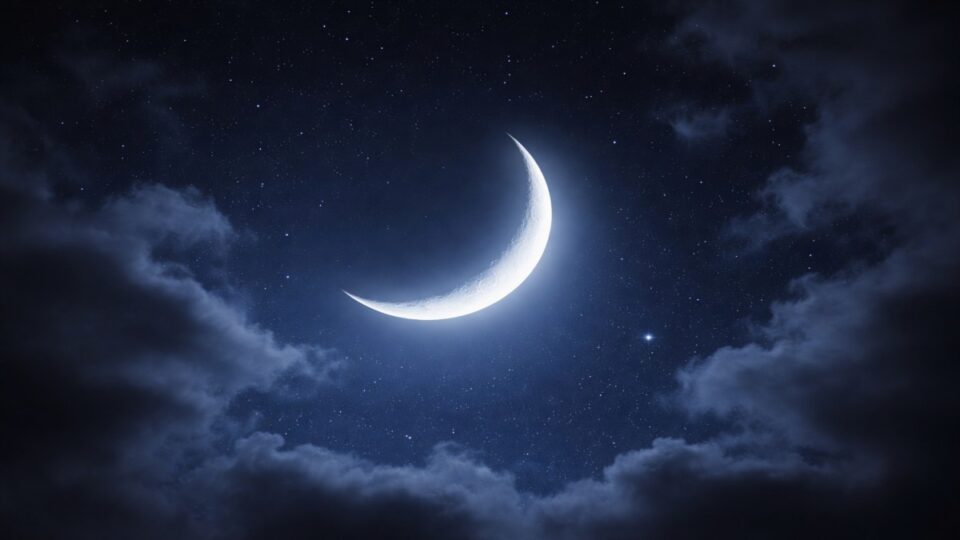
A crescent is one of those shapes you recognize instantly, even if you don’t always stop to name it. From the moon in the night sky to the flaky croissant on your breakfast plate, the crescent quietly appears everywhere. But what does “crescent” really mean, and why has this shape captured human attention for centuries? Let’s explore it together.
What Does Crescent Mean?
Basic Definition
The word crescent refers to a curved shape that looks like a thin, bent arc with pointed ends. It’s most commonly used to describe the early or late phases of the moon when it’s only partially illuminated.
Visual Description
Imagine slicing a circle and keeping only a curved sliver—that elegant, tapering curve is a crescent. It feels soft, flowing, and almost poetic to the eye.
Origin and Etymology of the Word Crescent
Latin Roots
“Crescent” comes from the Latin word crescere, meaning “to grow.” This makes sense, especially in astronomy, where a crescent moon is literally growing toward fullness.
Evolution of the Term in English
The term entered English in the 14th century and gradually expanded beyond astronomy to describe any similar curved form.
Crescent Shape Explained
Geometry of a Crescent
In geometry, a crescent is formed when two circles overlap, creating a curved, lens-like shape. It’s not just a curve—it’s a curve with intention.
Crescent vs Half-Moon
A common mistake is calling a crescent a half-moon. A half-moon is exactly 50% illuminated, while a crescent is less than half. Think of the crescent as the moon whispering before it speaks loudly.
Crescent in Astronomy
Crescent Moon Phases
The moon appears crescent-shaped during the waxing crescent (growing light) and waning crescent (shrinking light) phases.
Why the Moon Appears Crescent-Shaped
It’s all about angles—how sunlight hits the moon and how we view it from Earth. The crescent is a beautiful reminder that perspective changes everything.
Cultural and Religious Significance
Crescent in Islamic Symbolism
The crescent is widely recognized as a symbol of Islam, often paired with a star. It represents guidance, faith, and the lunar calendar used for Islamic months.
Crescent in Other Cultures
Ancient civilizations, including the Greeks and Mesopotamians, linked the crescent to gods, fertility, and renewal.
Crescent in Food and Cuisine
Crescent Rolls
Soft, buttery, and comforting, crescent rolls are shaped to resemble the classic curve. The name isn’t accidental—it’s visual storytelling you can eat.
Croissants and Crescent Pastries
The iconic croissant literally means “crescent” in French. Its flaky layers follow the same graceful arc that defines the shape itself.
Crescent in Language and Literature
Metaphorical Uses
Writers often use “crescent” metaphorically to suggest growth, beginnings, or gentle transformation.
Crescent as a Symbol in Poetry
In poetry, a crescent moon can symbolize hope, mystery, or quiet anticipation—like a promise not yet fulfilled.
Crescent Shapes in Design and Architecture
Logos and Branding
Many brands use crescent shapes to convey elegance, motion, or calm energy. It’s a curve that feels alive.
Architectural Examples
From crescent-shaped bridges to sweeping building facades, architects love this form for its balance between strength and softness.
Conclusion
The crescent is far more than just a shape. It’s a symbol of growth, beauty, and quiet transformation that spans science, culture, food, and design. Whether glowing softly in the night sky or resting warmly on your plate, the crescent continues to inspire and connect us across time and traditions.
FAQs
1. What is the simplest meaning of crescent?
A crescent is a curved shape resembling a thin slice of a circle, often associated with the moon.
2. Is a crescent the same as a half-moon?
No, a crescent is less than half illuminated, while a half-moon is exactly 50%.
3. Why is the crescent important in Islam?
It represents the lunar calendar and has deep historical and cultural significance.
4. Why are croissants crescent-shaped?
The name “croissant” means crescent in French, reflecting both shape and tradition.
5. Where else do we see crescent shapes in daily life?
In logos, architecture, tools, jewelry, nature, and even road designs.
