
Introduction
Let’s be honest… a slow laptop can drive anyone crazy. You click something, and it just sits there thinking like it’s having an existential crisis. I’ve been there too, staring at a loading screen and wondering if I should just give up and buy a new one.
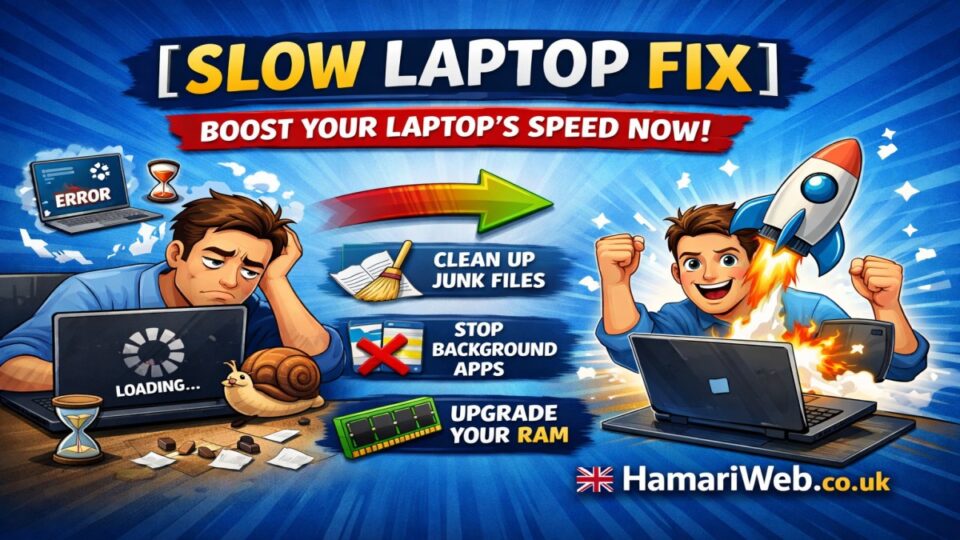
But here’s the thing most of the time, you don’t actually need a new laptop. You just need the right slow laptop fix.
In this guide, I’ll walk you through real, practical solutions (not complicated tech stuff). Just simple steps that actually work.
Why Your Laptop Gets Slow (And Why It’s Normal)
Honestly, laptops slowing down over time is totally normal. It’s not just you. Even expensive laptops start lagging after a while.
According to recent tech guides, common causes include low RAM, too many background apps, full storage, and malware . And yeah, most people ignore these until things get really bad.
Think of your laptop like a room. If you keep throwing stuff inside without cleaning it, eventually it becomes messy and hard to move around. Same thing happens with your system.
Some common reasons:
- Too many programs running
- Storage almost full
- Old hardware
- Viruses or malware
- Outdated software
And the worst part? These problems build up slowly… so you don’t notice until your laptop becomes painfully slow.
Top 10 Slow Laptop Fix Methods That Actually Work
Alright, let’s get into the real stuff. These are the best slow laptop fix methods that I personally find effective.
1. Restart Your Laptop (Yes, Seriously)
I know this sounds basic… but honestly, it works more often than you think.
When you restart your laptop, it clears RAM and stops unnecessary processes. It’s like giving your system a fresh start.
In my experience, even a simple restart can make things feel smoother instantly.
2. Close Unnecessary Background Apps
A lot of apps run quietly in the background, eating up your RAM and CPU.
You can:
- Open Task Manager (Ctrl + Shift + Esc)
- Check which apps are using the most memory
- Close the ones you don’t need
Too many background processes can seriously slow down your laptop .
3. Free Up Storage Space
If your storage is almost full, your laptop will struggle. That’s just how it works.
Try this:
- Delete old files
- Remove unused apps
- Clear downloads folder
Experts recommend keeping at least 10–20% free space for better performance .
4. Disable Startup Programs
This is a big one.
Some apps automatically start when you turn on your laptop. That’s why your startup feels so slow.
Fix it:
- Open Task Manager
- Go to Startup tab
- Disable unnecessary apps
You’ll notice faster boot times almost immediately.
5. Scan for Viruses and Malware
Malware is like a hidden thief. It uses your system resources without you knowing.
Run a full scan using:
- Windows Defender
- Antivirus software
Malware can run silently and slow down performance significantly .
6. Upgrade to SSD (Game Changer)
If you’re still using an HDD… this is the biggest upgrade you can make.
Switching to SSD:
- Faster boot time
- Faster file loading
- Overall smooth performance
Honestly, this is the ultimate slow laptop fix if your device feels outdated.
7. Add More RAM (If Possible)
If your laptop has low RAM (like 4GB or 8GB), upgrading it can make a huge difference.
More RAM = better multitasking.
Especially if you:
- Use Chrome with many tabs
- Run heavy software
8. Update Your System and Drivers
Outdated software can slow things down.
Make sure:
- Windows is updated
- Drivers are updated
Updates often include performance improvements and bug fixes.
9. Reduce Visual Effects
This one is underrated.
Fancy animations and effects look nice… but they slow your system.
Turn them off:
- Go to Performance Settings
- Select “Adjust for best performance”
It makes your laptop feel faster instantly.
10. Clean Your Laptop (Physically)
Yeah, dust matters.
If your laptop overheats, it slows down automatically. Heat = performance drop.
Clean:
- Fans
- Air vents
Even this small step can improve speed.
Quick Comparison: What Works Best?
| Fix Method | Difficulty | Impact Level | Best For |
|---|---|---|---|
| Restart Laptop | Easy | Medium | Quick fix |
| Remove Apps | Easy | High | Storage issues |
| SSD Upgrade | Medium | Very High | Old laptops |
| RAM Upgrade | Medium | High | Multitasking |
| Virus Scan | Easy | High | Security issues |
Pro Tips That People Usually Ignore
Let me share a few small things that actually matter:
- Don’t keep 20 Chrome tabs open
- Avoid installing random software
- Restart your laptop regularly
- Keep your desktop clean
These habits make a huge difference over time.
How to Speed Up Laptop: Quick Wins
Learning how to speed up laptop performance starts with the quick wins: restart the laptop, close the apps you are not using, and free up storage space. The how to make laptop faster steps that work fastest are the simplest ones — a restart clears the memory, closing apps frees the processor, and deleting old files gives the system room to breathe.
Why Is My Laptop So Slow? The Main Causes
The why is my laptop so slow question has a few common answers: too many startup programs, a full hard drive, too little RAM, or malware running in the background. The slow-after-an-update problem is common too — a big update can leave the system re-indexing files for hours. Check the simple causes first, before you spend money on upgrades.
Laptop Running Slow Fix: Step by Step
The laptop running slow fix that works is a simple sequence: restart, close background apps, free up space, disable startup programs, and scan for malware. The fix slow computer steps are the same on Windows and Mac — the buttons are different, but the logic is the same. Do them in order, and check the speed after each step.
Speed Up Slow Laptop Windows 11: Best Settings
The Windows 11 settings that help most are turning off visual effects, disabling startup apps, and switching the power plan to Best Performance. Windows 11 looks pretty, but the animations and effects cost speed. Turn them off, and an old laptop feels new again.
Conclusion
Fixing a slow laptop isn’t rocket science. It’s mostly about cleaning things up and managing your system better.
If your laptop is lagging, don’t panic. Start with simple steps like clearing storage, closing apps, and scanning for viruses. Then move to upgrades like SSD or RAM if needed.
Honestly, once you apply these slow laptop fix methods, your laptop will feel way faster—and you’ll probably wonder why you didn’t do this earlier.
FAQs About Slow Laptop Fix
1. What is the fastest slow laptop fix?
Restarting your laptop and closing background apps is the quickest fix. It gives instant improvement.
2. Why is my laptop suddenly very slow
It could be due to malware, full storage, or too many running programs .
3. Does upgrading RAM really help?
Yes, especially if you multitask a lot. More RAM = smoother performance.
4. Is SSD better than HDD for speed?
Absolutely. SSD is much faster and improves overall system performance significantly .
5. How often should I clean my laptop?
At least every few months. Both software and physical cleaning help maintain speed.
