
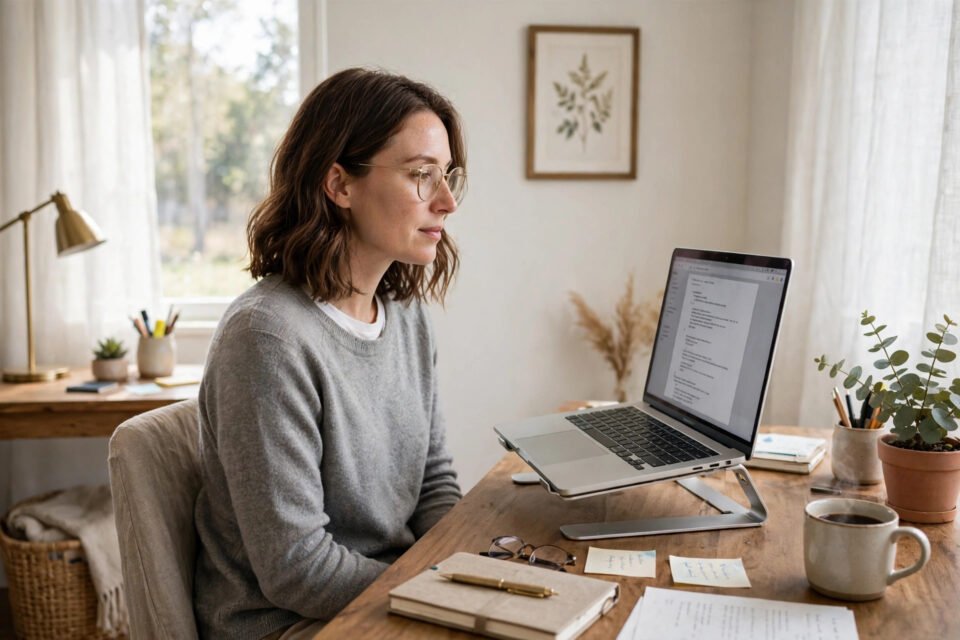
Learning how to improve posture at home does not require special equipment or a gym membership. Small, consistent changes to how you sit, stand, and move during the day can ease stiffness, reduce back and neck strain, and help you feel more comfortable and confident. This beginner-friendly guide explains simple posture habits you can start today, right at home.
Why Good Posture Matters
Good posture keeps your muscles, joints, and spine in healthy alignment. When you slouch for hours, your neck and shoulders work harder than they should, which can lead to tension, headaches, and tiredness. Improving your posture is not about sitting perfectly still all day. It is about moving well, taking breaks, and giving your body better support.
Start With Your Sitting Posture
Most posture problems begin at a desk, sofa, or dining table. Use these sitting posture tips to set yourself up well:
- Sit with your back supported and both feet flat on the floor.
- Keep your knees roughly level with your hips, not tucked underneath you.
- Raise your screen so the top is near eye level, rather than looking sharply down.
- Keep your shoulders relaxed and down, not hunched toward your ears.
- Take a short standing or stretching break every 30 to 60 minutes.
If your chair is too low or your screen is too low, a cushion or a stack of books can help until you find a better setup. Comfort matters more than expensive equipment.
Try Good Posture Exercises at Home
Gentle movement is one of the best ways to fix bad posture. Try these posture correction exercises for beginners for a few minutes each day:
Shoulder rolls: Roll your shoulders slowly backward ten times, then forward ten times. This loosens tight shoulders after long sitting.
Chin tucks: Sit tall, look straight ahead, and gently draw your chin back, as if making a double chin. Hold for five seconds and repeat five times. This helps counter forward head posture from phones and laptops.
Wall angels: Stand with your back against a wall, arms bent like a goalpost. Slowly raise and lower your arms while keeping your back and arms close to the wall. Stop if it feels painful.
Chest opener: Stand in a doorway, place your forearms on the frame, and step gently forward until you feel a mild stretch across your chest. Hold for 20 seconds.
Move slowly, breathe normally, and never force a stretch into sharp pain. If you have an existing injury or persistent
pain, speak to a healthcare professional before starting new exercises.
Build Daily Habits for Better Posture
Daily habits for better posture work best when they fit into routines you already have. A simple morning routine can be a good place to start, because it sets the tone for the rest of the day. While you brush your teeth, stand tall and check that your shoulders are level. While you wait for food to cook, do a few shoulder rolls. While you watch television, sit supported instead of sinking into the sofa for hours.
Also notice your phone habits. Holding a phone low for a long time pulls your head forward. Raise the phone closer to eye level when you can, and take breaks from scrolling. Small changes like these add up over weeks, even if no single day feels dramatic.
Improve How You Stand and Walk
Good posture is not only about sitting. When you stand, imagine a string gently pulling the top of your head upward. Keep your weight balanced over both feet, your knees soft rather than locked, and your stomach lightly engaged. When you walk, look ahead instead of down at your feet, and let your arms swing naturally. These simple checks take only a few seconds and can become automatic with practice.
Set Up a Posture-Friendly Home Workspace
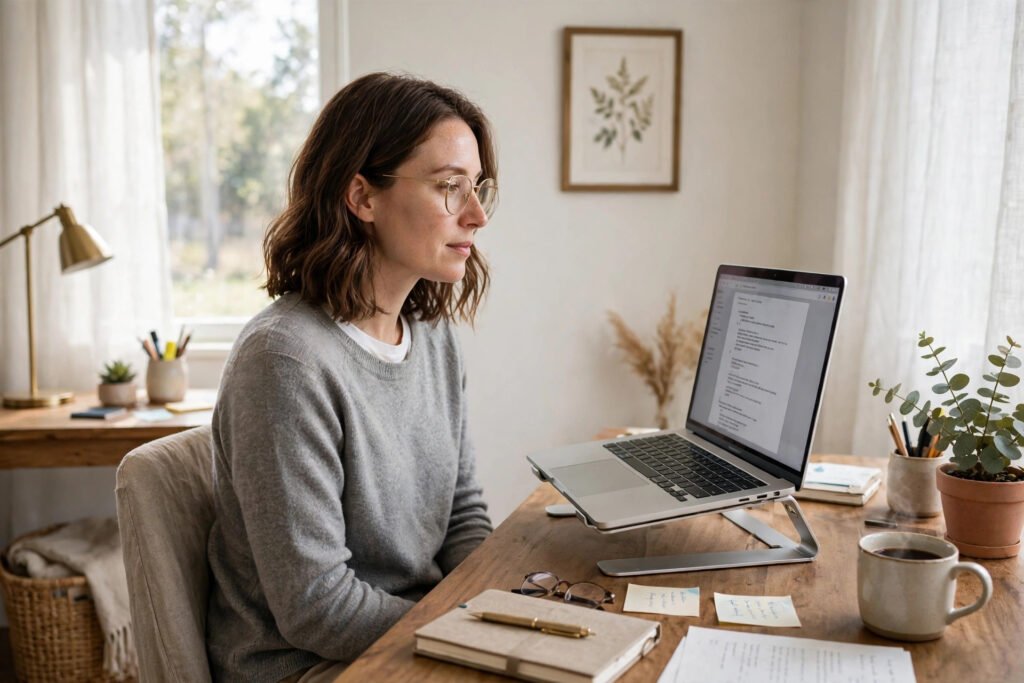
You do not need a perfect office to improve your posture at home. Focus on the basics:
- A chair that supports your lower back.
- A desk or table at a height where your elbows rest comfortably.
- A screen at eye level, not far below it.
- Good lighting, so you are not leaning forward to read.
- Space to stand and stretch regularly.
If you work from home, try alternating between sitting and standing when possible, and keep water nearby so you naturally get up to refill it.
What to Avoid
A few common mistakes can undo good habits. Avoid sitting in exactly the same position for hours, sleeping on a very flat or very high pillow that strains your neck, and carrying a heavy bag on one shoulder every day. Also avoid sudden, intense stretching routines if you are just starting out. Slow and steady progress is safer and easier to maintain.
A Simple Daily Posture Plan
Here is an easy plan to follow for the first two weeks:
- Morning: two minutes of shoulder rolls and chin tucks.
- Work time: check your sitting posture once an hour and stand for a short break.
- Evening: one chest opener stretch and a short walk with tall, relaxed posture.
- Bedtime: notice whether your pillow keeps your neck in a neutral position.
Track how you feel rather than chasing perfection. Less stiffness, fewer aches, and easier movement are good signs that your habits are working.
Conclusion
Learning how to improve posture at home is really about small, repeatable habits: sitting with support, moving gently each day, setting up your workspace sensibly, and taking regular breaks. Start with one or two changes from this guide, practise them daily, and build from there. Over time, better posture can become your natural way of sitting, standing, and moving at home.
