
Introduction
Learning how to organize a small kitchen can make everyday cooking feel calmer, quicker and far less frustrating. When every drawer is full, the counters are crowded and you cannot find the pan you need, even a simple meal starts to feel like hard work. The good news is that a small kitchen does not need a renovation to work well. With a few smart choices about what stays, where it lives and how you use vertical space, you can free up room you did not know you had.
This guide explains how to organize a small kitchen step by step, from clearing the clutter to setting up zones that make sense for the way you actually cook. It covers small kitchen organization hacks and simple ways to keep a small kitchen organized, plus habits that keep the room tidy long after the first clean-up.
Why Small Kitchens Feel Cluttered
Small kitchens usually suffer from the same few problems. There are too many items for the space, things are stored where they are hard to reach, and the countertop ends up doing the job of a cupboard. Appliances you rarely use sit out all day, while the things you reach for daily are buried at the back of a drawer.
Another common issue is mixing categories. When baking trays, cleaning sprays, spare batteries and recipe books all share the same cupboard, nothing has a proper home. Organizing starts by giving each group of items one clear place, so putting things away becomes quick and automatic.
Step 1: Take Everything Out and Sort It
Before you buy a single storage box, empty one cupboard or drawer at a time. Sort items into three groups: keep, move elsewhere, and let go. Keep only what you use regularly and what genuinely belongs in the kitchen. Duplicate utensils, chipped mugs, gadgets you have not used in a year, and expired food can go.
This step often frees more space than any organizer. It also shows you what you actually own, which stops you buying a third spatula or another set of containers you do not need. If you are unsure about an item, put it in a box out of the kitchen for two weeks. If you never reach for it, you can let it go with confidence.
For a room-by-room approach to clearing clutter first, see our guide on how to declutter your home in a weekend.
Step 2: Create Simple Kitchen Zones
A zone is just a small area for one job. Most kitchens work well with four or five zones: cooking, preparation, washing up, food storage, and eating or serving. Keep the items for each job close to where you use them. Pans and spatulas belong near the cooker, knives and boards near your main work surface, and plates near the dishwasher or sink.
Zones save time because you stop walking back and forth across the kitchen. They also make tidying easier, because every item has an obvious home. You do not need labels on everything, but a clear rule — “baking things live here, cleaning things live there” — is enough for the whole household to follow.
Step 3: Use Vertical Space and Cabinet Doors
In a small kitchen, the walls and the insides of doors are valuable real estate. Hooks on the inside of a cabinet door can hold measuring cups, lids or cleaning cloths. A rail with hooks above the worktop keeps everyday utensils within reach and frees a whole drawer. Magnetic strips for knives clear counter space and keep blades safe.
Inside cupboards, stackable shelves and risers create a second level, so mugs and plates are not piled on top of each other. For deep cupboards, a small basket or turntable at the front stops items disappearing into the dark back corner. The goal is simple: you should be able to see and reach everything without moving five other things first.
Step 4: Organize Cabinets Without Overfilling Them
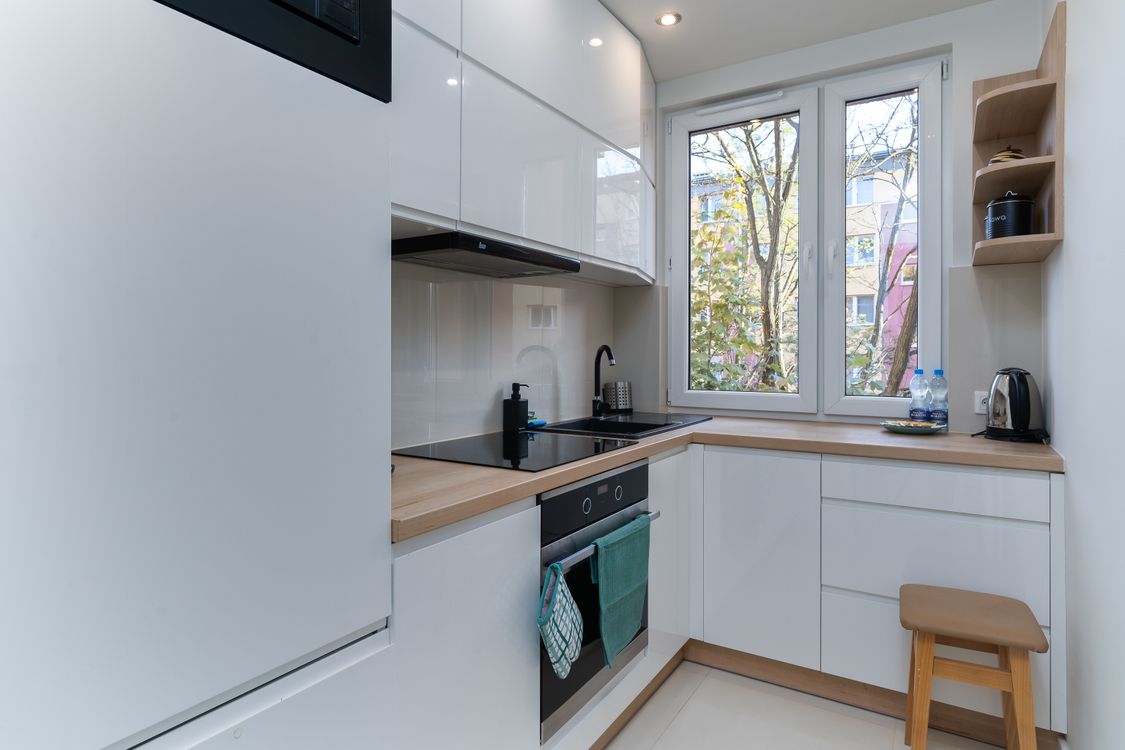
Learning how to keep a small kitchen organized starts with the cabinets. Group similar items together, put the heaviest things low down, and keep daily items at eye level or within easy reach. Store lids with their pots where possible, or use a simple vertical lid rack so they do not slide around.
Avoid filling a cabinet to the very top. A little empty space makes it much easier to put things back, which is what keeps the system working. If a cabinet is still overflowing after sorting, that is a sign something in it belongs elsewhere, not a sign you need a bigger cabinet.
Step 5: Small Kitchen Organization Hacks That Work Without a Pantry
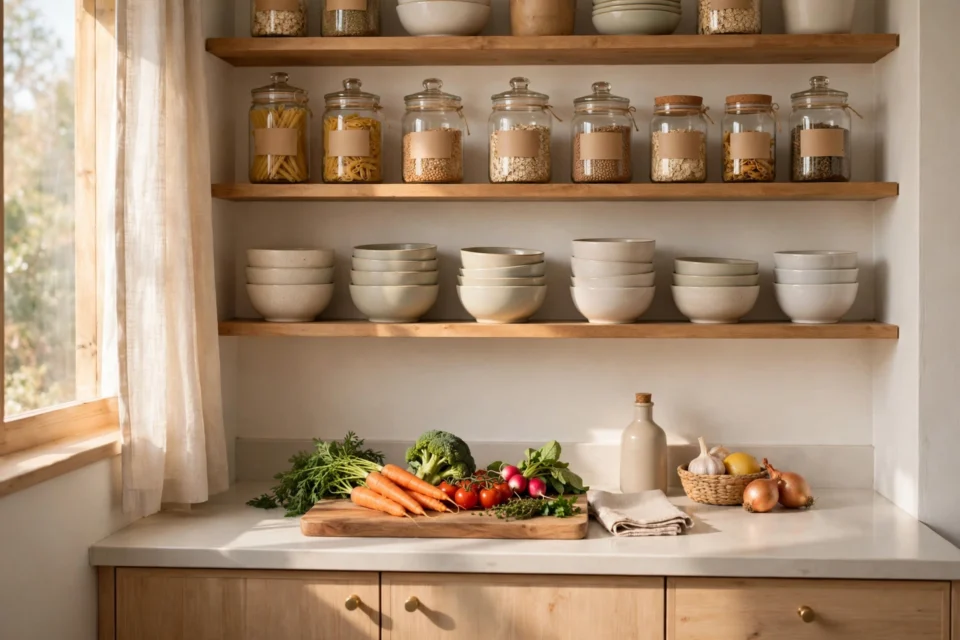
Not every kitchen has a pantry, and that is fine. A few small kitchen organization hacks can make a big difference. Clear jars for rice, pasta and flour let you see at a glance what you have and how much is left. A narrow rolling trolley can slide into a gap beside the fridge and hold oils, spices or cleaning supplies. A basket on top of a cupboard can store rarely used items, as long as you can reach it safely with a step stool.
If you have no pantry at all, choose one shelf or one basket as your “pantry” and keep all dry food there. When everything is in one place, shopping becomes easier too, because you can check one spot before you buy more.
Step 6: Keep Counters Clear
Clear counters make a small kitchen feel twice as big. Keep out only what you use every single day, such as a kettle, a chopping board, or a knife block. Everything else — the blender, the food processor, the waffle maker — can live in a cupboard and come out when needed.
At the end of cooking, take two minutes to wipe the counters and return items to their zones. This tiny habit matters more than any organizer, because a kitchen that is reset daily never has time to slide back into clutter. It also makes the next meal easier to start, which is a reward in itself.
Step 7: A Simple Weekly Reset
Even a well-organized kitchen drifts over time. A short weekly reset keeps it on track. Once a week, check the fridge for food past its best, wipe one shelf, and return any stray items to their zones. Check that lids match their containers and that nothing new has crept onto the counters without a home.
This reset takes ten minutes at most, and it stops small messes turning into a full reorganization job. Pair it with something you already do, like a weekend food shop, so it becomes part of the routine rather than another chore to remember.
Common Small Kitchen Mistakes to Avoid
- Buying organizers before sorting. Containers cannot fix clutter; they only hide it in neater boxes.
- Storing rarely used appliances on the counter. They take prime space every day for a job they do once a month.
- Piling items so high you cannot reach the ones at the bottom. If you cannot see it, you will not use it.
- Keeping broken or duplicate items “just in case.” In a small space, every item earns its place by being used.
- Creating a system only one person understands. If the household cannot follow it, it will not last.
Conclusion
You do not need a bigger kitchen to enjoy cooking in it. When you learn how to organize a small kitchen — by sorting honestly, creating simple zones, using vertical space, and keeping counters clear — the same room feels calmer, roomier and much easier to use. Start with one drawer or one cupboard today, keep the changes simple, and build from there. Small, steady habits will keep your kitchen organized long after the first tidy-up.
