
How to Store Fresh Cut Herbs: Simple Methods That Keep Them Fresh Longer
Introduction
Learning how to store fresh cut herbs properly can save you money, cut food waste, and make weeknight cooking much easier. Fresh herbs wilt fast when they are left in a warm bag on the counter, but with the right method, parsley, mint, basil, and cilantro can stay fresh for a week or longer. This guide explains the simplest ways to store fresh herbs, which method suits each herb, and the mistakes that make them go slimy.
Why Fresh Herbs Go Bad So Quickly
Fresh cut herbs are still living leaves, so they lose water, wilt, and rot when they are too dry, too wet, or too warm. Tender herbs such as parsley, mint, and cilantro dry out quickly in the fridge, while basil turns black in cold air. The trick is to give each herb steady moisture and cool air without trapping too much water around the leaves.
The Glass-of-Water Method for Tender Herbs
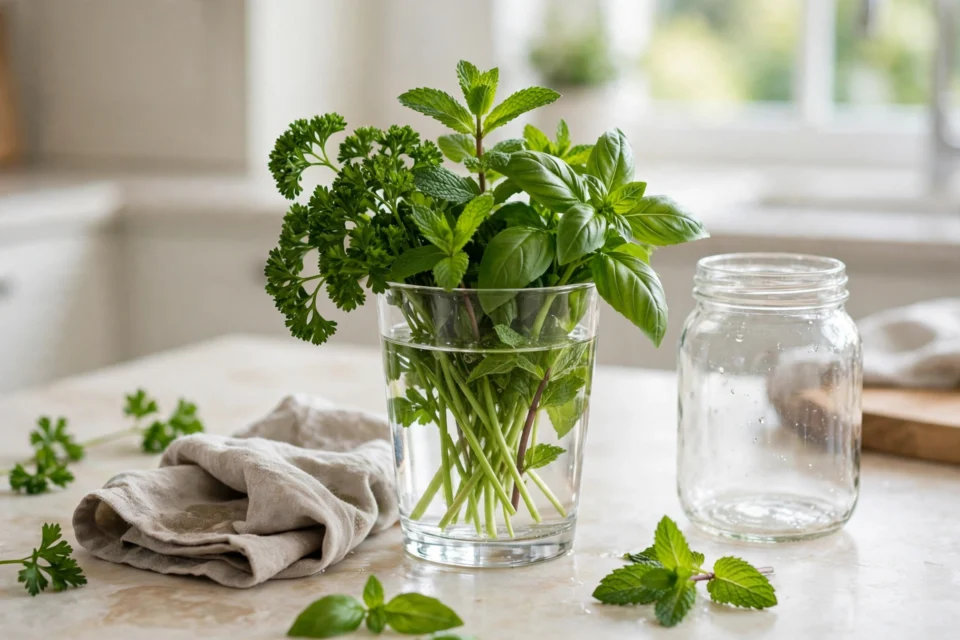
The easiest way to store fresh cut herbs like parsley, mint, and cilantro is to treat them like flowers. Trim about a centimetre from the stems, stand the bunch upright in a glass with a few centimetres of cold water, and loosely cover the leaves with a clean plastic bag or a damp cloth. Keep the glass in the fridge and change the water every two or three days. Stored this way, tender herbs often stay fresh for two to three weeks.
How to Store Fresh Basil Differently
Basil is the exception. Cold fridge air can turn basil leaves black, so it is better kept at room temperature. Stand basil in a glass of water on the kitchen counter, away from direct sunlight, and cover it loosely if your kitchen is dry. Use basil within about a week, and change the water every couple of days to stop it going cloudy.
The Damp Towel Method for the Fridge
If you do not want a glass in the fridge, wrap washed and fully dried herbs in a slightly damp paper towel, then place the bundle in a sealed bag or airtight container. The towel keeps humidity steady, while drying the leaves first stops mould. This method works well for parsley, mint, chives, and dill, and it keeps the fridge tidy.
How to Store Fresh Herbs in the Fridge for a Short Week
For a simple everyday routine, wash herbs only when you need them, because extra water speeds up rotting. Keep tender herbs in water or a damp towel, keep woody herbs such as rosemary and thyme in a dry bag in the fridge, and check the bunch every few days, removing any yellow or slimy leaves before they spread.
Freezing Fresh Herbs for Longer Storage
When you have more herbs than you can use in a week, freezing is better than letting them rot. Chop the herbs, pack them into ice-cube trays with a little water or olive oil, freeze, then move the cubes into a labelled bag. Frozen herb cubes are perfect for soups, stews, and sauces, even though they lose the crisp texture needed for salads.
Mistakes That Make Fresh Herbs Go Slimy
The most common mistakes are storing wet herbs in a sealed plastic bag, leaving herbs on a warm counter, and forgetting to change the water in the glass. Always dry leaves gently before fridge storage, keep herbs away from the coldest part of the fridge, and throw out damaged leaves early, because one rotten stem can spoil the whole bunch.
A Simple Weekly Routine
A routine that works for most kitchens is simple: on shopping day, trim and store tender herbs in water, wrap woody herbs for the fridge, and keep basil on the counter. Midweek, change the water and pick off any tired leaves. At the end of the week, freeze what is left instead of throwing it away. This small habit is also handy if you like to meal prep for the week, because fresh herbs are ready when you need them.
Conclusion
You do not need special equipment to keep herbs fresh. A glass of water, a damp towel, and a little regular care are enough to make fresh cut herbs last much longer. Start with the method that fits your kitchen, keep basil out of the fridge, and freeze the rest before it wilts — your cooking will taste fresher, and you will waste far less.
