
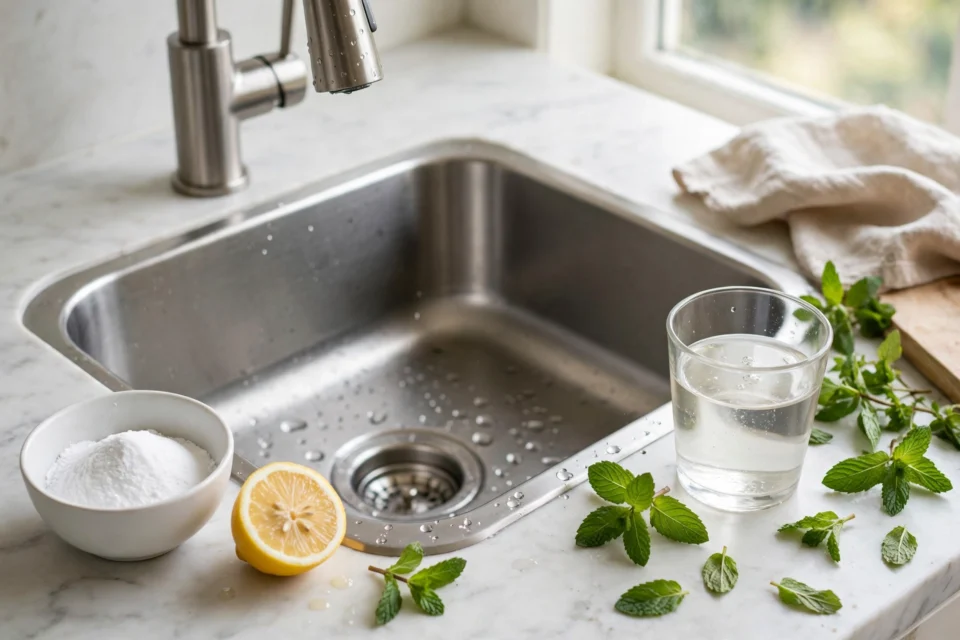
A bad smell coming up from the sink can make a whole kitchen or bathroom feel unclean, even when everything looks spotless. If you have been wondering how to get rid of drain smell, the fix is usually simple and takes less than fifteen minutes. Most drain smells come from the same few causes, and the methods below deal with each one using things you probably already have at home.
Why Does My Drain Smell?
Before you start cleaning, it helps to know what you are dealing with. A drain smells when food, grease, soap scum and hair collect inside the pipe and start to break down. Bacteria feed on that buildup and release gases, which is why a drain smells like rotten eggs — that sulphur smell comes from hydrogen sulphide gas produced as the gunk rots.
In a bathroom, the smell often comes from a dry P-trap. The P-trap is the U-shaped bend under the sink, and it holds a small amount of water that blocks sewer gas from rising into the room. If a sink or shower is not used for a while, that water evaporates, the seal breaks, and sewer smell comes straight up. In the kitchen, the usual culprit is grease and old food stuck in the drain or the garbage disposal.
1. Baking Soda and Vinegar
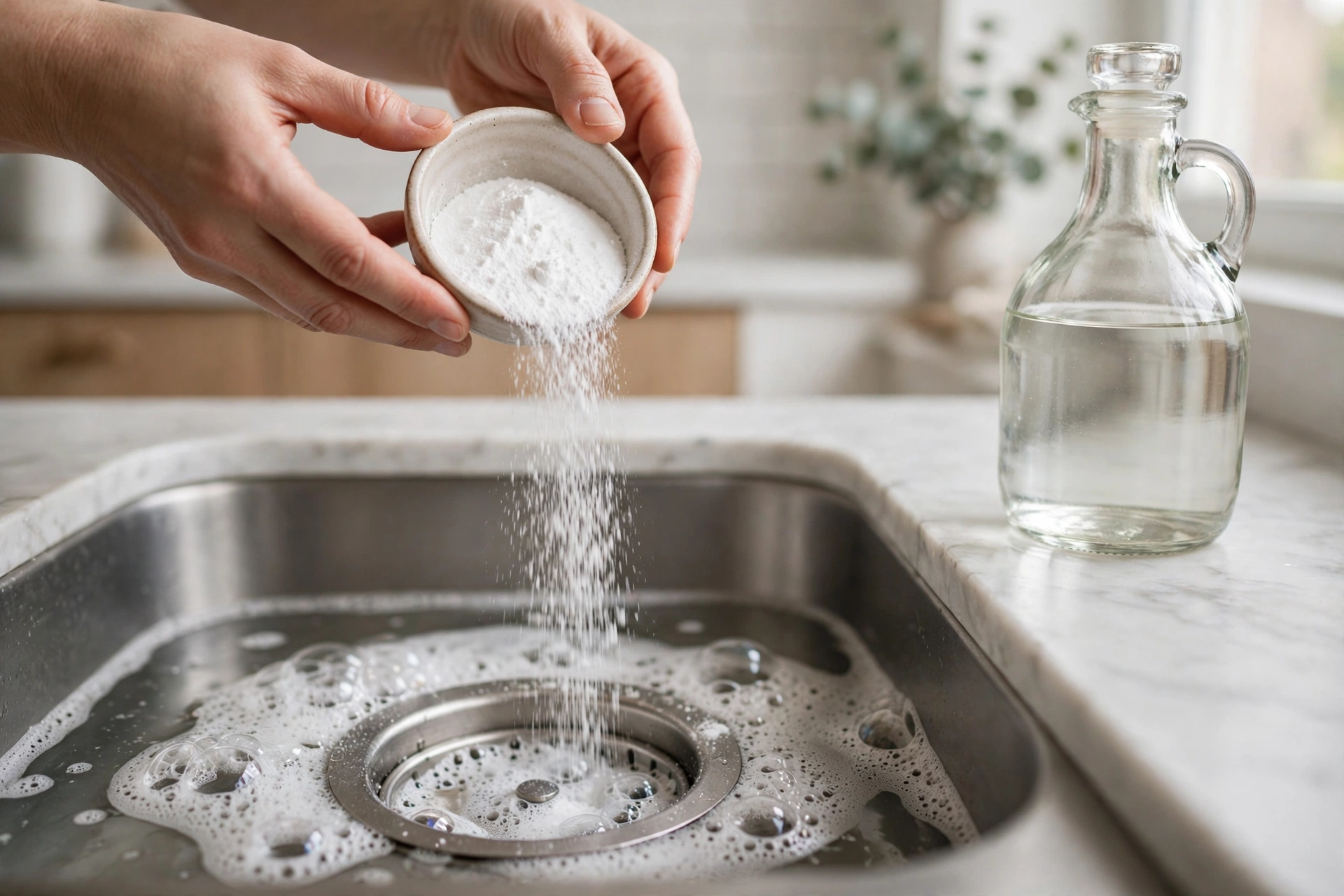
This is the best first step to clean a smelly drain, and it works in both the kitchen and the bathroom. Pour half a cup of baking soda down the drain, then slowly pour in one cup of white vinegar. It will fizz, and that fizzing helps loosen the grime stuck to the pipe walls. Let it sit for fifteen minutes, then flush the drain with a kettle of hot water.
Do this once a week to keep the smell from coming back. It is cheap, it uses no harsh chemicals, and it is safe for most household drains.
2. Flush with Hot Water
Sometimes the simplest fix is the right one. Grease solidifies inside pipes and traps food particles, and hot water melts it away. Boil a kettle, then pour the water down the drain slowly in two or three rounds, waiting a few seconds between each pour. If your pipes are plastic, use very hot tap water instead of boiling water, so you do not risk softening the joints.
Make it a habit to run hot water down the kitchen sink for thirty seconds after washing greasy dishes. It takes almost no effort and stops grease from building up in the first place.
3. Clean the Drain Stopper and Strainer
A lot of the smell lives right at the top of the drain, not deep in the pipes. Pull out the stopper or strainer and you will often find a slimy coating of soap scum, hair and food. Scrub it with an old toothbrush and washing-up liquid, rinse it well, and put it back. While it is out, wipe around the drain opening too.
In the bathroom, hair is usually the main problem. A small drain snake or even a bent wire hook can pull out a surprising amount of hair from just below the drain. Once the blockage is gone, the smell usually goes with it.
4. Freshen a Kitchen Disposal with Lemon and Ice
If the smell comes from the garbage disposal, try this. Drop a few ice cubes and a handful of coarse salt into the disposal, run cold water, and switch it on for a few seconds. The ice and salt scrub the grinding plates clean. Then cut a lemon into small pieces, drop them in, and run the disposal again with cold water. The lemon leaves a fresh smell behind.
Never put your hand inside the disposal, and always run cold water, not hot, while it is on. Lemon is a handy natural cleaner elsewhere in the kitchen too — see our guide on how to clean a microwave with lemon.
5. Refill a Dry P-Trap
If a bathroom drain smells like a sewer, especially in a guest bathroom or a sink that is rarely used, the P-trap has probably dried out. The fix takes ten seconds: just run the tap for thirty seconds, or pour a jug of water down the drain. That refills the trap and blocks the sewer gas again.
For drains you almost never use, pour in a spoonful of cooking oil after the water. The oil floats on top and slows down evaporation, so the trap stays full for much longer.
6. Try an Enzyme Drain Cleaner
If the natural methods help but the smell keeps coming back, an enzyme drain cleaner is worth trying. These use live bacteria that eat the organic buildup inside the pipes. Pour it in at night and leave it to work while you sleep, then flush with hot water in the morning. It works more slowly than chemical cleaners, but it is gentler on your pipes and on the environment.
Avoid mixing cleaning products, and never mix bleach with vinegar or with any other cleaner — that combination releases harmful fumes. If you use a chemical drain cleaner, follow the label exactly and keep the room ventilated.
How to Stop Drain Smell Coming Back
Once the drain smells fresh, a few small habits keep it that way. Never pour cooking grease down the sink; let it cool and throw it in the bin. Use a strainer in the kitchen sink to catch food scraps, and empty it into the bin after every wash. In the bathroom, brush hair before showering so less of it goes down the drain. Run water in every sink and shower at least once a week, even in rooms you rarely use. And give the drains a quick baking soda and vinegar treatment once a month as regular maintenance.
When to Call a Plumber
Most drain smells are a do-it-yourself job, but a few signs mean it is time to call a plumber. If the smell comes from every drain in the house at once, if water drains slowly even after cleaning, or if you hear gurgling from the pipes, the problem may be a blocked vent pipe or a damaged sewer line. A cracked pipe or a broken seal is not something to fix with baking soda, and a plumber can find the cause quickly.
Conclusion
Learning how to get rid of drain smell comes down to finding the cause and giving the drain a proper clean. Baking soda and vinegar handle most smells, hot water clears grease, and a quick P-trap refill fixes a dry bathroom drain. Do it once, then keep up the simple habits above, and your drains will stay fresh. If the smell returns again and again, treat it as a warning sign and get a plumber to take a look before a small problem becomes a big one.
