
Introduction
If you want to know how to remove coffee stains from clothes, the most important thing is not to panic — and not to rub. Coffee looks dramatic on a shirt, but it is one of the easier everyday stains to deal with when you act in the right order. Blot first, rinse with cool water, treat the mark gently, and then wash as normal. In most cases, that simple sequence is enough.
This guide covers how to remove coffee stains from clothing in different situations: a fresh spill, a stain you only noticed hours later, a mark on white clothes, and a spill on a delicate fabric. You do not need special stain removers to start. Dish soap, baking soda, white vinegar and plain cool water will handle most coffee stains at home.
First Steps: What to Do Right Away
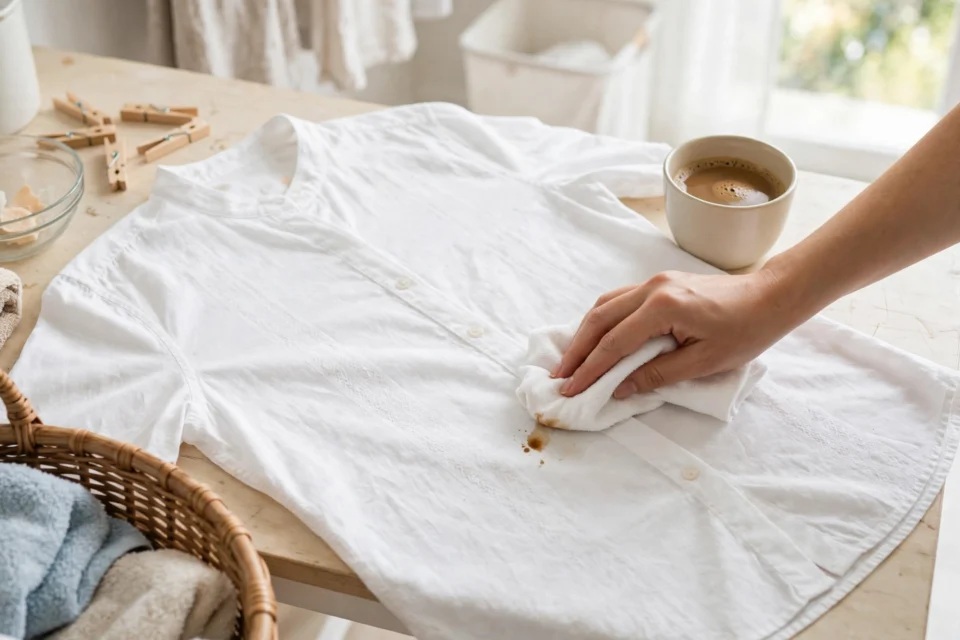
When coffee spills, speed helps, but rubbing hurts. Rubbing pushes the coffee deeper into the fibres and can spread the stain wider. Instead, follow these first steps:
- Blot the stain gently with a clean cloth or paper towel. Press, lift, repeat — do not scrub.
- Remove as much liquid as you can before it dries.
- Rinse the back of the stain under cool running water. Rinsing from the back helps push the coffee out of the fabric rather than further in.
- If you are out, blot well and keep the item damp in a bag until you get home. Do not put it in a hot dryer before treating it, because heat can set a stain.
These first minutes matter more than any fancy product. A stain treated while it is still damp is almost always easier to remove than one that has dried and been heated.
How to Remove a Fresh Coffee Stain
For a fresh stain, this simple method works well on most washable clothes:
- Blot up the excess coffee.
- Rinse the stained area under cool water for a minute or two.
- Apply a small drop of liquid dish soap to the stain and work it in gently with your fingers.
- Let it sit for five to ten minutes.
- Rinse again with cool water and check the stain. If a faint mark remains, repeat the soap step once.
- Wash the item as usual, following the care label, and check before drying. If any mark is left, treat it again rather than putting it in the dryer.
This is the core of how to remove coffee stain from clothes when the spill is still fresh. Dish soap is good here because it breaks down the oily part of coffee without being harsh on most fabrics.
How to Remove Dried or Old Coffee Stains
A dried coffee stain needs a little more patience, but it is not hopeless. Start by soaking the item in cool water for 30 minutes to soften the stain. Then apply dish soap, or make a paste of baking soda and a little water, and spread it over the mark. Leave it for 20 to 30 minutes, rinse, and repeat if needed.
For a stubborn dried mark, a soak in a solution of one part white vinegar to two parts cool water for 15 minutes can help lift the colour. Always rinse well afterwards and test vinegar on a hidden area first, especially on coloured or delicate fabrics. After treatment, wash as normal and, again, check before tumble drying. Heat is the enemy of a half-removed stain, so air-dry until you are sure the mark is gone.
If you are dealing with a shirt that has been through the wash already, the same soak-and-treat routine is still worth trying. It may take two rounds, but many old coffee stains fade a great deal, even if they do not vanish completely on the first attempt.
How to Remove Coffee Stains from White Clothes
White clothes show every mark, so learning how to remove coffee stains from white clothes is worth the extra care. The steps are similar, but you have a few extra options:
- After blotting and rinsing, apply dish soap and leave it for ten minutes, then rinse.
- For a white cotton shirt, a paste of baking soda and water left for 20 minutes can lift remaining colour.
- A short soak in cool water with a spoonful of oxygen-based stain remover (the kind sold for whites) is a safe next step for most white cottons. Follow the product instructions and the care label.
- Avoid chlorine bleach unless the care label clearly allows it, and never mix bleach with vinegar.
Sunlight can also help white cotton after washing, but do not rely on it alone, and do not leave delicate whites in strong sun for long. The safest rule for whites is the same as for any coffee stain: treat before drying, and repeat gently rather than using one harsh treatment.
Coffee Stains on Delicate Fabrics
Silk, wool and items marked dry-clean-only need a gentler approach. Blot carefully, rinse only if the care label allows water, and do not use vinegar, baking soda paste or strong stain removers on silk or wool without testing a hidden spot first. For these fabrics, a small amount of mild dish soap diluted in cool water, dabbed on and rinsed off gently, is usually the safest home step. If the stain remains, or the item is valuable, take it to a dry cleaner and point out the stain — and mention that it is coffee — rather than trying stronger home remedies.
Mistakes That Make Coffee Stains Worse
A few common mistakes turn a small spill into a permanent mark:
- Rubbing hard: This spreads the stain and can damage the fabric.
- Using hot water first: Hot water can help set coffee, especially on a fresh stain. Start cool.
- Drying before checking: A tumble dryer can set a stain that washing alone had almost removed. Always check first.
- Using coloured cloths to blot: A coloured towel can transfer dye to a damp white shirt. Use a white cloth when you can.
- Skipping the care label: Some fabrics do not tolerate vinegar, bleach or hot water. A quick label check takes seconds and can save the garment.
For more ideas on keeping this part of the house in order, see our guide on how to organize a small kitchen — a tidy laundry and kitchen routine makes spills much less stressful.
Conclusion
Learning how to remove coffee stains from clothes comes down to a calm, simple routine: blot, rinse cool, treat gently, wash, and check before drying. Fresh stains usually come out with dish soap and cool water, dried stains need a soak and a second round, and white clothes benefit from baking soda or an oxygen-based soak. Keep the treatment gentle, be patient with old marks, and never let heat set a stain you have not finished treating.
Next time coffee spills, you will know exactly what to do — and your favourite shirt stands a very good chance of surviving it.
