

Opening a closet should never greet you with a damp, stale smell, yet that musty odour is one of the most common household complaints. If you want to know how to get rid of musty smell in closet spaces for good, the answer is simpler than most people expect: remove the moisture that causes it, clean the surfaces where it lives, and give the air somewhere to go. No expensive sprays or special equipment are needed — just a few everyday items and a little patience.
Why Does a Closet Smell Musty?
A musty smell is almost always a sign of moisture. Closets are dark, enclosed, and often poorly ventilated, which makes them the perfect place for dampness to settle. The usual causes are:
- Trapped humidity. Warm, moist air from the bedroom or bathroom gets inside and has nowhere to escape.
- Damp clothes. Putting away clothes that are even slightly damp lets moisture — and the smell that comes with it — build up over time.
- Mould and mildew. These grow quietly on walls, shelves, and fabric in dark, humid spots, and their smell is the classic “musty” odour.
- Poor airflow. A closet that stays shut for days or weeks at a time never dries out.
- Old wood or plaster. Unsealed wood and older walls can hold moisture and release a stale smell of their own.
Understanding the cause matters, because masking the smell with a scented spray will not fix it. The methods below deal with the source, so the smell stays away.
Method 1: Empty the Closet and Air It Out
Start by taking everything out. It sounds like a big job, but it is the only way to reach every shelf, wall, and corner where the smell hides.
- Remove all clothes, shoes, and boxes, and lay them on the bed or a clean sheet.
- Open the closet doors wide and leave them open for several hours — a full day is even better.
- If the room has a window, open it to get fresh air moving. A small fan pointed at the open closet helps even more.
- While it airs, sort through what you removed. Anything that smells musty itself should be washed or aired separately before it goes back in.
This step alone can make a noticeable difference, because fresh, moving air dries out the surfaces where odour-causing mould and mildew thrive.
Method 2: Clean the Shelves and Walls with Vinegar
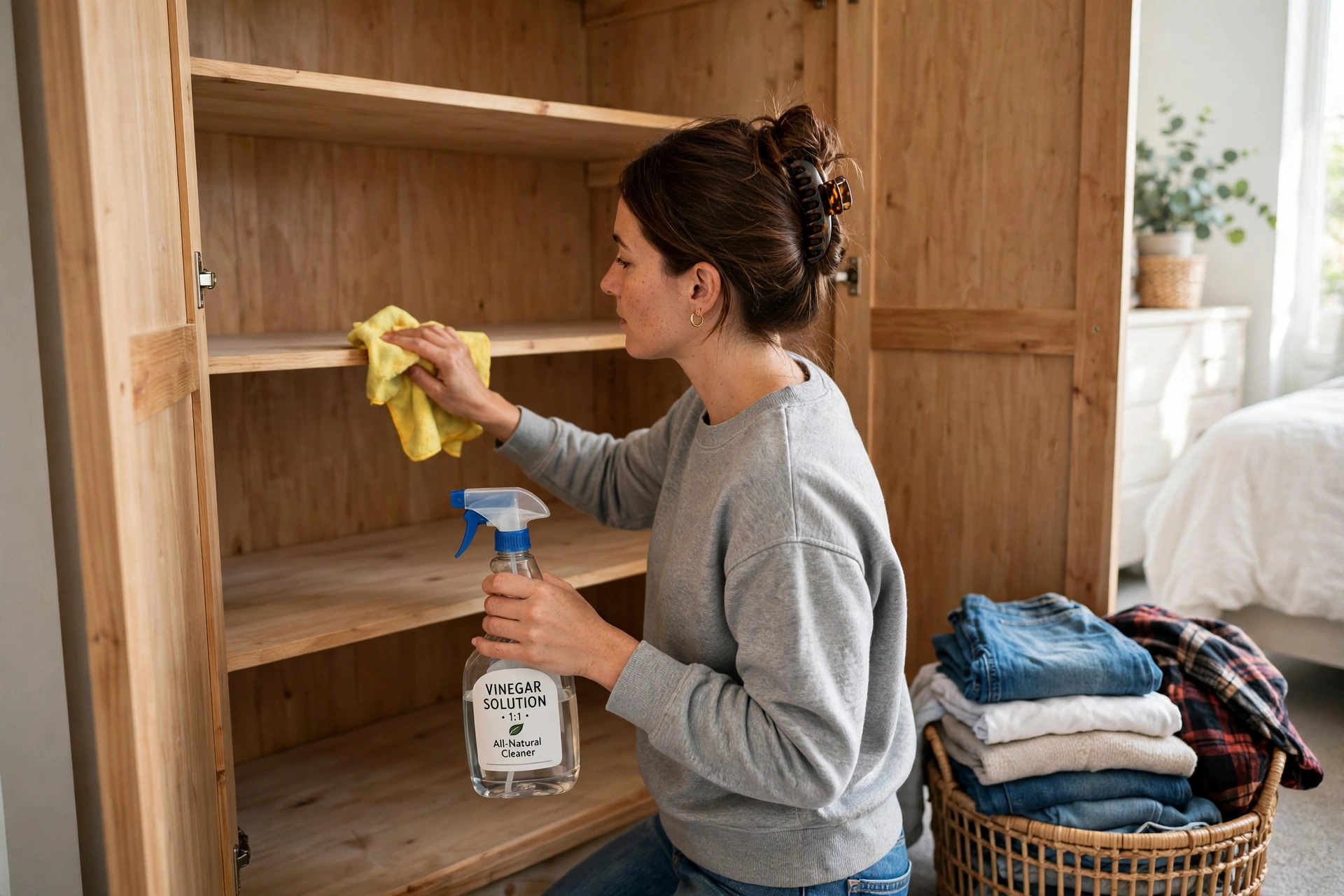
Once the closet is empty and dry, clean it. White vinegar is one of the best tools for this job: it is a mild acid that kills many mould and mildew spores and neutralises odours rather than covering them up.
- Mix equal parts white vinegar and water in a spray bottle.
- Spray the shelves, walls, floor, and the inside of the doors.
- Wipe everything down with a clean cloth, paying extra attention to corners and the back wall.
- Let the surfaces dry completely before putting anything back. The vinegar smell fades as it dries — usually within an hour or two.
If you can see dark spots or patches on the wall, that is likely mould. For small patches, the vinegar solution above is usually enough, but wear gloves and a mask while you clean. If the mould covers a large area or keeps returning, it is worth having a professional look at the source of the moisture, because the problem may be a leak behind the wall.
Method 3: Use Baking Soda to Absorb Lingering Odours
After cleaning, baking soda helps pull out whatever smell is left in the air and in fabrics. It is cheap, safe, and does not add any scent of its own.
- Place an open bowl or small box of baking soda on a shelf and leave it there. Replace it every month or two.
- For clothes that still smell musty, sprinkle baking soda over them, leave it for a few hours, then shake or brush it off before washing.
- Adding half a cup of baking soda to the wash can help remove musty smell from clothes that picked it up in the closet.
Method 4: Wash or Air the Clothes Before They Go Back
The closet is only half the problem — clothes that have been sitting in a musty closet carry the smell too. Wash anything that smells stale, using warm water if the fabric allows, and dry it fully in fresh air or sunlight before it goes back. Sunlight is a natural deodoriser and helps kill the bacteria behind the smell.
For white clothes that have picked up a grey or yellow tint along with the smell, our guide on how to keep white clothes white has simple methods that work without harsh bleach.
Never put clothes away while they are still even slightly damp. If you are unsure, leave them out for an extra hour — it is always better than trapping moisture back in the closet.
Method 5: Keep Moisture Out for Good
Removing the smell is only half the job. To stop it from coming back, keep the closet dry:
- Use moisture absorbers. Small tubs of silica gel, calcium chloride, or activated charcoal placed on a shelf pull moisture from the air. Replace or recharge them as the instructions say.
- Leave a gap for air. Do not pack the closet so tightly that air cannot move between the clothes. A little space makes a big difference.
- Open the doors regularly. Even leaving the doors open for an hour a few times a week helps the space dry out.
- Fix the source. If the wall behind the closet feels damp, or the smell returns within days of cleaning, check for a leak, poor insulation, or condensation on an outside wall. No cleaning routine can beat a constant source of water.
Method 6: Add a Natural Freshener
Once the closet is clean and dry, a light natural scent keeps it pleasant. Cedar blocks or cedar sachets are a classic choice — they smell fresh and help keep moths away. Small cloth bags filled with dried lavender, or a few drops of essential oil on a cotton ball placed in a corner, work well too. Avoid strong plug-in air fresheners inside a small closet; they only mask problems and can be overpowering in such a small space.
Common Mistakes to Avoid
- Spraying air freshener and stopping there. It covers the smell for a few hours and does nothing about the moisture causing it.
- Putting damp clothes straight back in. This restarts the whole cycle within days.
- Ignoring visible mould. A small patch is easy to clean; a patch left alone spreads and smells worse.
- Sealing the closet tighter. Some people add draught excluders to closet doors, but that traps moisture in. Airflow is your friend here.
How to Get Rid of Musty Smell in Room Spaces Too
The same ideas work beyond the closet. If the musty smell has spread into the bedroom, the steps for how to get rid of musty smell in room spaces are the same: find the damp source, ventilate, clean with vinegar, and use baking soda or charcoal to absorb what remains. The routine answers the broader question of how to get rid of closet smell, too — dry, clean, absorb, and ventilate.
Conclusion
Learning how to get rid of musty smell in closet spaces comes down to three things: dry the space out, clean it with vinegar, and keep moisture from building up again with baking soda, airflow, and a moisture absorber. The work takes an afternoon, the ingredients cost very little, and the result is a closet that smells fresh every time you open it. Do it once properly, keep the doors open now and then, and the musty smell should not come back.
