
Introduction
If you want to know how to clean a microwave with lemon, the good news is that you do not need strong chemical sprays or a lot of scrubbing. A lemon, a bowl of water and a few minutes of steam can loosen dried-on food, cut through light grease and leave the inside smelling fresh. It is one of the simplest natural cleaning methods in the kitchen, and it works on the splatters that build up from reheating soup, warming leftovers and the occasional exploding pasta sauce.
This guide explains how to clean a microwave with lemon step by step, how to deal with a very dirty microwave, and how to deodorize a microwave that still smells of burnt food afterwards. You will also learn what to avoid, so you do not damage the inside of the appliance.
Why Lemon Works for Cleaning a Microwave
Lemon works for two reasons. First, the steam from the heated water softens dried food and grease, so it wipes away instead of needing to be scraped off. Second, lemon juice is mildly acidic, which helps break down light grease and mineral marks, and its fresh scent neutralises cooking smells rather than covering them up.
That combination is why this method is so popular. It uses no harsh chemicals, so there is nothing to worry about rinsing out of a place where food is heated. It is also cheap: one lemon is usually enough for a full clean.
What You Need
You do not need special equipment. Gather these before you start:
- One fresh lemon, cut in half
- A microwave-safe bowl or jug
- About 250 ml (one cup) of water
- A clean cloth or sponge
- A dry tea towel
That is all. If your microwave is very dirty, you may also want a little washing-up liquid for the turntable, but the lemon steam does most of the work on the inside walls.
How to Clean a Microwave with Lemon, Step by Step
Follow these steps and the whole job takes about ten minutes, most of which is waiting for the steam to work.
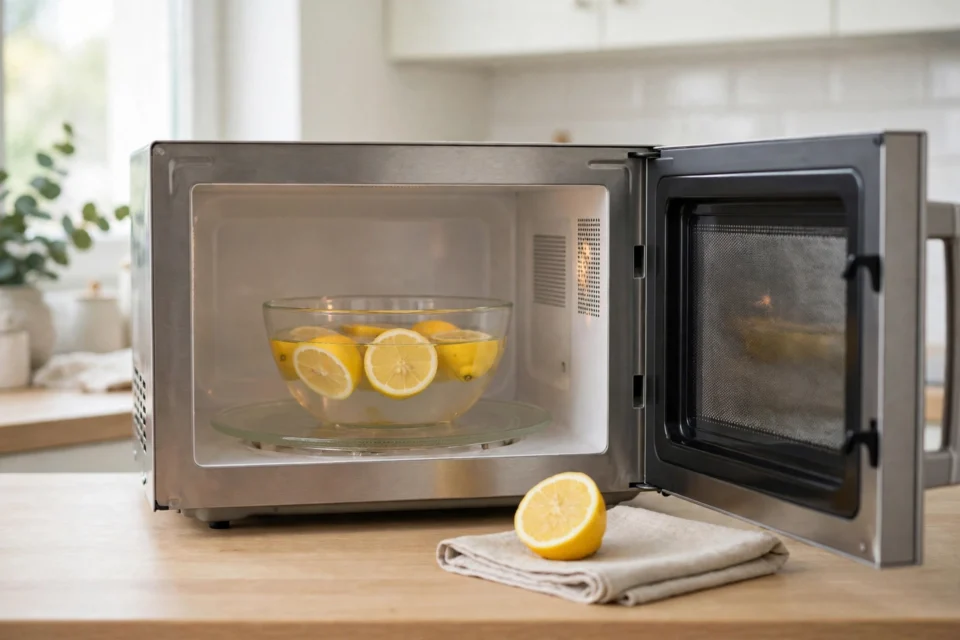
- Squeeze the lemon halves into the bowl of water, then drop the squeezed halves into the bowl as well.
- Place the bowl in the centre of the microwave and heat it on full power for three to five minutes, until the water is steaming well and the inside of the door looks foggy.
- Leave the door closed for another two to three minutes after the microwave stops. This is the important part: the trapped steam keeps working on the dried-on food.
- Carefully remove the bowl. It will be hot, so use an oven glove or a thick cloth.
- Wipe the inside walls, ceiling and floor with a damp cloth. Most splatters should come away easily now.
- Lift out the turntable and wash it separately in warm soapy water, then dry it and put it back.
- Wipe the inside once more with a clean damp cloth, then dry it with a tea towel so no water marks are left.
When you clean a microwave with lemon juice and steam like this, you will usually find that even marks you thought were permanent soften enough to wipe away. If a spot is stubborn, dip your cloth in the warm lemon water and hold it against the mark for a minute before wiping again.
How to Clean a Very Dirty Microwave
If the microwave has not been cleaned for a while, one round of steam may not be enough. Do not reach for an abrasive scourer, which can scratch the inside surface. Instead, repeat the lemon steam step a second time, and give the steam a full five minutes of sitting time with the door closed.
For thick, baked-on patches, squeeze a little extra lemon juice onto a cloth and press it against the patch for a few minutes before wiping. The acid in the juice helps loosen the residue, and the warmth keeps it working. Two gentle rounds almost always beat one aggressive scrub.
How to Deodorize a Microwave and Remove Burnt Smells
Cleaning and deodorising are not quite the same job. After you wipe the microwave clean, it may still smell of burnt popcorn or strong spices. To deodorize a microwave, heat a fresh bowl of water with a few lemon slices for two minutes and leave it to stand with the door closed for five minutes. The steam carries the lemon scent into every corner.
For a stubborn burnt smell, wipe the inside with a cloth dampened with the lemon water, then leave the door open for half an hour so fresh air can circulate. Avoid spraying air freshener inside the microwave: it only masks the smell, and you do not want its chemicals near food.
Cleaning the Door, Turntable and Outside
The glass door collects steam marks and fingerprints. Wipe the inside of the door with the damp cloth while it is still warm, then dry it to stop streaks. Clean the outside with a cloth dampened in warm soapy water, including the handle and the control panel. Do not spray cleaner directly onto the buttons; spray it onto the cloth first.
The turntable and its support ring can go in warm soapy water. If the ring has dried food on it, leave it to soak for a few minutes. Dry both parts properly before putting them back, or the microwave will rattle next time it runs.
Mistakes to Avoid
A few common mistakes make this job harder than it needs to be:
- Do not heat the lemon water for too long. Five minutes is enough; longer can make the bowl boil over and create a new mess.
- Do not open the door straight away. The steam needs those extra minutes to soften the grime.
- Do not use a metal scourer or a harsh oven cleaner inside the microwave. Scratches and chemical residues are worse than the dirt you started with.
- Do not forget the ceiling. Splatters often land up there, and they are easy to miss.
- Do not put the hot bowl down on a cold worktop without a mat, especially if the worktop is stone.
How Often Should You Clean Your Microwave?
A quick wipe once a week keeps the job easy. If you reheat saucy food often, wipe the inside with a damp cloth after cooking, while the microwave is still warm. A full lemon steam clean once every two to four weeks is enough for most households, and more often if the microwave gets heavy daily use.
Little and often is the real secret. A microwave that is wiped regularly never builds up the baked-on layer that needs a deep clean.
Conclusion
Learning how to clean a microwave with lemon is worth the ten minutes it takes. A bowl of water, a cut lemon and a few minutes of steam will loosen grime, cut light grease and leave the microwave smelling fresh, without any harsh chemicals. Do it regularly, wipe up splatters while they are fresh, and the job stays easy every time.
If you enjoy simple natural cleaning methods, you may also like our guide on how to clean a coffee maker without vinegar, which uses a similarly gentle approach for another kitchen appliance that works hard every day.
