
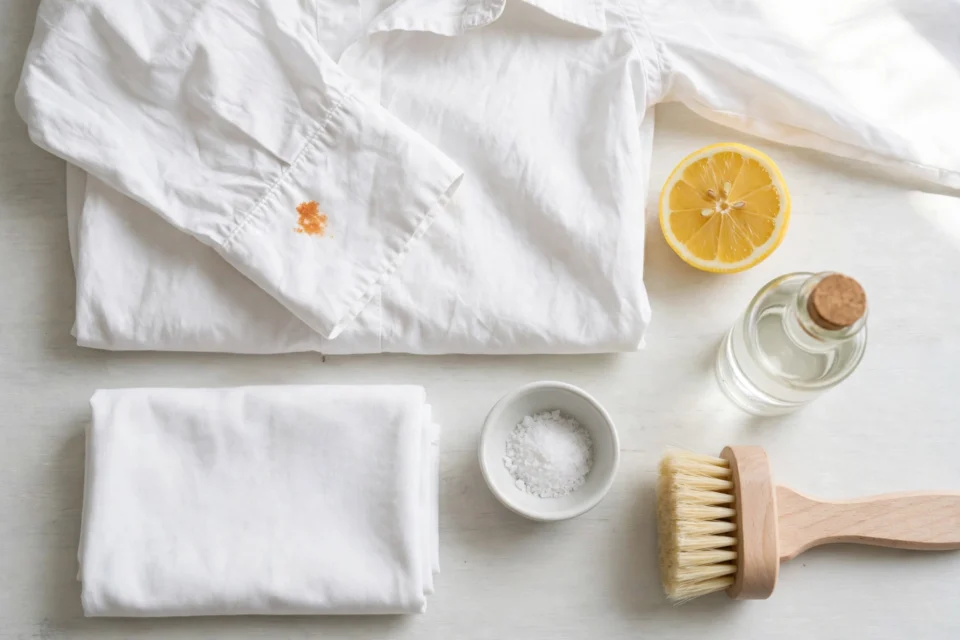
A rust mark looks small, but it behaves nothing like a food stain. Scrub it, soak it in detergent, run it through the wash twice — the mark will still be there, because rust is not dirt. To remove rust stains from clothes, you need acid, not soap — and one common laundry product, chlorine bleach, will make the stain permanent. Here are four methods that work, in the order to try them.
Why Rust Stains Need Acid, Not Soap
Rust is iron oxide, formed when iron meets oxygen and moisture. A rusty nail in a pocket, a metal button, a zip, a chipped washing machine drum, or iron in tap water can all leave that orange-brown mark.
Ordinary detergent lifts grease and organic dirt, but it cannot dissolve a mineral. Only an acid can break the bonds in iron oxide and turn it into a salt that rinses away. That is why lemon juice, white vinegar, and cream of tartar work on rust while soap does not.
Two rules apply before you start. First, never use chlorine bleach on a rust stain — it reacts with iron oxide and locks the discolouration into the fibres, often turning it darker. Second, never use hot water or a hot dryer until the stain is fully gone, because heat sets rust into fabric. A guide on chocolate stains works with cold water and dish soap, but rust needs a completely different approach.
What You Will Need
Most rust stains can be treated with kitchen items. Gather these first so the stain stays damp while you work: fresh lemons, table salt, white vinegar (5% acidity), cream of tartar, a soft brush or old toothbrush, clean white cloths, rubber gloves, and a fabric rust remover for stubborn stains.
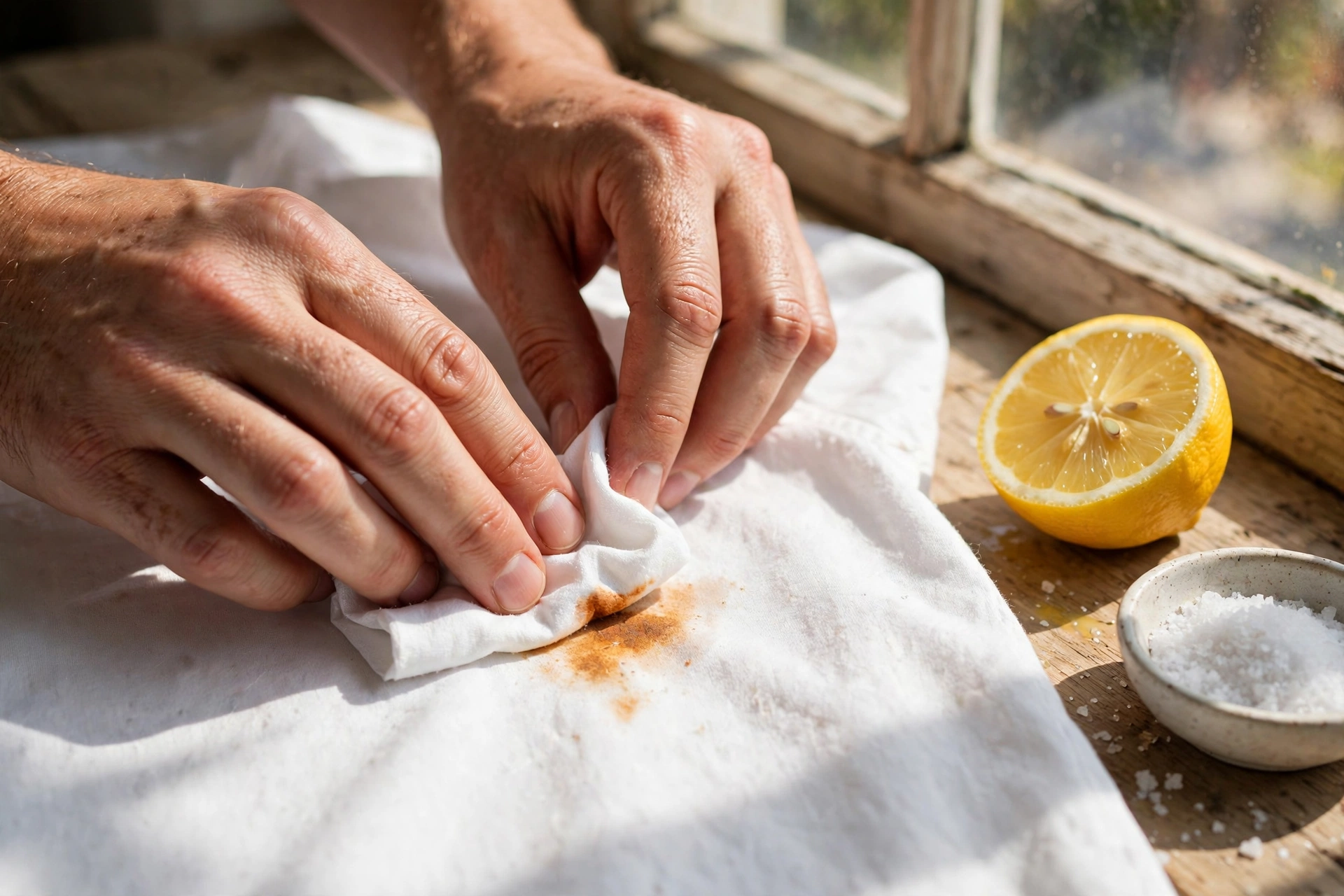
Always read the care label first — dry-clean-only garments, silk, and wool need a professional. Test your treatment on a hidden seam and wait ten minutes; if the colour changes, try a milder method.
Method 1: Lemon Juice and Salt in Sunlight
This classic first method works best on fresh stains on white or colourfast cotton and linen: citric acid dissolves the iron oxide, salt adds mild abrasion, and sunlight speeds the reaction.
Time needed: 30 to 60 minutes (up to 2 hours for a deeper stain).
- Lay the garment flat on a towel in direct sunlight.
- Squeeze fresh lemon juice over the stain until the area is fully wet.
- Sprinkle table salt generously over the wet area.
- Leave it in the sun for 30 to 60 minutes, reapplying lemon juice if the fabric dries out.
- Rinse with cold water, then wash as usual.
Check the stain before drying. If a faint mark remains, repeat once before trying a stronger acid. Lemon juice can lighten dyes, so this suits white and light fabrics best.
Method 2: White Vinegar Soak
Vinegar suits larger stains, several marks at once, or a stain the lemon method only faded. Acetic acid works like citric acid, and a soak keeps the fabric wet longer so the acid reaches rust settled deeper into the fibres.
Time needed: 30 minutes to 2 hours (overnight for stubborn marks).
- Pour undiluted white vinegar onto the stain and leave it for 30 minutes.
- For a larger or older mark, soak the stained area in a bowl of vinegar for 1 to 2 hours.
- Blot with a clean white cloth, from the outside inward. Do not rub.
- Rinse with cold water and wash as usual.
Vinegar is milder on dye than lemon and sunlight, so it is often safer for coloured clothes.
Method 3: Cream of Tartar Paste
Cream of tartar (potassium bitartrate) is a gentle acid for delicate fabrics and light colours where lemon juice feels too harsh. Mix it with a little hot water to form a thick paste, spread it over the stain, leave it for 1 to 2 hours, then rinse with cold water and wash as usual. It is slower than lemon or vinegar, but it is the kindest home treatment — a good middle step before a commercial product.
Method 4: A Commercial Fabric Rust Remover
When home acids have failed, or the stain is weeks or months old, a commercial fabric rust remover is the next step. Products such as Iron OUT and Carbona Rust Remover dissolve iron oxide chemically. Do not substitute a cleaner made for sinks, tiles, or metal — those can damage fabric.
Time needed: 5 to 30 minutes, following the label.
- Choose a product labelled for clothing and your fabric type.
- Test it on a hidden seam first.
- Apply as directed, wearing gloves in a ventilated area.
- Rinse thoroughly, then wash per the care label.
- Air-dry and inspect before using any heat.
Some fabric rust removers contain strong acids — follow a DANGER or POISON label exactly. If the garment is valuable, dry-clean-only, or heavily stained, a professional cleaner is safer. Never mix a rust remover with bleach, ammonia, vinegar, or any other cleaner.
How to Remove Rust Stains from White Clothes
White cotton is the easiest fabric to rescue, because you can use the strongest home method without worrying about dye. Lemon juice and salt in sunlight is usually enough for a fresh mark. For a stain that has already been washed, start with the vinegar soak, then repeat the lemon treatment if a shadow remains.
White clothes show rust sooner than dark ones, so treat a small spot the same day. Keep treated items out of the dryer until every mark is gone — one hot cycle can set a stain that more treatment would have removed. Our guide on how to keep white clothes white covers the washing habits that stop new marks from forming.
How to Remove Old Rust Stains from Clothes
An old rust stain — one that has sat for weeks, or been washed and dried — is harder because the iron oxide has bonded firmly to the fibres. The approach is the same, but contact times are longer and you may need to combine methods.
Start with a vinegar soak of 2 hours, or overnight for a heavy mark. Rinse, then apply the lemon juice and salt treatment in sunlight. If the stain is still visible, move to a commercial fabric rust remover. Repeat once more if needed, but stop if the fabric feels thin or the colour fades — a professional cleaner has better tools than a home treatment.
On coloured fabric, test every step on a hidden seam and prefer vinegar over lemon and sunlight, which can bleach dye.
What NOT to Do
Avoid these mistakes:
- Never use chlorine bleach. It reacts with iron oxide and sets the stain permanently, often making it darker.
- Never use hot water first. Rinse and wash in cold water until the stain is gone.
- Never tumble dry before checking. Heat sets the stain. Air-dry and inspect in good light first.
- Never rub hard. Rubbing spreads the stain and pushes iron deeper into the weave. Blot instead.
- Never use a surface rust cleaner on clothes. Only products labelled for fabric belong on a garment.
- Never skip the patch test. Ten minutes on a hidden seam can save the garment.
The same no-heat rule applies to most stains. Our guides on blood stains and sweat stains on white shirts both stress cold water first.
How to Remove Rust Stains from Carpet
Rust reaches carpet from metal furniture legs, tools, or damp items left on the floor. Blot the area with a cloth dampened with white vinegar, sprinkle a little salt over it, and leave it for 30 minutes. Blot again with a clean, damp cloth, and repeat if the colour is fading. Rinse by blotting with plain cold water — never pour liquid freely onto carpet, since a soaked underlay can grow mould. Test a hidden corner first on wool or light carpet.
How to Prevent Rust Stains
Prevention is easier than removal. Empty pockets before washing — nails, screws, pins, and coins rust fast in a damp pocket. Check metal buttons, zips, and rivets, since a rusty fastener marks the fabric around it every wash. Do not leave damp clothes in the machine, where a wet load against a chipped drum picks up rust overnight. Inspect the drum and door seal for rust spots. Store tools and metal hangers away from laundry. If tap water leaves orange marks, test the water for iron.
A quick pocket check before every wash prevents most rust stains — the same habit that stops grass stains from setting in after a day outdoors.
Frequently Asked Questions
How to remove rust stains from clothes?
Start with lemon juice and salt in sunlight for a fresh stain on white or colourfast cotton, or a vinegar soak for a larger or coloured item. For delicates, use a cream of tartar paste. For an old or stubborn stain, finish with a commercial fabric rust remover. Never use bleach or hot water first.
Can rust stains be removed from clothes completely?
Yes, in most cases. Fresh rust on white or colourfast cotton usually comes out fully with lemon juice and salt or a vinegar soak. Old stains are harder, but a commercial fabric rust remover often finishes the job.
What removes rust stains from clothes fastest?
Lemon juice and salt in sunlight is fastest for a fresh stain, usually 30 to 60 minutes. For a larger or older stain, a vinegar soak of 1 to 2 hours works better. A commercial fabric rust remover works in 5 to 30 minutes, but try it last, not first.
Does vinegar remove rust from clothes?
Yes. White vinegar contains acetic acid, which dissolves iron oxide in the same way lemon juice does. Pour it undiluted onto the stain, leave it for 30 minutes, or soak the area for 1 to 2 hours for a deeper mark. Rinse with cold water and wash as usual.
Can I use bleach on a rust stain?
No. Chlorine bleach reacts with iron oxide and locks the stain into the fabric permanently. If bleach has already been applied, do not dry the garment — take it to a professional cleaner.
Conclusion
If you want to know how to get rust stains out of clothes, start with the gentlest acid that fits the fabric: lemon juice and salt in sunlight for fresh marks on white cotton, a vinegar soak for larger or coloured items, and cream of tartar paste for delicates. Save a commercial rust remover for old or stubborn stains. Skip the bleach, skip the hot water, and check the stain before anything goes near the dryer. Treated the right way, you can remove rust stains from clothes completely.
