
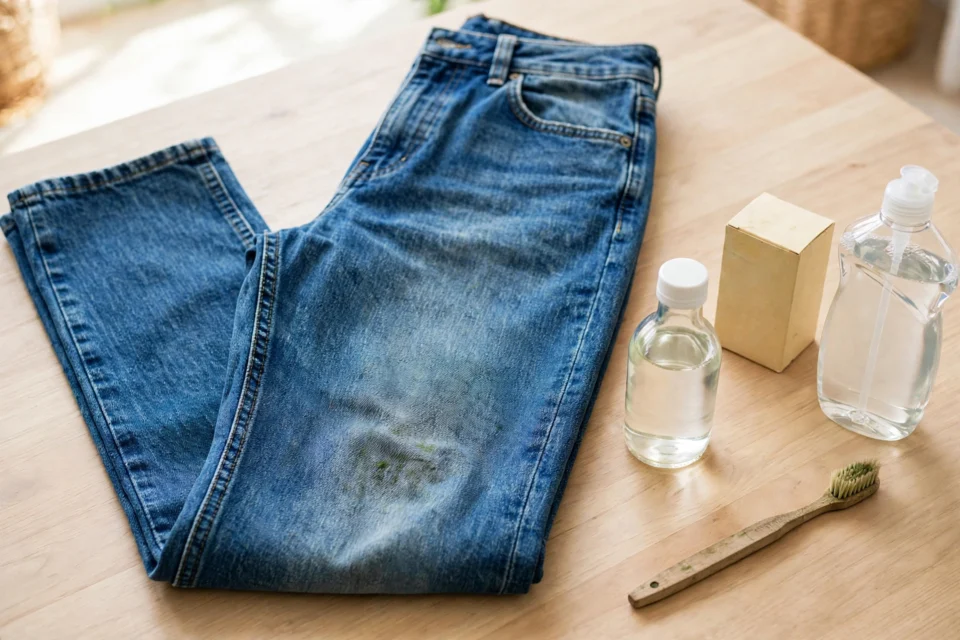
A slide tackle on the football field, an afternoon picnic on the lawn, or kids playing in the garden — grass stains show up fast, and the bright green mark they leave looks permanent. The good news is that learning how to remove grass stains from clothes is easier than it looks. Grass stains are mostly chlorophyll, the green pigment in plants, mixed with a little plant protein, and ordinary household items break them down well. Here are the simple methods that actually work, using things you probably already have at home.
1. Act Fast and Scrape Off the Loose Grass
The first minutes matter most with a grass stain. As soon as you can, brush or scrape off any loose grass and dried mud from the fabric with your fingers or a blunt knife. Work from the outside of the stain towards the middle so it does not spread.
Do not put a grass-stained garment straight into the dryer. Heat sets the stain, and once it has been through a hot dryer it becomes far harder to remove. Treat the stain first, wash it, and only dry it once the mark is gone. This one habit saves more clothes than any stain remover.
2. Pre-Treat the Stain with Dish Soap or Laundry Detergent
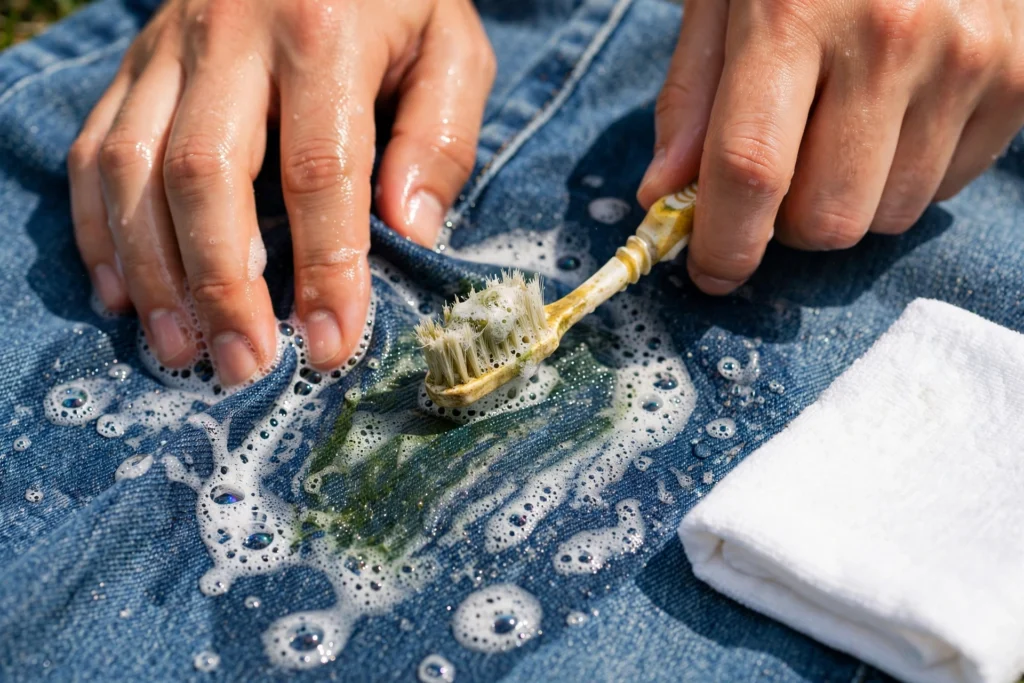
Dish soap is the simplest first step for a fresh grass stain. Put a small drop of plain dish soap or liquid laundry detergent directly onto the stain and gently work it in with your fingers or a soft toothbrush. Leave it for 10 to 15 minutes so it can loosen the green pigment.
Rinse the area with cool water and check the stain. For a light, fresh mark, this step alone is often enough. If a green shadow remains, move on to one of the methods below before washing. Like oil stains, grass stains respond best when the stain is loosened before the wash, not during it.
3. Use White Vinegar for White Clothes
White vinegar is one of the best options when you need to remove grass stains from white clothes. Mix one part white vinegar with two parts cool water and soak the stained area for about 30 minutes. The mild acid in the vinegar helps dissolve the chlorophyll without harming white cotton or linen.
After soaking, rub the stain gently with a soft brush, then wash as normal. Do not use vinegar on silk or wool, and never mix vinegar with bleach. For white shirts and school uniforms, this is often the method that finally lifts the last trace of green.
4. Make a Baking Soda Paste for Dried Stains
For a stain that has already dried, a baking soda paste works well. Mix baking soda with a little water until it forms a thick paste, spread it over the stain, and leave it for 30 minutes. The paste draws the pigment out of the fibres as it dries.
Brush the dried paste off, then rinse the area with cool water. Repeat once if the stain is still visible. Baking soda is gentle enough for most fabrics, including coloured cotton, and it also helps with the musty smell that sometimes comes with a muddy grass stain.
5. Try Rubbing Alcohol on Stubborn Marks
If the green mark is still there after soap and vinegar, rubbing alcohol (or clear hand sanitiser, which is mostly alcohol) is the next step. Dab a little onto a clean white cloth and press it onto the stain — do not pour it straight onto coloured fabric without testing a hidden spot first, as alcohol can affect some dyes.
Blot, lift, and repeat with a clean part of the cloth until no more green transfers. Then rinse and wash the garment as normal. This method is especially useful for older stains that have already been washed once without treatment.
6. How to Remove Grass Stains from Jeans
Denim can take a firmer approach than delicate fabrics, which is handy because jeans pick up the worst grass stains. To remove grass stains from jeans, start with dish soap worked in with an old toothbrush, using small circular movements. The brush gets into the weave of the denim where the pigment hides.
For a stubborn mark on jeans, follow with the vinegar soak or the baking soda paste, then wash in warm water. Check the stain before drying — if any green remains, repeat the treatment rather than putting the jeans in the dryer. Dark denim should be treated on the stained side only, and always test the vinegar on an inside seam first.
7. How to Get Grass Stains Out of Shoes
Grass stains on trainers and canvas shoes need the same ideas in a smaller package. To get grass stains out of shoes, remove the laces first and work on them separately. Scrub the stained canvas with a toothbrush and a little dish soap mixed with water, then wipe with a damp cloth.
For white canvas shoes, a baking soda paste left for 20 minutes before scrubbing works well. Let the shoes air-dry away from direct heat — never put them in a hot dryer. Leather shoes should be wiped with a damp cloth and a drop of mild soap only, since vinegar and alcohol can damage the finish.
8. Wash in the Warmest Water the Fabric Allows
Once you have pre-treated the stain, wash the garment in the warmest water that is safe for the fabric. Check the care label first: cotton and linen usually handle warm water well, while wool, silk and delicate synthetics need cooler water.
Use your normal laundry detergent and wash the item on its own or with similar colours. When the wash finishes, check the stain in good light before you put the garment in the dryer. If any green remains, repeat the pre-treatment and wash again — one extra round now is far easier than a heat-set stain later.
9. What Not to Do with Grass Stains
A few common mistakes make grass stains worse. Do not use chlorine bleach on coloured clothes — it will remove the colour along with the stain. Do not use hot water on a fresh stain before treating it, as heat helps the pigment bind to the fibres. And never mix vinegar or any acid with bleach, since that combination creates harmful fumes.
Also, avoid scrubbing delicate fabrics with a stiff brush. A soft toothbrush is enough, and pressing too hard can damage the weave or spread the stain. Gentle, repeated treatment beats one aggressive attempt every time.
Final Thoughts
Grass stains look worse than they are. With a quick pre-treatment, a little dish soap or vinegar, and a normal wash, most grass-stained clothes come out clean — even jeans and white shirts that seemed ruined. The real secret is timing: treat the stain before the wash, check it before the dryer, and repeat once if needed. Keep an old toothbrush and a bottle of white vinegar in the laundry cupboard, and the next slide tackle will not cost you a favourite pair of jeans.
