
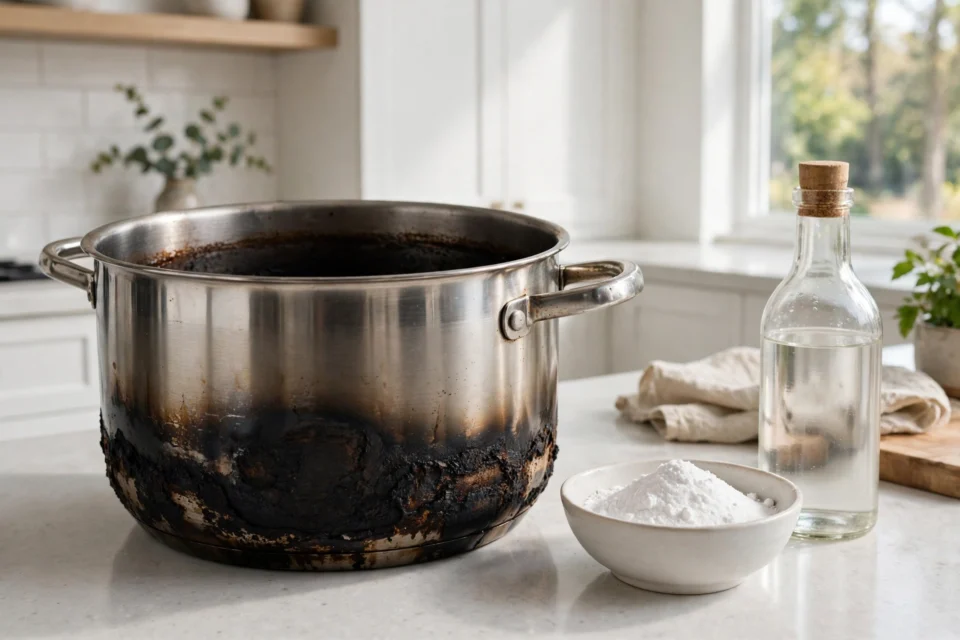
A burnt pot is one of those kitchen accidents that feels like a disaster in the moment. You turn away for a minute, the milk boils over or the sauce catches, and suddenly the bottom of your favourite pot is covered in a black, stubborn layer that no amount of normal washing seems to shift. The good news is that you do not need harsh chemicals or a new pot. Learning how to clean a burnt pot is mostly about patience and using the right household ingredients in the right order.
Most burnt-on food can be removed with baking soda, vinegar, dish soap and hot water. The trick is to soften the burnt layer first, then lift it gently, instead of attacking it with a metal scourer that can scratch the surface. The methods below work on stainless steel, enamel and most non-stick pots, with a few important differences noted for each type.
1. Start With a Hot Soak
Before you scrub anything, fill the burnt pot with hot water and add a squirt of dish soap. Put it back on the stove and bring the water to a gentle simmer for about ten minutes, then turn off the heat and let it sit until the water is cool enough to touch.
This hot soak loosens the burnt layer from underneath. You will often find that a good part of the black crust lifts away on its own, or comes off easily with a wooden spoon. This hot soak is also the gentlest way to get burnt food off a pan without scratching it. If the burn is light, this step alone may be enough, followed by a normal wash.
2. The Baking Soda Method
Baking soda is the most reliable way to clean a burnt pot, and it works on almost every type of cookware. If you want to know how to clean a burnt pot with baking soda, this is the method to start with. Sprinkle a generous layer of baking soda over the burnt area, add just enough water to make a thick paste, and leave it for at least 30 minutes. For a badly burnt pot, leave it overnight.
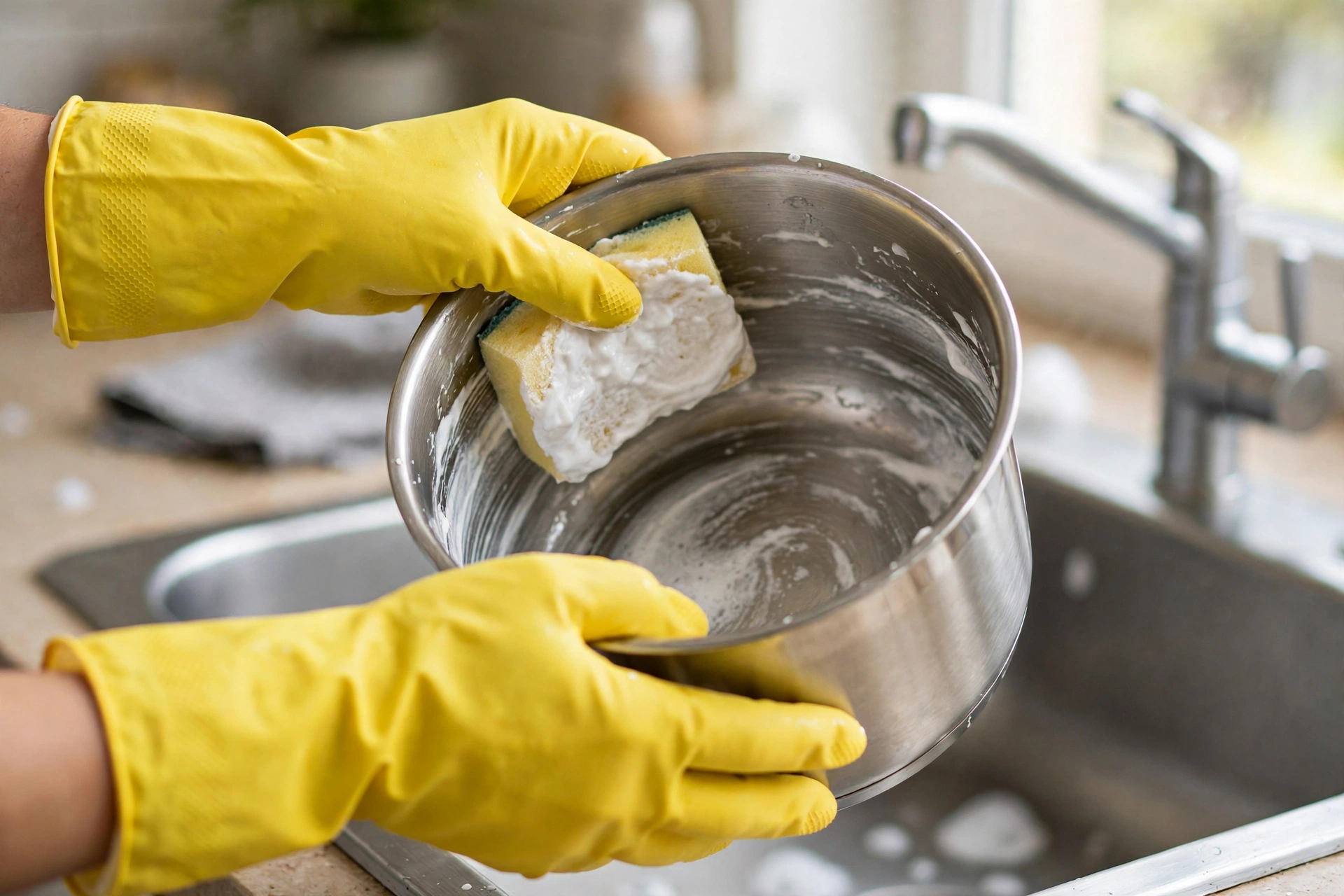
After soaking, scrub gently with a soft sponge or a non-scratch scouring pad. The paste acts as a mild abrasive that lifts the carbonised food without gouging the metal. Rinse well and repeat if a faint stain remains. This is the method to try first, because it is cheap, safe and surprisingly effective.
3. Baking Soda and Vinegar Together
For a tougher burn, combine baking soda with vinegar. First, pour a cup of vinegar into the pot and add enough water to cover the burnt area. Bring the mixture to a boil on the stove, then take the pot off the heat and stir in two tablespoons of baking soda. It will fizz loudly, which is normal.
Let the mixture sit for 15 to 20 minutes, then pour it out and scrub the loosened residue with a sponge. The fizzing reaction helps break the bond between the burnt food and the pot, and the vinegar cuts through grease at the same time. Learning how to clean a burnt pan with baking soda is worth the small effort, because this is one of the best ways to clean a burnt pan when the stain has been there for a while. If your kettle has the same problem, see our guide on how to descale a kettle with vinegar.
4. Boil Water With Dishwasher Tablets
If baking soda has not fully worked, a dishwasher tablet can help. Fill the pot with hot water, drop in one dishwasher tablet, and leave it to soak for a few hours or overnight. The tablet contains enzymes and cleaning agents designed to break down burnt-on food.
This method is very effective on stainless steel pots. Rinse the pot thoroughly afterwards with hot water and wash it with normal dish soap before using it for cooking again.
5. How to Clean a Burnt Stainless Steel Pot
Stainless steel is tough, so it can handle a little more effort than other materials. After the baking soda soak, you can use a paste of baking soda and water with a non-scratch pad, working in small circles. For a cloudy or rainbow-coloured stain left behind after the burn, rub the area with a little white vinegar on a soft cloth, then rinse and dry.
Avoid steel wool on stainless steel if you can, because it can leave fine scratches that make food stick more easily next time. A plastic scraper or the edge of a wooden spoon is safer for lifting the last stubborn flakes.
6. What to Do With a Burnt Non-Stick Pot
Non-stick pots need a gentler touch. Never use steel wool, metal scourers or harsh oven cleaner on them, because the coating is easily damaged. Instead, simmer soapy water in the pot for ten minutes, let it cool, and wipe the burnt residue away with a soft sponge.
If the coating is already peeling, bubbling or flaking after the burn, it is safer to replace the pot. A damaged non-stick surface can release flakes into food and will keep catching and burning.
7. Remove Burnt Food From an Enamel Pot
Enamel pots, such as Dutch ovens, can be soaked in the same baking soda paste as stainless steel. For very stubborn marks, fill the pot with water, add two tablespoons of baking soda, and simmer for ten minutes before scrubbing with a soft sponge.
Do not use abrasive pads on enamel, because they can chip the coating. If a stain remains, a paste of baking soda left overnight usually finishes the job.
8. Prevent Burns Next Time
Once your pot is clean, a few small habits can stop it happening again. Use medium heat instead of high heat for sauces, milk and sugary foods, which catch easily. Stir thick foods regularly, and never leave a pot unattended on a hot burner. A thin layer of oil or butter before cooking also helps food release more easily.
If something does start to stick, add a splash of water and lower the heat straight away. Catching a burn early makes cleaning far easier than dealing with a fully blackened base later.
Frequently Asked Questions
Can I use oven cleaner on a burnt pot?
It is best not to. Oven cleaner is very harsh, can damage cookware surfaces, and leaves residues that are hard to remove completely. Baking soda and vinegar are safer and usually just as effective.
How long should I soak a burnt pot?
At least 30 minutes for a light burn, and overnight for a heavy one. The longer the burnt layer stays wet and soft, the less scrubbing you will need.
Does vinegar damage stainless steel?
No, not when used for cleaning and rinsed off afterwards. White vinegar is safe on stainless steel and even helps remove the cloudy stains that burns can leave behind.
What if the pot still smells burnt after cleaning?
Boil a mixture of equal parts water and vinegar in the pot for a few minutes, then wash it normally. This usually removes the lingering smell.
Conclusion
A burnt pot does not have to be thrown away. With a hot soak, a baking soda paste and a little patience, most burnt pots come back to life in under an hour of mostly hands-off time. Start with the gentlest method, work your way up only if you need to, and match your approach to the material of your pot. Once it is clean, lower heat and regular stirring will keep it that way.
