
Introduction
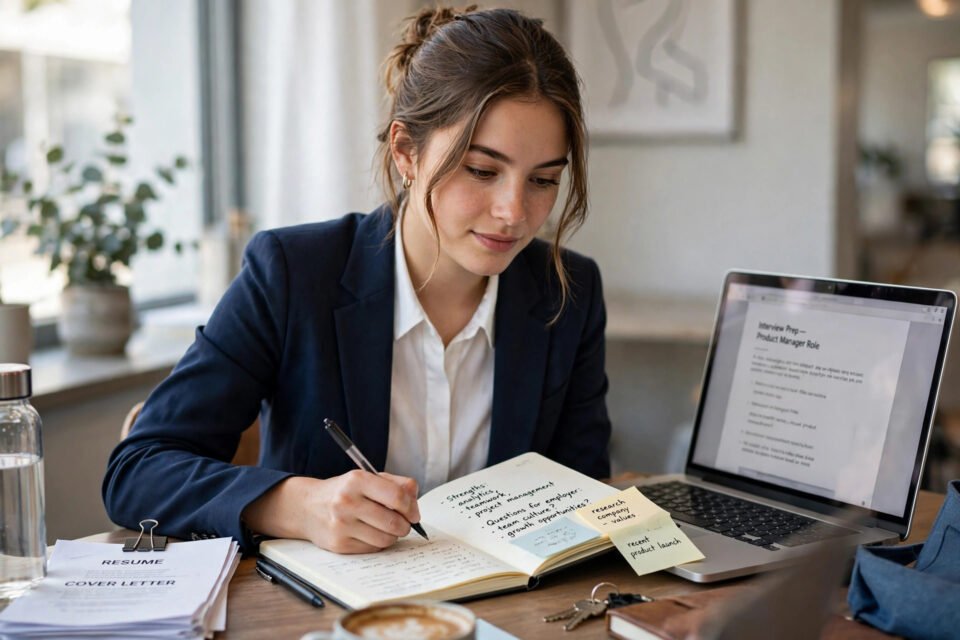
A job interview can feel stressful, especially when it is your first one. You may worry about what to say, what to wear, or whether you will freeze on a difficult question. Learning how to prepare for a job interview for beginners is not about memorising perfect answers. It is about knowing the job, knowing your own strengths, and practising enough to feel calm and confident on the day.
Good preparation does not take weeks. With a simple plan, a few hours spread over two or three days is usually enough. This guide walks you through job interview tips for beginners, from research and practice to the interview itself and what to do afterwards.
Start With Research, Not Guesswork
Before you practise any answers, spend time learning about the employer. Visit the company’s website and read what it does, who its customers are, and what values it talks about. Check the job description again and highlight the main skills it asks for. These are the skills the interviewer is most likely to ask about.
Try to answer three simple questions before the interview:
- What does this company do, in one or two sentences?
- What does this role involve day to day?
- Which of my skills and experiences match this role best?
You do not need to know everything about the company. Showing that you understand the role and have thought about how you can help is far more impressive than repeating facts from its homepage.
If you are still building your first application, our guide on how to write a CV with no experience explains how school projects, volunteering, and part-time work can show employers what you can do — the same examples will help you in an interview.
Practise Common Interview Questions and Answers
Most beginner interviews include a small set of common interview questions and answers. Practise these out loud, not just in your head, so the words feel natural when you say them.
Tell me about yourself. Keep this short — about one minute. Mention what you studied or what work you have done, one or two strengths that fit the job, and why you are interested in this role. Avoid telling your whole life story.
Why do you want this job? Connect your answer to the role itself, not just to needing a job. Mention something specific you like about the work, the company, or what you hope to learn.
What are your strengths? Pick two strengths that match the job description, and give a short example for each. For example, if you say you are organised, describe a project or task where you planned your time well.
What is a weakness? Choose a real but manageable weakness, and explain what you are doing to improve it. Avoid answers that sound like hidden strengths, such as claiming to be a perfectionist.
Why should we hire you? Summarise, in two or three sentences, how your skills and attitude fit the role, and show enthusiasm for learning and doing the work well.
Practise with a friend or family member if you can. Ask them to listen for filler words, unclear answers, and answers that run too long. Two or three practice rounds are usually enough — over-rehearsing can make you sound stiff.
Use an Interview Preparation Checklist
A simple interview preparation checklist keeps small details from becoming last-minute stress. The day before your interview, check off each item:
- Confirm the time, place, or video link, and plan how you will get there with time to spare
- Choose what to wear to a job interview (see below) and lay it out the night before
- Print or save a copy of your CV, the job description, and any questions you want to ask
- Prepare a pen, notebook, water, and identification if the employer asked for it
- Charge your phone and laptop, and test your camera and microphone for an online interview
- Get a good night’s sleep, and eat before you leave home
Arrive about ten minutes early for an in-person interview, or join a video call about five minutes early. If you are delayed, contact the employer as soon as you can and explain briefly.

What to Wear to a Job Interview
What to wear to a job interview depends on the workplace, but for beginners a simple rule works well: dress slightly smarter than the people who already work there. For most office, shop, and customer-service roles, clean, smart clothes in neutral colours are a safe choice.
Avoid strong perfume or cologne, very casual clothes such as shorts or flip-flops, and anything that distracts from what you are saying. Make sure your clothes are clean and ironed, your shoes are tidy, and your hair is neat. When you feel well presented, it is easier to feel confident too.
If you are unsure about the dress code, it is perfectly fine to ask the employer when they invite you to interview. That question shows care, not weakness.
During the Interview: Simple Habits That Help
On the day, a few calm habits make a real difference. Greet the interviewer politely, make eye contact, and smile. Listen to each question fully before you answer, and do not rush. If you do not understand a question, it is fine to say, “Could you please explain that a little more?” Interviewers expect this, and it is better than guessing.
Use short, clear answers with an example where you can. The STAR method can help for questions about past experience: describe the Situation, the Task you faced, the Action you took, and the Result. Even a school project, a team activity, or a part-time job can provide a good example.
Towards the end, the interviewer will usually ask if you have any questions. Always prepare two or three, such as asking what a typical day looks like, what training is provided, or what the next steps are. Asking questions shows genuine interest in the role.
After the Interview
When the interview ends, thank the interviewer for their time. If you were given a business card or contact details, a short thank-you email on the same day is a polite touch — keep it brief, thank them, and repeat your interest in the role.
Then, write down what went well and what you would improve next time, while it is still fresh. Note any questions that surprised you, so you can practise them for the next interview. Finally, be patient: hiring decisions often take a week or more. If you have not heard back by the date they gave you, a short, polite follow-up message is acceptable.
Common Beginner Mistakes to Avoid
A few mistakes are easy to avoid once you know them. Do not arrive late without warning, speak negatively about a previous employer or teacher, or claim skills you do not have — interviewers can usually tell, and honesty builds trust. Avoid checking your phone during the interview, interrupting the interviewer, or giving one-word answers with no examples. And do not skip preparation because the role feels simple: even a short interview deserves a little research and practice.
Conclusion
Knowing how to prepare for a job interview for beginners comes down to three things: research the job, practise your answers out loud, and use a simple checklist so nothing important is forgotten. You do not need to be perfect — employers hiring beginners expect some nerves, and they are looking for willingness to learn as much as experience.
Start with one practice session today, prepare your questions and outfit the day before, and walk in ready to show what you can do. Every interview, even one that does not lead to a job, makes the next one easier.
