
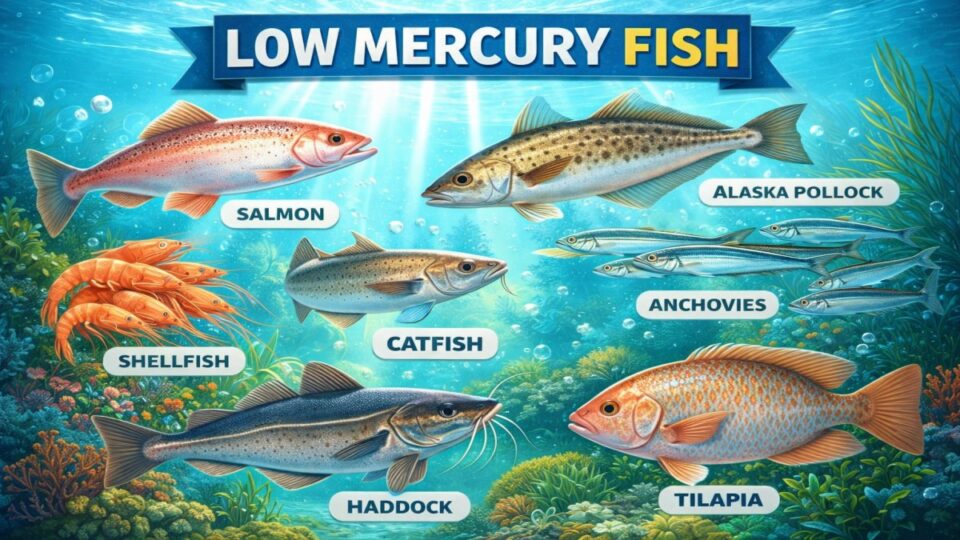
Seafood is often praised as one of the healthiest protein sources you can eat. It’s packed with omega-3 fatty acids, lean protein, vitamins, and minerals. But there’s one concern that makes many people pause at the seafood counter: mercury.
If you’ve ever wondered which fish are safe to eat regularly, especially during pregnancy or for children, you’re in the right place. This guide breaks down everything you need to know about low mercury fish, how to choose them, and why they’re a smart addition to your diet.
What Is Low Mercury Fish?
Mercury is a naturally occurring metal found in the environment. It enters oceans and rivers through industrial pollution, volcanic activity, and other natural processes. Once in water, mercury turns into methylmercury, a toxic form that builds up in fish.
Here’s the key point: the bigger and older the fish, the more mercury it usually contains. That’s because large fish eat smaller fish, accumulating mercury over time — a process called bioaccumulation.
Why Mercury Levels Matter
High levels of mercury can affect the nervous system. It’s especially concerning for:
- Pregnant women
- Breastfeeding mothers
- Young children
- People who eat large amounts of fish
However, avoiding fish entirely isn’t the solution. Fish offers major health benefits. The goal is choosing low mercury fish that are safe for regular consumption.
Benefits of Eating Low Mercury Fish
Choosing low mercury seafood allows you to enjoy all the advantages without the risks.
1. Rich in Omega-3 Fatty Acids
Omega-3s support heart health, reduce inflammation, and promote brain development.
2. High-Quality Protein
Fish provides complete protein with fewer calories and less saturated fat than red meat.
3. Essential Nutrients
Low mercury fish often contain:
- Vitamin D
- Selenium
- Iodine
- B vitamins
It’s like getting a nutritional power-up without unwanted toxins.
Top Low Mercury Fish to Eat
Here’s a list of fish that are generally considered low in mercury and safe for regular consumption:
1. Salmon
Wild or farmed salmon is low in mercury and rich in omega-3s.
2. Sardines
Small, oily fish packed with calcium and healthy fats.
3. Trout
Especially freshwater trout — nutritious and low in contaminants.
4. Anchovies
Tiny fish, minimal mercury, maximum flavor.
5. Atlantic Mackerel
Not to be confused with King Mackerel (which is high in mercury).
6. Herring
Commonly used in European diets, low mercury and heart-healthy.
7. Tilapia
Affordable, widely available, and low in mercury.
8. Pollock
Often used in fish sticks and fast-food fish sandwiches.
9. Cod
Lean, mild flavor, and low mercury content.
10. Shrimp
Technically not fish, but very low in mercury and high in protein.
Fish to Avoid Due to High Mercury
To make smart choices, it’s just as important to know which fish contain high mercury levels:
- Shark
- Swordfish
- King Mackerel
- Tilefish
- Bigeye Tuna
These fish are typically large predators and accumulate more mercury.
How Much Low Mercury Fish Is Safe to Eat?
Most health authorities recommend:
- Adults: 2–3 servings per week (8–12 ounces total)
- Pregnant women: 2–3 servings of low mercury fish weekly
- Children: Smaller portions based on age
One serving is about 4 ounces — roughly the size of your palm.
Eating a variety of low mercury fish reduces exposure risk even further.
Low Mercury Fish for Pregnancy
Pregnancy is when mercury concerns are most critical. However, fish is extremely beneficial for fetal brain development.
The safest choices include:
- Salmon
- Sardines
- Trout
- Shrimp
- Pollock
Avoid raw fish during pregnancy and limit tuna intake (especially albacore).
Think of it this way: the right fish supports your baby’s brain growth. The wrong fish increases unnecessary risk.
Canned Tuna: Is It Safe?
Tuna often confuses people.
- Light canned tuna: Lower mercury
- Albacore (white) tuna: Higher mercury
If you love tuna, stick to light tuna and limit it to 1–2 servings per week.
Conclusion
Low mercury fish are a safe, nutritious, and delicious part of a balanced diet. By choosing smaller species like salmon, sardines, trout, and shrimp, you can enjoy powerful health benefits without worrying about harmful mercury levels.
You don’t need to eliminate seafood. You just need to choose wisely.
When in doubt, remember: small fish, big benefits.
FAQs
1. What fish has the lowest mercury?
Sardines, anchovies, salmon, trout, and shrimp are among the lowest in mercury.
2. Can I eat fish every day?
It’s best to stick to 2–3 servings per week of low mercury fish to balance nutrition and safety.
3. Is salmon high in mercury?
No, salmon is considered low in mercury and safe for regular consumption.
4. Is canned tuna safe?
Light canned tuna is safer than albacore. Limit intake to 1–2 servings weekly.
5. Are frozen fish lower in mercury?
Freezing does not change mercury levels. It depends on the species, not storage method.
