

Introduction to the Libero Position
Libero Volleyball. In the fast-paced world of volleyball, the libero is one of the most exciting and crucial positions on the court. They may not spike the hardest or stand the tallest, but their presence can change the entire rhythm of the game. A libero is the defensive backbone of a volleyball team, the specialist whose job is to keep the ball alive—and trust me, it’s a role packed with responsibility.
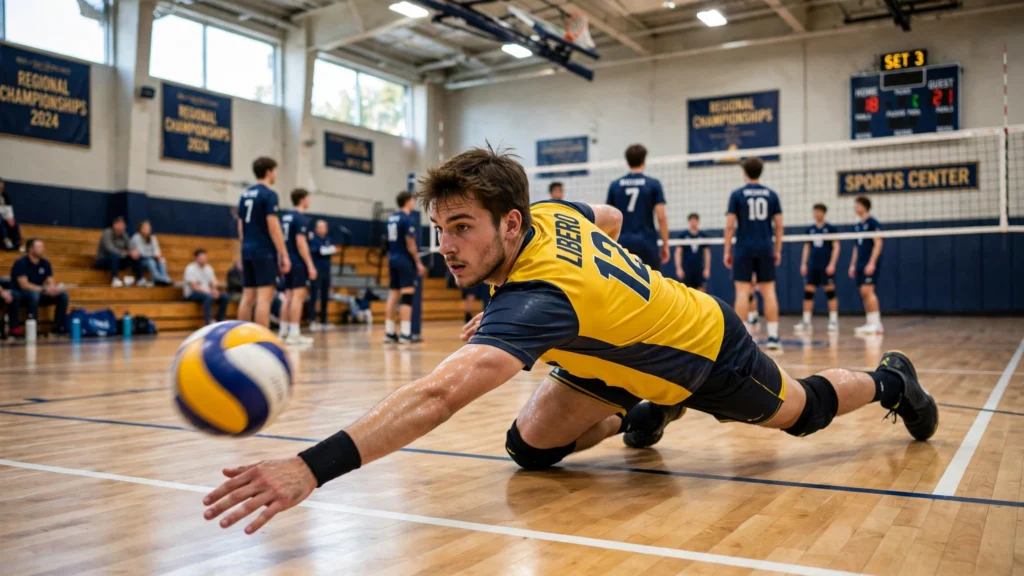
What Is a Libero in Volleyball?
A libero is a back-row defensive specialist who wears a jersey that is a different color from the rest of the team. They’re not just “another passer;” they are the player trusted to handle tough serves, protect the backcourt, and maintain ball control through perfect passing and digging.
Key Characteristics of a Great Libero
Quick Reflexes and Agility
Liberos need lightning-fast reactions to chase down spikes, digs, and fast serves. Picture them as the team’s defensive superhero.
Reliable Ball Control
Great passers make great liberos. Their job demands accuracy over power, technique over height.
Game Awareness
Liberos read the court like a book. They anticipate plays before they happen, positioning themselves for the perfect defensive response.
Libero’s Responsibilities on the Court
Receiving Serves
A libero often takes most of the serve receptions to ensure a smooth start to each play.
Defensive Coverage
Their main job? Keep the ball from hitting the floor. They dig hard-driven attacks and control rebounds.
Perfect Passes to Set Up Plays
Liberos don’t set from the front, but they can provide excellent passes to help setters deliver perfect opportunities to attackers.
What a Libero Cannot Do – Rules & Restrictions
No Attacking or Spiking
Liberos can’t jump and hit the ball above the net. Their role stays defensive, not offensive.
No Serving in Most Formats
In some leagues, they can serve, but traditionally they do not.
Cannot Block or Attempt to Block
A libero never participates in the front-row block—defense stays behind the attack line.
Limited Setting in the Front Zone
If a libero sets the ball with their hands in front of the attack line, hitters can’t jump attack that set.
Essential Skills Every Libero Must Master
Passing
Quality passing decides the quality of offense. Liberos train endlessly to deliver clean, consistent passes.
Digging
Digging saves rallies. It’s the libero’s version of a power move—precision plus hustle.
Rolling & Sliding Techniques
To reach low balls, liberos roll smoothly to protect their bodies and recover quickly.
Communication
They direct the backcourt, calling plays, warning teammates, and keeping energy high.
Why the Libero Position Was Created
Volleyball introduced libero in 1998 to**
Volleyball introduced libero in 1998 to improve defensive play, extend rallies, and balance the sport between offense and defense. Before that, games were often too heavily dominated by power hitters. The libero added a spark—more exciting saves, longer points, and smarter tactics.
Impact of a Libero on Team Strategy
The libero affects how a coach builds the lineup. With better ball control in the backcourt, setters have more offensive choices and attackers receive cleaner opportunities. A strong libero makes the entire team look stronger.
Training Tips for Aspiring Liberos
- Work on footwork speed drills every day
- Practice hundreds of passes—not dozens
- Improve reaction time with reflex training
- Study hitters’ tendencies to predict angles
- Stay mentally calm—confidence is everything
Famous Liberos Who Changed the Game
Some of the most celebrated volleyball players in history have been liberos—proof that power isn’t the only path to greatness. Many international champions earned fame through precision, not height.
What Is a Libero in Volleyball? Explained
The libero in volleyball is a defensive specialist. You can spot the libero immediately: they wear a different coloured jersey from the rest of the team. The libero’s job is to receive serves, dig hard-driven attacks and keep the ball alive so the setter can run the attack. It is the one position where defence is the whole job, and a good libero can change a match without ever scoring a point.
Libero Rules Explained Simply
Libero rules are simple once you know them. The libero can replace any back-row player without it counting as a substitution, and they can swap in and out freely. The libero cannot attack the ball above net height, cannot block, and cannot serve in most competitions. They also cannot set the ball with their fingers from in front of the attack line if the ball is then attacked above the net. These limits exist because the libero is a defensive role — the rules keep it that way.
Skills Every Libero Needs
A libero’s most important skill is passing. Clean, accurate passing turns a hard serve into a good set, so liberos practise passing more than anything else. Digging is next: reading the attacker’s body and getting to the ball before it hits the floor. Quick footwork, low positioning and constant communication with teammates complete the package. The best liberos are not the tallest players on the court — they are the quickest readers of the game.
Libero vs Setter: What’s the Difference?
The comparison between the two roles is really about defence versus attack. The setter runs the offence, choosing who gets the ball and when. The libero keeps the ball alive so the setter has something to work with. The setter touches the ball on almost every rally; the libero touches it when the other team hits it hard. Both need quick reactions, but the setter needs a setter’s hands and the libero needs a digger’s courage. And one thing the libero does not do: score. If you want points, play outside hitter — the libero’s glory is in the saves.
Conclusion
The libero position may not look glamorous to newcomers, but in reality, it is one of the most influential and strategic roles in volleyball. Without them, the court loses stability, the defense weakens, and the offense becomes unpredictable. If you love strategy, teamwork, and heart-driven hustle, the libero position might be perfect for you.
A great libero isn’t defined by size—they’re defined by skill, dedication, and determination.
FAQs
1. Why does a libero wear a different jersey?
To easily identify them since they have special rules and substitutions.
2. Can a libero serve in volleyball?
In some leagues yes, but traditionally no.
3. Is libero a good position for short players?
Absolutely. Height is not a limitation here; skill matters more.
4. Can a libero be a team captain?
Yes, a libero can lead the team as long as rule guidelines are followed.
5. What is the most important skill for a libero?
Consistent passing and digging—ball control is everything.
