
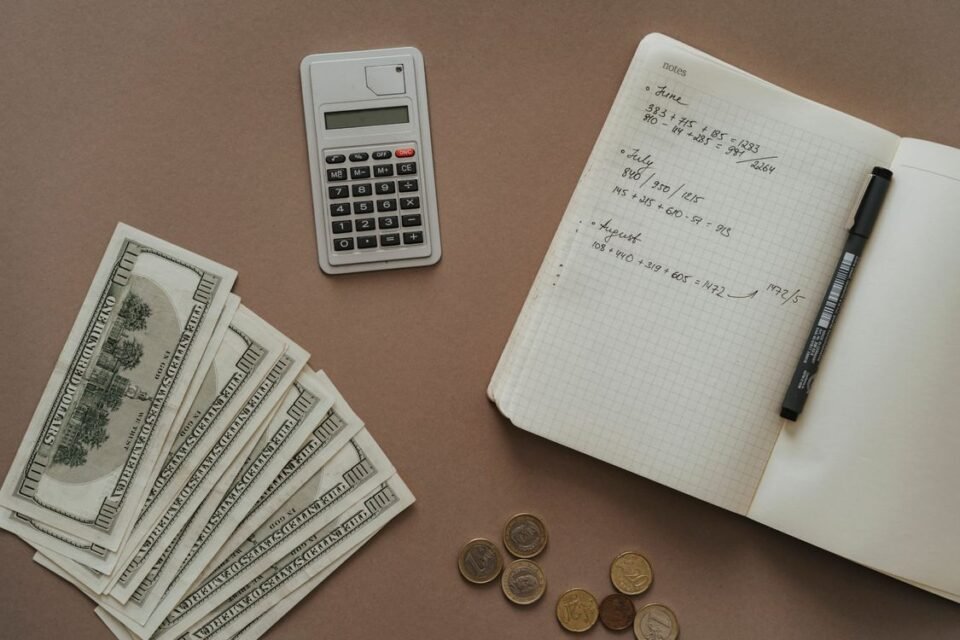
A monthly budget for beginners does not need a spreadsheet full of formulas or a strict set of rules you abandon by the second week. At its simplest, a budget is a plan you make before the month starts, so your money goes where you actually want it to go. This guide walks you through a simple monthly budget plan step by step, from working out your income to building a habit you can keep.
Start With Your Real Take-Home Pay
Your budget starts with one honest number: the money that actually lands in your account each month after tax and deductions. If your pay changes from month to month, use your lowest recent month as your starting point, or an average of the last three months. Planning around money you hope to earn is the fastest way to end up short, so build your first beginner budget plan on income you can count on.
List Your Fixed Expenses First
Fixed expenses are the bills that stay roughly the same each month: rent or a mortgage payment, utilities, insurance, phone and internet bills, and minimum debt payments. Write them down first, because they are the least flexible part of your budget. Once you subtract them from your take-home pay, you will know exactly how much is left for everything else.
Track Monthly Expenses to See Where Money Really Goes
Most people are surprised by this step. For one month, track monthly expenses honestly, including the small ones: coffee, food delivery, streaming subscriptions, and impulse purchases. Look at your recent bank and card statements rather than guessing. You do not need to judge every purchase; you just need a clear picture, because you cannot fix a spending pattern you cannot see.

Try the 50/30/20 Budget Rule
The 50/30/20 budget rule is a simple starting framework: aim for about 50 percent of your income on needs, 30 percent on wants, and 20 percent on savings and extra debt payments. Treat these percentages as a guide, not a pass-or-fail test. If your rent is high, your needs may run above 50 percent, and that is fine. The point is to give your money a shape, then adjust the shape until it fits your real life.
Give Every Dollar a Job With a Personal Budget Template
A personal budget template, even a simple one drawn in a notebook or a basic spreadsheet, makes the plan visible. Before the month begins, assign each dollar a purpose: bills, groceries, transport, fun, and savings. This is sometimes called zero-based budgeting, and it works because nothing is left to chance. When money already has a job, it is much harder for it to quietly disappear.
Build a Habit That Helps You Save Money Each Month
The best budget is the one you still use in three months. To save money each month without feeling deprived, automate a small transfer to savings on payday, even if it is a modest amount. Review your budget for ten minutes at the end of each month and adjust one thing, not everything. A budget that bends a little will last far longer than a perfect plan you quit.
Common Beginner Mistakes to Avoid
Three mistakes trip up most first budgets. First, making the plan too strict to follow. Second, forgetting irregular costs like annual subscriptions, car repairs, or gifts, which should be divided by twelve and set aside monthly. Third, treating one bad week as failure and abandoning the whole plan. A budget is a tool you adjust, not a test you pass or fail.
A monthly budget for beginners is not about restriction; it is about clarity. Start with your real income, list your fixed costs, track your spending for a month, and use a simple framework like the 50/30/20 rule to guide you. Keep the plan simple, review it monthly, and let it grow with you. That steady habit is what turns a first budget into lasting control over your money.
