
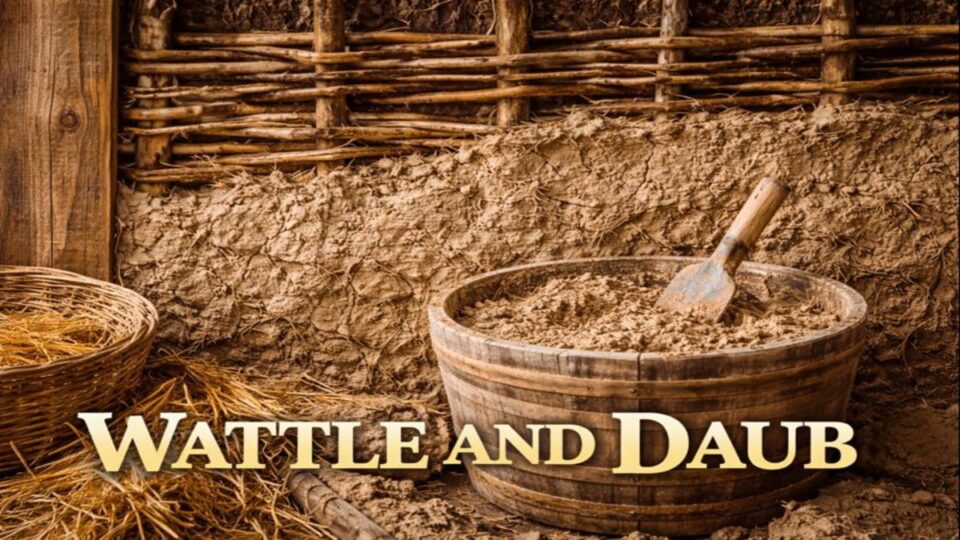
Wattle and daub is one of the oldest building techniques known to humanity. Simple, natural, and surprisingly effective, it has sheltered people for thousands of years. Imagine weaving sticks together and coating them with mud to create a solid wall it sounds primitive, yet it works brilliantly. Even today, wattle and daub continues to inspire eco-friendly and sustainable construction practices.
What Is Wattle and Daub?
Wattle and daub is a traditional construction method where a woven lattice of wooden sticks (wattle) is coated with a sticky mixture of mud, clay, straw, and water (daub). Once dried, it forms a strong and insulating wall.
This technique relies on locally available materials, making it both affordable and environmentally friendly.
Origin and Historical Background
Ancient Civilizations and Early Use
Wattle and daub dates back over 6,000 years. Archaeological evidence shows its use in ancient Africa, the Middle East, and Asia. Early humans discovered that woven branches covered with earth could protect against wind, rain, and heat.
Wattle and Daub in Medieval Times
During medieval Europe, wattle and daub became common in houses, barns, and even castles. Many Tudor-style buildings in England still showcase this method, standing strong centuries later.
Materials Used in Wattle and Daub
Wattle Framework
The wattle is made from:
- Wooden sticks or poles
- Bamboo or reeds
- Branches woven horizontally and vertically
This framework acts like a skeleton, holding the wall together.
Daub Mixture
Daub is the “flesh” of the wall and usually contains:
- Clay or soil
- Sand
- Straw or animal hair
- Water
Natural Additives
Sometimes lime, manure, or plant fibers are added to improve strength, flexibility, and resistance to cracking.
Construction Process
Making the Wattle
Vertical wooden stakes are fixed into a frame. Thin branches are then woven between them, forming a flexible but sturdy lattice.
Applying the Daub
The daub mixture is pressed into the wattle by hand, filling gaps completely. Multiple layers may be applied. Once dry, the wall becomes hard and durable.
Advantages of Wattle and Daub
Wattle and daub offers several benefits:
- Uses natural, low-cost materials
- Excellent insulation
- Breathable walls that regulate humidity
- Low environmental impact
- Easy to repair
It’s proof that simple ideas can be powerful.
Disadvantages and Limitations
Despite its strengths, wattle and daub has drawbacks:
- Vulnerable to water damage if not protected
- Requires regular maintenance
- Not suitable for extreme wet climates without modifications
However, these issues can be managed with proper design and care.
Environmental Benefits
Wattle and daub is a sustainable building method:
- Minimal carbon footprint
- Biodegradable materials
- No industrial processing required
In a world struggling with climate change, this ancient technique feels surprisingly modern.
Wattle and Daub in Modern Architecture
Today, architects and eco-builders are reviving wattle and daub in green housing projects. Combined with modern techniques like raised foundations and protective roofing, it meets contemporary living standards while staying environmentally responsible.
Maintenance and Durability
With proper care, wattle and daub buildings can last for centuries. Regular re-plastering and protection from moisture are key. Lime washes are often used to seal and preserve walls.
Cultural and Architectural Significance
Wattle and daub is more than construction it’s cultural heritage. From African huts to European cottages, it reflects human creativity and adaptation. It connects us to our ancestors and their relationship with nature.
Comparison with Modern Building Methods
Unlike concrete and steel, wattle and daub:
- Produces less pollution
- Is cheaper in rural areas
- Encourages local craftsmanship
While modern materials offer speed and uniformity, wattle and daub offers sustainability and soul.
Conclusion
Wattle and daub stands as a timeless reminder that building doesn’t have to harm the planet. This ancient technique, born from necessity and ingenuity, continues to inspire sustainable living today. As the world looks for greener solutions, wattle and daub proves that sometimes, the future lies in the past.
Frequently Asked Questions (FAQs)
1. What is wattle and daub made of?
It consists of a wooden lattice (wattle) and a mud-based mixture (daub).
2. Is wattle and daub strong?
Yes, when properly built and maintained, it can last for centuries.
3. Is wattle and daub eco-friendly?
Absolutely, it uses natural and biodegradable materials.
4. Can wattle and daub be used today?
Yes, it’s used in eco-housing and sustainable architecture.
5. What protects wattle and daub from rain?
Good roofing, raised foundations, and lime plaster help protect it.
