
Have you ever wished you could eat endlessly without gaining a single pound? Sounds like a dream, right? That’s exactly why the idea of zero calorie foods has become so popular. The thought of munching on something that magically burns more calories than it contains is tempting.
But here’s the big question: Do zero calorie foods actually exist? Or is it just another health myth circulating online?
Let’s break it down in simple terms, bust some myths, and explore the facts — so you know exactly what you’re putting on your plate.
What Are Zero Calorie Foods?
Zero calorie foods are commonly described as foods that supposedly contain so few calories that your body burns more energy digesting them than the food itself provides.
In reality, no natural food has literally zero calories (except water). However, some foods are so low in calories that they’re often called “zero calorie” for convenience.
These foods are typically:
- High in water
- High in fiber
- Very low in fat
- Low in carbohydrates
Think of them as ultra-light fuel for your body.
The Concept of Negative Calorie Foods
You might have heard the term negative calorie foods. This concept suggests that the act of chewing, digesting, and metabolizing certain foods burns more calories than the food contains.
For example, if celery contains 15 calories, the theory says your body might burn 20 calories digesting it — resulting in a 5-calorie deficit.
Sounds amazing, right?
Here’s the truth: While digestion does burn calories (called the thermic effect of food), it’s not enough to completely cancel out the calories in most foods. The effect is real, but small.
So technically, true negative calorie foods don’t exist — but very low calorie foods absolutely do.
How Digestion Burns Calories (Thermic Effect of Food)
Your body isn’t lazy. Every time you eat, it works.
The thermic effect of food (TEF) refers to the energy your body uses to digest, absorb, and process nutrients. On average:
- Protein burns 20–30% of its calories during digestion.
- Carbohydrates burn 5–10%.
- Fats burn 0–3%.
Low-calorie vegetables often contain mostly water and fiber, meaning your body works a bit harder to process them compared to their calorie content.
But remember — this doesn’t turn them into calorie-free miracles.
Why Zero Calorie Foods Are Popular for Weight Loss
Let’s be honest. Most people search for zero calorie foods because they want to lose weight.
And here’s the good news: even if they’re not truly zero-calorie, these foods are incredibly helpful for weight loss.
Why?
- They’re filling.
- They reduce overall calorie intake.
- They control hunger.
- They add volume to meals.
It’s like filling your gas tank with something super light but satisfying.
List of Common Zero or Ultra-Low Calorie Foods
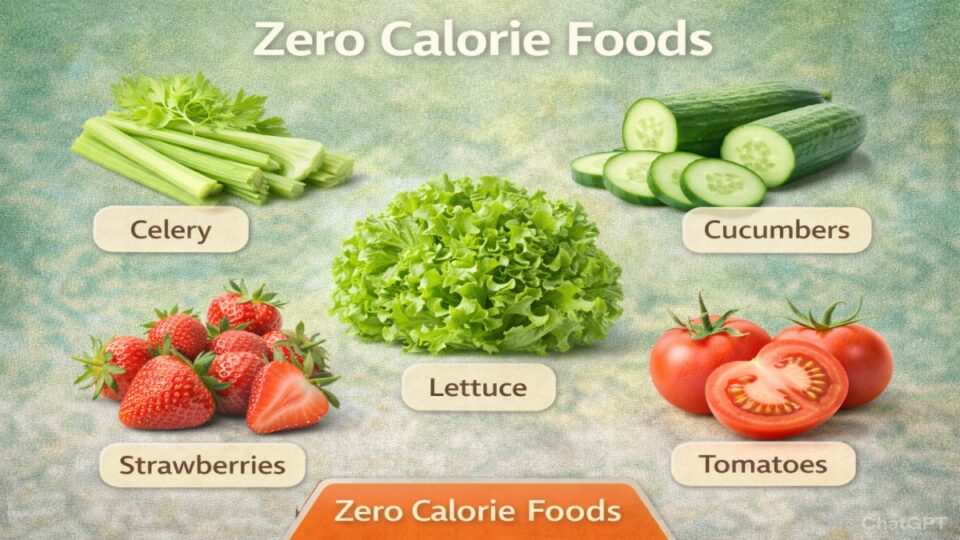
Here’s a list of foods often labeled as “zero calorie”:
1. Celery
Extremely low in calories and mostly water. Great crunchy snack.
2. Cucumber
Refreshing, hydrating, and very low in calories.
3. Lettuce
Adds volume to meals without adding many calories.
4. Zucchini
Versatile and low in calories — perfect for zoodles.
5. Spinach
Packed with nutrients but very low in calories.
6. Cabbage
High in fiber and commonly used in low-calorie diets.
7. Broccoli
Low in calories and rich in vitamins.
8. Cauliflower
A popular low-calorie substitute for rice and mashed potatoes.
9. Asparagus
Light, nutrient-rich, and diet-friendly.
10. Radishes
Crunchy and nearly calorie-free.
Conclusion
So, do zero calorie foods exist?
Technically, no — except for water. But ultra-low calorie foods absolutely exist, and they can be powerful tools for weight management.
The secret isn’t eating only these foods. It’s using them strategically. Fill your plate with fiber-rich vegetables, balance them with protein and healthy fats, and focus on sustainable habits.
Weight loss isn’t about magic foods. It’s about smart choices made consistently.
And honestly? That’s much more empowering than chasing a myth.
FAQs About Zero Calorie Foods
1. Are there truly any foods with zero calories?
No natural solid food has zero calories. Only water is completely calorie-free.
2. Do negative calorie foods really burn more calories than they contain?
The thermic effect of food exists, but it doesn’t completely cancel out the calories in food. True negative calorie foods are a myth.
3. Can zero calorie foods help with weight loss?
Yes, because they are low in calories and high in fiber, which helps you feel full while consuming fewer total calories.
4. Is it safe to eat only zero calorie foods?
No. Your body needs protein, fats, and essential nutrients that low-calorie vegetables alone cannot provide.
5. Are zero calorie drinks good for dieting?
Water, black coffee, and unsweetened tea are good low-calorie options. However, artificially sweetened drinks should be consumed in moderation.
