
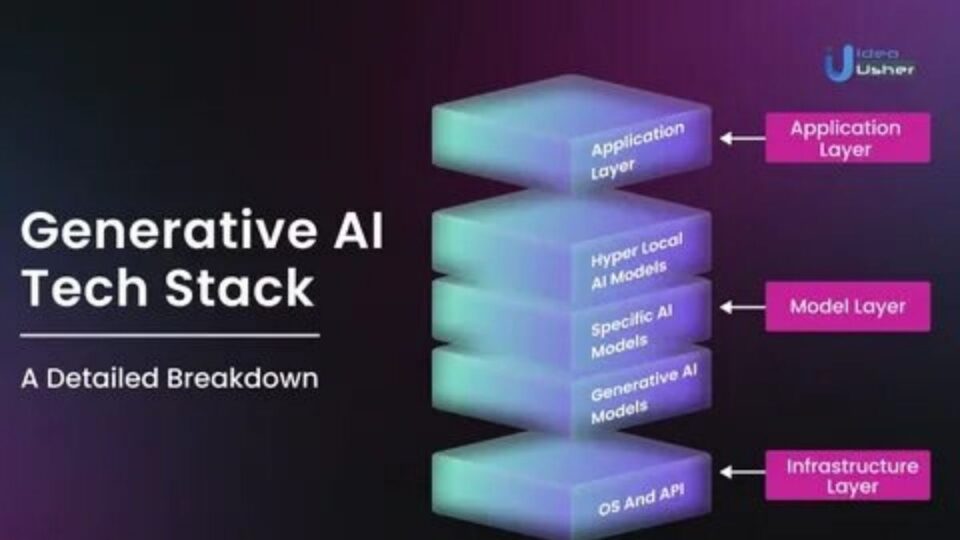
In today’s digital era, artificial intelligence is reshaping how creators, developers, and businesses build and innovate. Among the most exciting platforms leading this revolution is Kaiber AI, a tool well-known for transforming ideas into stunning visual experiences. Behind this innovation lies the Kaiber AI tech stack, a powerful combination of technologies that enables its advanced capabilities.
Understanding the tech stack of any AI tool is essential, especially if you’re a creator or business professional looking to leverage it. So, let’s explore what makes the Kaiber AI tech stack so unique, how it empowers users, and why it matters for the future of creative technology.
What is the Kaiber AI Tech Stack?
A tech stack is the backbone of any digital product. It’s essentially the collection of programming languages, frameworks, libraries, and infrastructure that powers the tool. The Kaiber AI tech stack combines artificial intelligence models, machine learning frameworks, and scalable cloud infrastructure to deliver high-quality generative outputs.
At its core, Kaiber AI leverages:
- Deep learning models for generating visuals and animations.
- Natural language processing (NLP) to interpret prompts.
- Cloud-based GPU acceleration for fast rendering and scalability.
- Modern web frameworks that provide a smooth, intuitive user interface.
This combination ensures users get a seamless experience, whether they are generating animated music videos, artwork, or experimental content.
Why the Kaiber AI Tech Stack Stands Out
What makes the Kaiber AI tech stack so special isn’t just the technology itself—it’s how these tools are integrated. Here are some standout features:
- Scalability – Kaiber’s infrastructure is designed to handle thousands of requests without performance issues, thanks to cloud-based GPUs and distributed computing.
- Flexibility – The stack supports different creative needs, from simple image generation to complex multi-layered animations.
- User-Centric Design – By blending advanced AI models with accessible design, Kaiber ensures non-technical users can harness AI creativity.
- Constant Evolution – Like any modern AI system, the Kaiber AI tech stack evolves with updates in AI research, adopting newer frameworks for faster, more efficient outputs.
The Role of AI Models in Kaiber’s Stack
At the heart of Kaiber’s system are AI models trained on massive datasets. These models learn patterns in visual and textual data, which allows Kaiber AI to generate professional-grade results. By combining GANs (Generative Adversarial Networks), diffusion models, and transformers, the Kaiber AI tech stack balances creativity with accuracy.
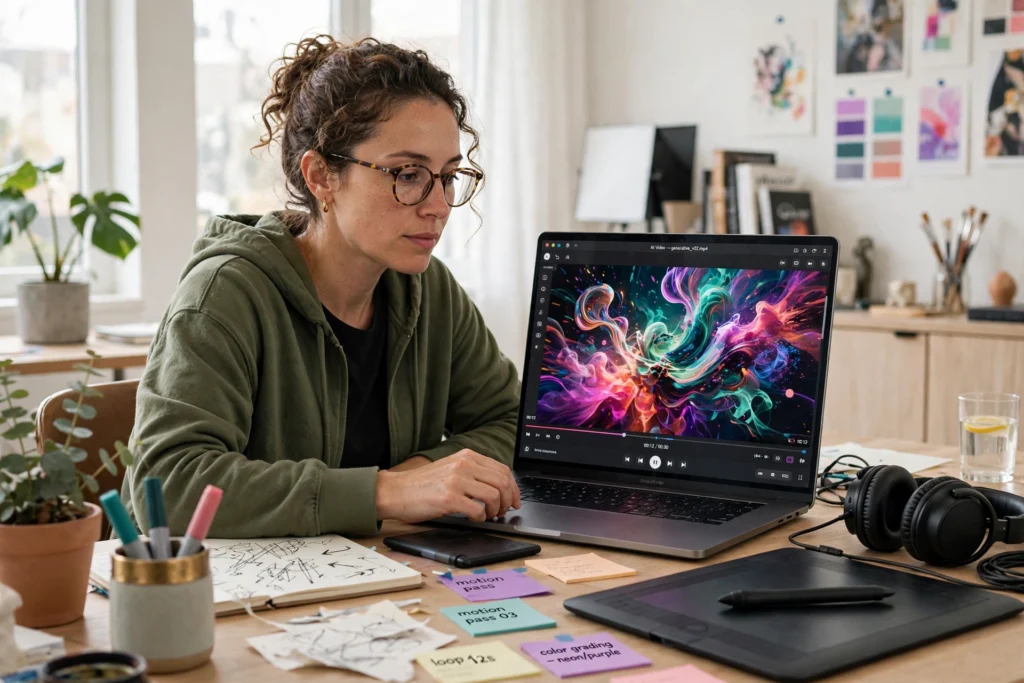
For instance, when a user inputs a prompt like “animate a futuristic cityscape in neon colors,” the AI stack processes the request, interprets the artistic direction, and generates video sequences that align with the description. This orchestration wouldn’t be possible without a powerful stack working behind the scenes.
Why Creators Care About Kaiber AI Tech Stack
Understanding the Kaiber AI tech stack isn’t just for developers—it matters for creators too. Here’s why:
- Reliability: Artists can depend on the system for consistent outputs.
- Speed: Rapid rendering means faster project completion.
- Innovation: With its evolving stack, Kaiber ensures creators always have access to cutting-edge tools.
- Accessibility: You don’t need technical expertise; the stack does the heavy lifting in the background.
This makes Kaiber AI a bridge between advanced technology and everyday creativity.
Future of Kaiber AI Tech Stack
The future of the Kaiber AI tech stack is promising. As AI research progresses, Kaiber is likely to integrate:
- More efficient diffusion models for higher-quality results.
- Augmented reality (AR) and VR compatibility for immersive content creation.
- Personalized AI assistants that adapt to each creator’s style.
By staying ahead of the curve, Kaiber AI continues to redefine what’s possible in digital creativity.
Kaiber AI: What It Does and Who It Is For
Kaiber is a video generator that turns text, images and music into moving video with artificial intelligence. The video generator works by taking a starting image or a written prompt and letting the system animate it into a clip between a few seconds and a minute long. It is built for creators — musicians, marketers and social media makers — who want video without a camera crew or editing software.
Kaiber AI Features: What the Tech Stack Powers
The features that matter most are its generation modes: text-to-video, image-to-video and video-to-video, where an existing clip is restyled into a new look. Behind them, the tech stack combines a diffusion model for the visuals with an audio engine that syncs motion to music. The result is a tool that turns a still image into a moving scene in minutes, with controls for style, motion and camera movement.
Kaiber AI Pricing: What It Costs
The pricing is subscription-based, with a free tier that gives a small number of credits to try the tool. Paid plans add more credits, longer videos and higher resolution, and the cost rises with the amount of video you generate. For occasional use the free tier is enough to test it, but creators who publish weekly usually need a paid plan — check the current price on Kaiber’s own site, because the plans change often.
Kaiber AI Alternatives: Other AI Video Tools
The alternatives worth knowing are Runway, Pika and Luma — other tools that turn text or images into video. Runway is the most powerful for editing and control, Pika is the simplest for quick clips, and Luma is strong at realistic 3D scenes. A tutorial will teach you Kaiber’s own flow, but the skills transfer: prompting, style words and motion settings work the same way across all three.
Final Thought
The Kaiber AI tech stack is more than just a behind-the-scenes framework—it’s the engine that makes creative AI accessible, reliable, and innovative. By combining powerful AI models, cloud infrastructure, and user-friendly design, Kaiber AI is changing the way people express ideas. Whether you’re an artist, content creator, or simply curious about technology, understanding this stack offers a glimpse into the exciting future of AI-driven creativity.
FAQs About Kaiber AI Tech Stack
Q1: What does Kaiber AI tech stack include?
It includes deep learning models, NLP systems, GPU-powered cloud infrastructure, and web frameworks that power its AI-driven features.
Q2: Is Kaiber AI tech stack only for developers?
No, it’s designed for everyone. While developers may appreciate the backend, creators and artists benefit from its seamless user interface.
Q3: How does the tech stack make Kaiber AI fast?
By using distributed GPU acceleration and optimized frameworks, the stack processes and renders results at high speed.
Q4: Can Kaiber AI tech stack evolve over time?
Yes, Kaiber continuously updates its stack with the latest AI models and frameworks, ensuring cutting-edge performance.
Q5: Why should creators care about Kaiber AI tech stack?
Because it ensures reliability, faster outputs, and innovative tools that enhance the creative process.
