
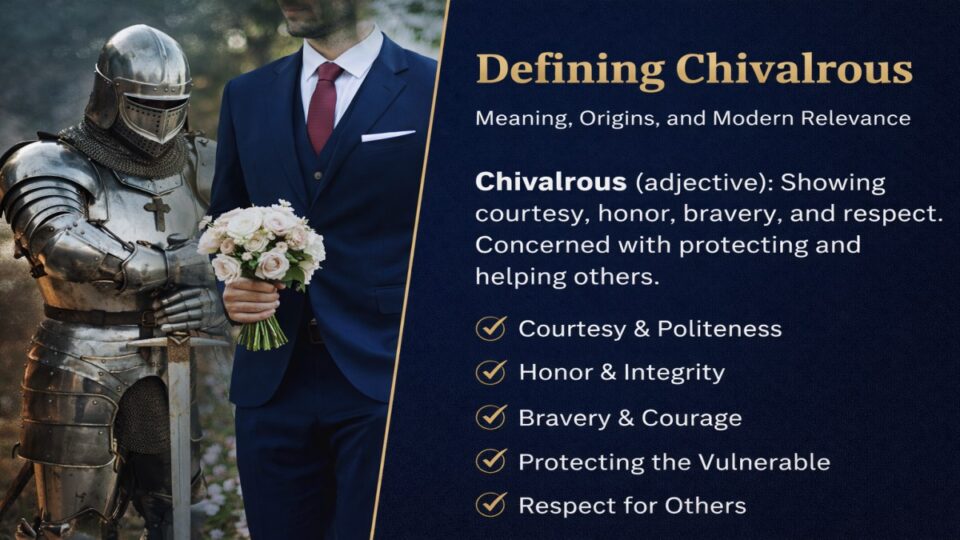
Defining Chivalrous. The word “chivalrous” evokes images of medieval knights, gallant gestures, honor-bound conduct, and refined manners. Over time, however, its meaning has expanded beyond armor and battlefields to describe a broader moral and social ideal. To define chivalrous accurately, it is important to explore its historical roots, core values, and how it is understood and practiced in the modern world.
Historical Origins of Chivalry
The term chivalrous comes from the word chivalry, which originated in medieval Europe. It is derived from the Old French word chevalerie, meaning “horsemanship” or “knighthood,” and ultimately from cheval, meaning “horse.” In the Middle Ages, chivalry referred to the code of conduct followed by knights—elite warriors who served kings and nobles.
This code of chivalry governed how knights were expected to behave both on and off the battlefield. It emphasized loyalty to one’s lord, courage in combat, protection of the weak, and respect toward women and the Church. A knight was not judged solely by his fighting skills but also by his moral character and sense of honor.
Thus, in its earliest sense, being chivalrous meant living according to a strict ethical system that balanced strength with compassion.
Core Characteristics of Being Chivalrous
To define chivalrous, one must look at the key traits traditionally associated with it. These characteristics have remained surprisingly consistent, even as society has changed.
- Courtesy and Politeness
A chivalrous person demonstrates good manners, respect, and consideration for others. This includes speaking politely, listening attentively, and behaving with dignity in social situations. - Honor and Integrity
Honor is central to chivalry. A chivalrous individual values honesty, keeps promises, and acts according to strong moral principles—even when doing so is difficult or inconvenient. - Bravery and Moral Courage
Historically, bravery referred to physical courage in battle. Today, it often means standing up for what is right, defending others from injustice, and acting with conviction despite fear or pressure. - Protection of the Vulnerable
One of the most enduring aspects of chivalry is the duty to protect those who cannot protect themselves—such as children, the elderly, or marginalized groups. - Respect for Women
Traditional chivalry emphasized respect, admiration, and courteous behavior toward women. While this aspect has evolved, the underlying principle of treating all people with dignity remains central.
Chivalrous vs. Polite: Understanding the Difference
Although chivalrous and polite are often used interchangeably, they are not identical. Politeness refers mainly to social manners—saying “please” and “thank you,” following etiquette, and avoiding rudeness. Chivalry, on the other hand, goes deeper. It implies a moral commitment to kindness, fairness, and responsibility toward others.
A person can be polite without being chivalrous, but a truly chivalrous person is almost always polite, because courtesy is a natural expression of their values.
Conclusion
To define chivalrous is to describe a way of being rooted in honor, respect, and moral responsibility. Originating in medieval knighthood, the concept has evolved from a battlefield code into a timeless ethical ideal. While its expressions have changed, the essence of chivalry—kindness guided by strength, respect guided by integrity—remains deeply relevant.
In a world often marked by division and self-interest, chivalry offers a reminder that true character is revealed not by power or status, but by how one treats others.
Add faqs
Below are FAQs added to the article on “Define Chivalrous”, written in clear and simple English.
Frequently Asked Questions (FAQs)
1. What does the word chivalrous mean?
The word chivalrous refers to behavior that is polite, honorable, brave, and considerate of others. It is especially associated with showing respect, acting with integrity, and helping or protecting those in need.
2. Is chivalry only related to medieval knights?
No. While chivalry originated in medieval times as a code followed by knights, its meaning has evolved. Today, chivalry represents moral values such as kindness, fairness, and respect that apply to everyday life.
3. Can anyone be chivalrous?
Yes. Chivalry is not limited by gender, age, or social status. Anyone who acts with courtesy, honesty, courage, and compassion can be considered chivalrous.
4. Is being chivalrous the same as being polite?
Not exactly. Politeness focuses on good manners, while chivalry goes deeper. Being chivalrous includes moral courage, responsibility, and respect for others, in addition to polite behavior.
5. Is chivalry still relevant in modern society?
Yes, chivalry remains relevant today. Modern chivalry emphasizes mutual respect, ethical behavior, empathy, and standing up for what is right, making it valuable in personal, social, and professional relationships.
