
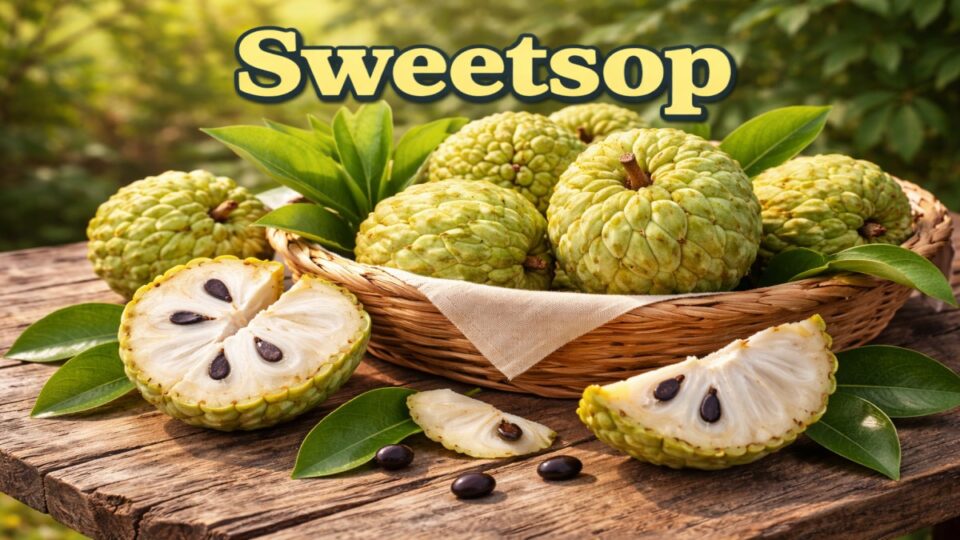
Sweetsop, also known as sugar apple (Annona squamosa), is a tropical fruit cherished for its sweet, creamy flesh and unique flavor. Native to the Americas but now widely cultivated across Asia, Africa, and the Caribbean, sweetsop is more than just a delicious treat—it’s packed with nutrients, holds cultural significance, and has potential health benefits. In this article, we’ll explore everything about sweetsop: its history, characteristics, cultivation, uses, and benefits.
What Is Sweetsop?
Sweetsop is a small to medium-sized fruit that grows on a tropical tree belonging to the Annonaceae family. It has a bumpy, green skin and soft, custard-like flesh inside that tastes sweet and aromatic, reminiscent of sugar and cream. The fruit contains several black seeds that are not edible.
Sweetsop is often eaten fresh, but it’s also used in desserts, smoothies, ice creams, and traditional medicine.
Origin and History of Sweetsop
The sweetsop tree is native to tropical Americas, particularly the Caribbean, Central, and South America. It spread to Asia during the colonial period through trade and exploration. Today, it thrives in countries such as the Philippines, India, Thailand, and Indonesia, where it is a staple fruit in local markets.
Botanical Characteristics of Sweetsop
- Tree Size: Small to medium, growing 3–8 meters tall
- Leaves: Oblong, glossy, and dark green
- Flowers: Creamy-white and fragrant, attracting pollinators like beetles
- Fruit: Round to heart-shaped, 5–10 cm long, with a segmented, scaly appearance
The plant prefers warm tropical climates with well-drained soil and moderate rainfall.
How Sweetsop Is Cultivated
Soil and Climate
Sweetsop grows best in sandy loam soils rich in organic matter. It requires full sunlight and a temperature range of 25–35°C. While drought-tolerant, regular watering improves fruit quality.
Propagation
Sweetsop can be propagated through seeds or grafting. Grafting ensures faster fruiting and better quality fruits.
Flowering and Fruiting
Flowering occurs during warm months, and fruits take 3–4 months to mature. Harvesting is usually done when the fruit turns light green and soft to the touch.
Nutritional Value of Sweetsop
Sweetsop is a nutrient-dense fruit. Key nutrients include:
- Carbohydrates: Provides energy
- Dietary Fiber: Supports digestion
- Vitamin C: Boosts immunity and acts as an antioxidant
- Vitamin B6: Supports brain health
- Potassium: Helps regulate blood pressure
- Magnesium: Supports muscle and nerve function
Low in fat and calories, sweetsop is an ideal fruit for a healthy diet.
Health Benefits of Sweetsop
1. Boosts Immunity
Rich in vitamin C, sweetsop helps strengthen the immune system and fight infections.
2. Supports Digestive Health
The high fiber content aids digestion, prevents constipation, and promotes gut health.
3. Promotes Heart Health
Potassium and magnesium in sweetsop help regulate blood pressure and support heart function.
4. May Aid in Blood Sugar Control
Some studies suggest that extracts from sweetsop seeds and leaves may help manage blood sugar levels, although caution is advised because seeds are toxic if ingested.
5. Antioxidant Properties
Sweetsop contains bioactive compounds that protect the body from oxidative stress and free radical damage.
Culinary Uses of Sweetsop
Sweetsop is incredibly versatile in the kitchen:
- Fresh Fruit: Eaten raw with a spoon
- Desserts: Used in custards, ice creams, and puddings
- Beverages: Blended into smoothies, shakes, and juices
- Traditional Dishes: In some cultures, sweetsop is incorporated into cakes, jams, or fruit salads
Its creamy texture and sweet taste make it a favorite for tropical desserts.
Cultural Significance of Sweetsop
In tropical regions, sweetsop is more than just a fruit:
- Philippines: Known as “atis,” it is a popular street fruit and featured in traditional festivals.
- India: Called “sitaphal,” it is often offered during religious ceremonies.
- Caribbean: Used in cultural desserts and beverages, symbolizing tropical abundance.
The fruit often holds symbolic value in local folklore and traditions.
Conclusion
Sweetsop is a tropical delight that combines taste, nutrition, and cultural significance. Its creamy, sweet flesh makes it a versatile fruit for desserts and beverages, while its nutrient content offers several health benefits. However, like all fruits, it must be consumed carefully, avoiding the seeds. As awareness about healthy eating grows, sweetsop continues to shine as a natural, delicious, and beneficial fruit that connects people to tropical landscapes and traditions.
Frequently Asked Questions (FAQs)
1. What is the other name for sweetsop?
Sweetsop is also called sugar apple or sitaphal.
2. Can sweetsop seeds be eaten?
No, sweetsop seeds are toxic and should never be consumed.
3. Where does sweetsop grow best?
In warm, tropical climates with well-drained soil and full sunlight.
4. What are the health benefits of sweetsop?
It boosts immunity, aids digestion, supports heart health, and provides antioxidants.
5. How can sweetsop be used in cooking?
It can be eaten fresh, blended into drinks, or used in desserts like ice cream, custards, and jams.
