
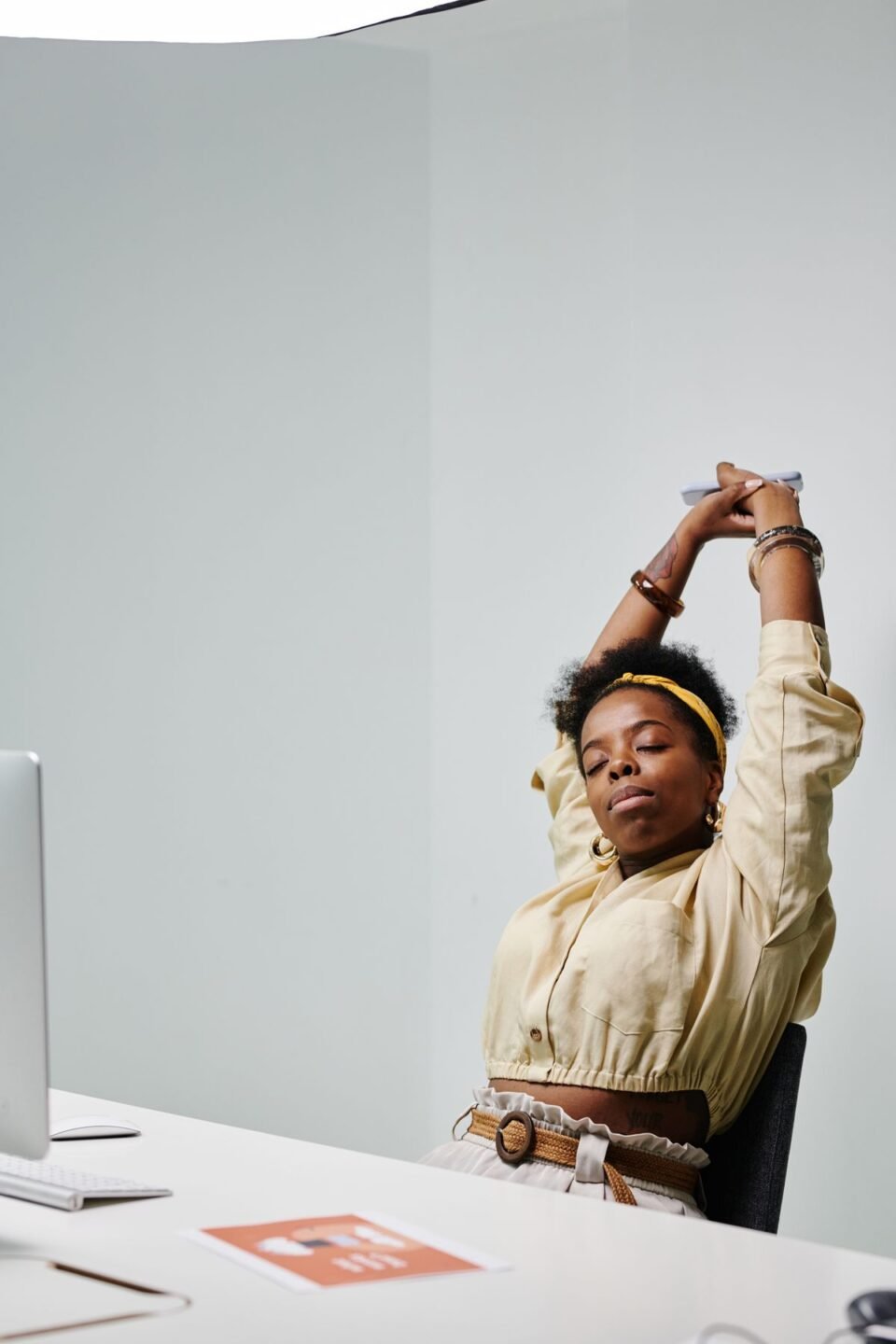
If you sit at a desk for most of the day, you probably know the feeling: a stiff neck by late morning, tight shoulders by lunch, and a dull ache in your lower back by the afternoon. A desk stretching routine for beginners can help. It does not need special equipment, a gym, or a long break — just a few gentle movements, done regularly, to loosen the muscles that tighten when we sit for hours.
Why Sitting All Day Makes You Stiff
When you sit for a long time, your hip flexors shorten, your shoulders round forward, and your neck drifts toward the screen. Blood flow slows, and muscles that should support you start to tire. That is why stretches for desk workers focus less on flexibility tricks and more on undoing the posture of sitting: opening the chest, lengthening the neck, and waking up the back and hips.
The 5-Minute Desk Stretching Routine
Do this office stretching routine once in the morning, once after lunch, and once before you finish work. Move slowly, breathe normally, and never force a stretch into pain. Mild tension is enough.

1. Neck release
Sit tall, drop your right ear toward your right shoulder, and hold for 20 seconds. Repeat on the left. Then slowly look left and right, holding each side for 10 seconds. These neck and shoulder stretches at work are best done gently — small, controlled movements beat aggressive pulling.
2. Shoulder rolls and chest opener
Roll both shoulders up, back, and down ten times. Then clasp your hands behind your back, gently straighten your arms, and lift slightly until you feel the front of your chest open. Hold for 20 seconds.
3. Seated back twist
Sit tall, place your right hand on the outside of your left knee, and turn gently to the left. Hold for 20 seconds, then repeat on the other side. This is one of the simplest sitting all day stretches for easing a stiff mid-back.
4. Wrist and forearm stretch
Stretch one arm forward, palm up, and gently pull the fingers back with the other hand. Hold for 15 seconds per side. If you type all day, this small stretch can make a surprising difference.
5. Hip and leg reset
Stand up, place one foot slightly behind you, and gently press your hips forward to stretch the front of the hip. Hold for 20 seconds per side. Then do ten slow calf raises. For more lower-body work on days when you have time, see these leg workouts.
6. Standing back stretch
Stand, reach both arms overhead, and lean gently from side to side. Finish with a slow forward fold, letting your arms hang, then roll up slowly.
How to Stretch at Your Desk Without Disrupting Work
You do not need to announce a workout. Set a quiet reminder every 90 minutes, keep the routine to five minutes, and pair it with something you already do — after sending an email, while waiting for a file to load, or before a meeting. Consistency matters more than intensity: three short sessions a day will do more for you than one long session once a week.
Tips and Safety
Keep movements slow and pain-free. If a stretch causes sharp pain, numbness, or tingling, stop and speak to a health professional. This routine is general information, not medical advice. If you have an injury, a spine condition, or you are recovering from surgery, check with your doctor or physiotherapist first. Wear comfortable shoes if you stand, keep your feet flat on the floor when seated, and adjust your screen so the top is roughly at eye level.
Conclusion
A desk stretching routine for beginners is one of the easiest healthy habits to start, because it fits into the workday you already have. Start with five minutes, three times a day, and give it two weeks. Most people notice less stiffness, fewer afternoon headaches from tension, and a little more energy — not because stretching is magic, but because moving regularly is what the body was built to do.
