
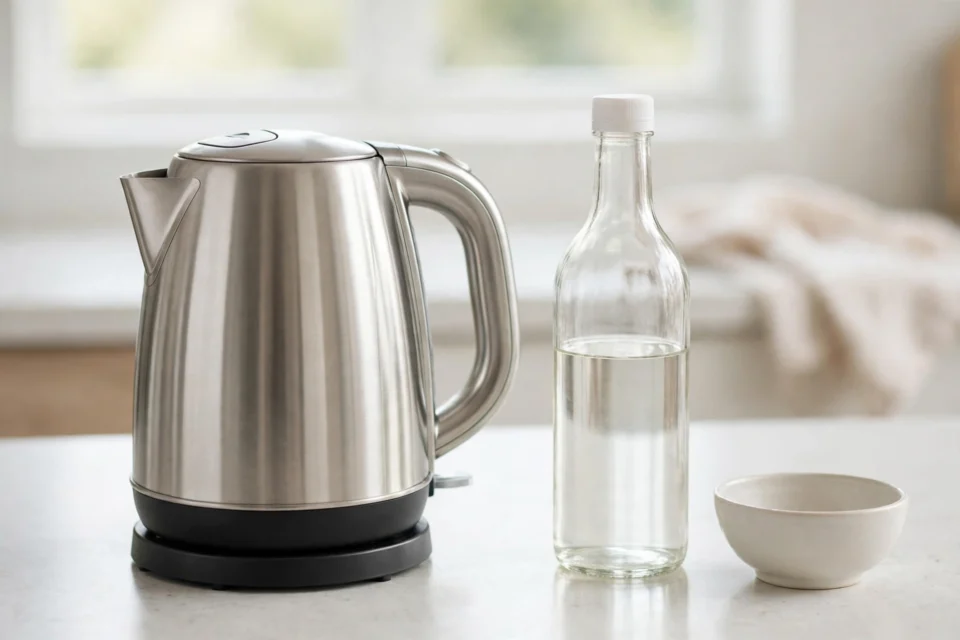
If your kettle takes longer to boil, looks cloudy inside, or leaves white flakes in your tea, it is almost certainly covered in limescale. The good news is that you do not need a special descaling product. Learning how to descale a kettle with vinegar is one of the simplest kitchen jobs there is, and it works on most electric and stovetop kettles.
White vinegar is mildly acidic, so it dissolves the chalky mineral deposits left behind by hard water. It is cheap, easy to find, and safe to use in a kettle when you rinse it well afterwards. This simple method removes limescale, helps your kettle boil faster, and keeps your tea and coffee tasting as they should.
What Is Limescale and Why Does It Build Up?
Limescale is the white, chalky deposit left behind when hard water is heated. It is mostly calcium carbonate, and it builds up on the heating element and the inside walls of a kettle over time. A thin layer is harmless, but a thick layer makes the kettle slower, noisier, and less efficient, and it can leave flakes in your drinks.
Descaling simply means removing that mineral buildup. Vinegar does the job well because its acid breaks down calcium carbonate, so the deposits loosen and wash away instead of needing to be scrubbed off.
What You Need to Descale a Kettle with Vinegar
- White vinegar (plain distilled white vinegar, not malt or balsamic vinegar)
- Water
- A soft cloth or sponge
- A small bowl, if you want to catch any loose flakes
That is all you need. You do not need a shop-bought descaler, and you do not need to scrub hard. The vinegar and hot water do most of the work.
How to Descale a Kettle with Vinegar: Step by Step
Follow these steps to descale an electric kettle with vinegar. The same method works for most stovetop kettles too.
- Empty the kettle. Pour out any old water and remove the filter, if your kettle has one.
- Mix equal parts water and white vinegar. Fill the kettle about halfway with a 50/50 mixture of water and white vinegar, making sure the limescale is covered.
- Boil the mixture. Switch the kettle on and bring the vinegar solution to the boil, then switch it off.
- Leave it to soak. Let the hot solution sit in the kettle for 20 to 30 minutes. For light limescale, 15 minutes is often enough.
- Pour it away and check. Empty the kettle and look inside. Most of the limescale should have gone. Wipe away any loose deposits with a soft cloth or sponge.
- Rinse well. Rinse the kettle several times with clean water.
- Boil fresh water once or twice. Fill the kettle with fresh water, boil it, and pour it away. This removes any lingering vinegar taste or smell. Your kettle is now ready to use.
How to Get Rid of Limescale in a Kettle with Heavy Buildup
If your kettle has a thick, crusty layer of limescale, one round may not be enough. That is normal, especially if it has not been descaled for a long time.
Repeat the same method with a fresh 50/50 mixture of water and white vinegar, and this time leave it to soak for an hour, or even overnight for very heavy buildup. Do not boil the kettle dry, and do not use a metal scourer or anything abrasive inside it, as that can damage the surface and the heating element. After the second soak, rinse and boil fresh water as above.
How Often Should You Descale Your Kettle?
How often you need to descale a kettle depends on how hard your water is and how often you use the kettle. As a rough guide, descale it every one to three months. If you live in a hard-water area or use the kettle several times a day, do it monthly. A quick descale little and often is much easier than dealing with a thick layer of limescale once a year.
Tips to Keep Your Kettle Limescale-Free for Longer
- Empty the kettle after each use instead of leaving water sitting in it.
- Only boil as much water as you need.
- Use filtered water if your tap water is very hard.
- Wipe the outside of the kettle regularly and keep the spout clean.
Vinegar works well for kettles, but it is not the right choice for every appliance. If you would rather avoid it elsewhere, read our guide on how to clean a coffee maker without vinegar for simple methods that actually work.
Frequently Asked Questions
Is it safe to descale a kettle with vinegar? Yes, white vinegar is safe for most kettles when you rinse well and boil fresh water afterwards. Check your kettle manual first if you are unsure, and never use vinegar on a kettle the manufacturer says not to descale this way.
Will vinegar leave a taste in my tea? It can if you do not rinse well. Rinse the kettle several times and boil a full kettle of fresh water and pour it away before you make your next drink, and the vinegar taste should be gone.
Can I use lemon juice instead of vinegar? Lemon juice can help with light limescale, but white vinegar is stronger, cheaper, and more reliable for a proper descale.
How long does it take to descale a kettle with vinegar? About 30 minutes in total, including the soak. Most of that time the kettle is just sitting, so it is a quick job to fit around other kitchen tasks.
Final Thoughts
Descaling a kettle with vinegar is simple, cheap, and effective. Mix equal parts water and white vinegar, boil it, let it soak, rinse well, and boil fresh water once more. Do it regularly, and your kettle will boil faster, last longer, and make better-tasting tea and coffee.
