
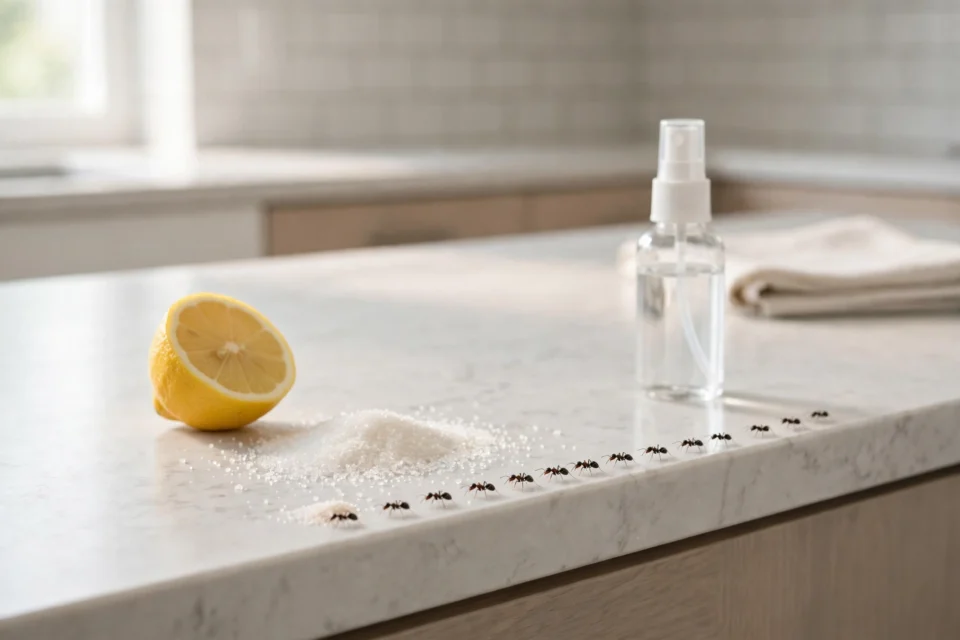
Finding a trail of ants across your kitchen counter is annoying, but it is also one of the easiest household problems to fix. Ants come inside for the same three reasons every time: food, water, and shelter. If you take away what attracts them and block the path they use, most kitchen ant problems clear up in a few days — no harsh chemicals needed.
Learning how to keep ants out of the kitchen starts with understanding what they want. A single scout ant finds a crumb or a drop of something sweet, leaves a scent trail behind, and soon the whole colony follows it. The good news is that the same trail that brings them in can be used to get rid of them. Below are simple natural methods that actually work, plus the small habits that stop ants from coming back.
1. Find the Trail and Follow It Back
Before you spray or wipe anything, watch the ants for a few minutes. Their trail usually runs in a straight line from a food source to an entry point — a gap under a window, a crack near the sink, or a tiny space where a pipe comes through the wall. Once you know where they are coming in, you know where to focus. Do not just kill the ants you can see; the colony will keep sending more until the entry point and the food source are dealt with.
2. Wipe Away the Scent Trail with Vinegar
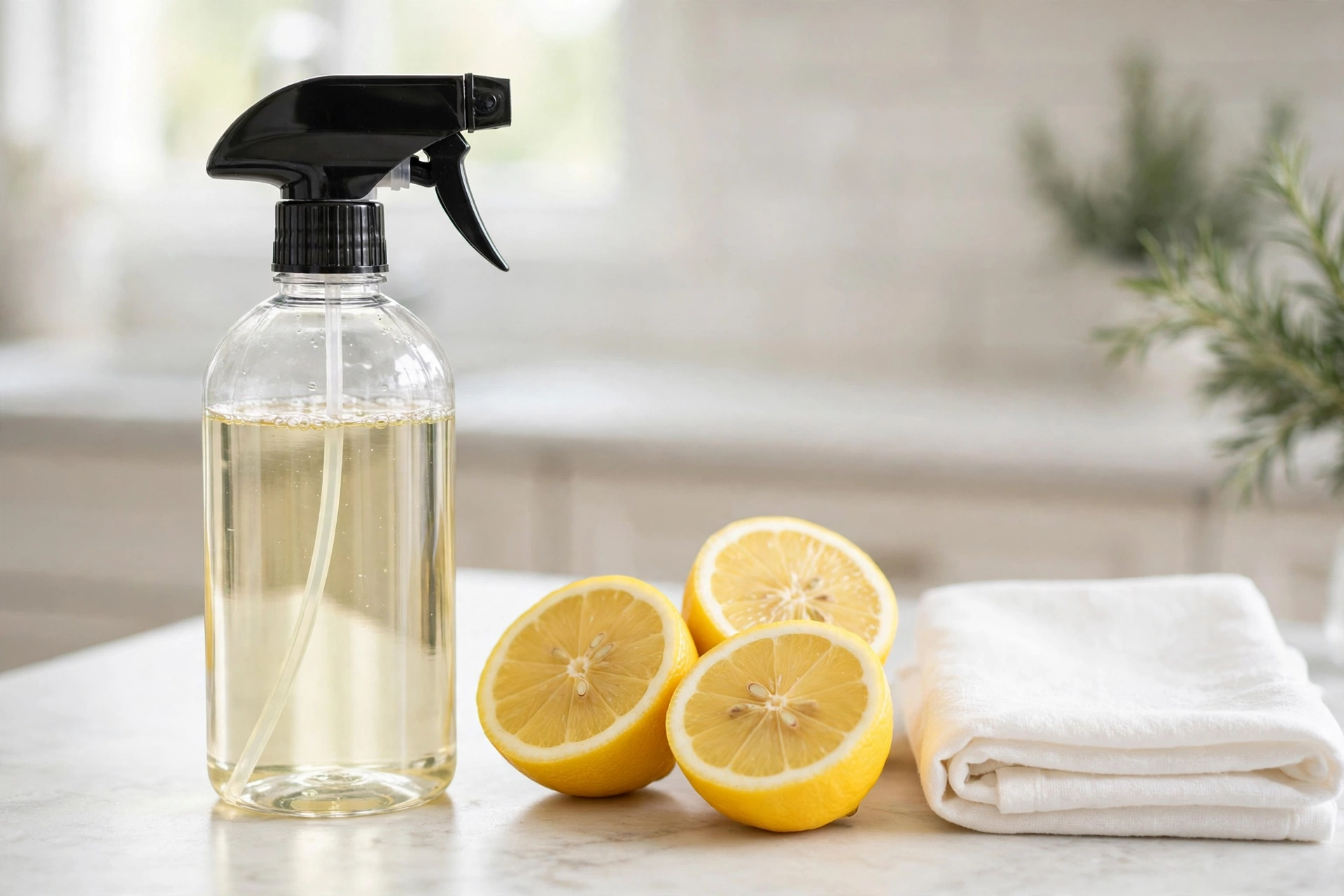
Ants follow a scent trail left by the scout ants. A simple mix of equal parts white vinegar and water wipes that trail away and confuses the ants that follow it. Spray the mixture along countertops, around the sink, and near the entry point, then wipe it clean. You can repeat this once or twice a day while the problem lasts. Vinegar is safe to use on most kitchen surfaces, cheap, and it leaves no smell behind once it dries. If you like a fresher scent, add a few drops of lemon juice to the mix.
3. Use Lemon Juice Around Entry Points
Ants dislike the strong smell of citrus, and lemon juice is an easy natural ant repellent for the kitchen. Squeeze fresh lemon juice along window sills, door frames, and the cracks where ants enter, or place lemon peels near the spots you have seen them. Like vinegar, lemon juice breaks up the scent trail, so ants lose their way. This works well as part of your daily cleaning routine, and it pairs nicely with other natural methods — for example, cleaning your microwave with lemon keeps that appliance fresh while also leaving a citrus scent ants avoid.
4. Remove the Food and Water That Attract Them
The fastest way to keep ants out of the kitchen is to take away their reason for visiting. Wipe up crumbs and spills straight away, especially sugary ones like juice, jam, honey, and syrup. Store sugar, flour, cereal, and pet food in sealed containers with tight lids, and never leave dirty dishes sitting in the sink overnight. Fix dripping taps and dry the sink area before bed, because ants also come looking for water. A kitchen that offers nothing to eat or drink is a kitchen ants will soon ignore.
5. Block the Entry Points
Once the trail is gone, seal the gaps ants use to get inside. A small tube of silicone sealant or caulk closes cracks around windows, skirting boards, and pipe openings. Check the seal around your kitchen door and any vents as well. This step takes only a few minutes, but it is the one that keeps ants out for good — sprays and wipes only treat the ants you can see, while sealing treats the cause.
6. Try Cinnamon or Peppermint Oil as a Natural Barrier
If you prefer a pleasant-smelling barrier, cinnamon and peppermint oil both work well. Sprinkle ground cinnamon along the trail and near entry points, or mix a few drops of peppermint essential oil with water in a spray bottle and mist it around windows and doors. Ants avoid both scents. Reapply every few days, especially after cleaning, because the scent fades. These are simple home remedies that are safe to use around food preparation areas.
7. Use a Borax Bait for a Stubborn Colony
When natural repellents are not enough and the same ants keep returning, a borax bait can deal with the whole colony. Mix a small amount of borax with sugar water and place it in a shallow lid near the ant trail, where the ants can carry it back to their nest. Be patient — it can take a few days for the bait to work through the colony. Important safety note: borax is toxic if eaten, so always keep baits well out of reach of children and pets, and never place them on surfaces where food is prepared.
8. Keep the Kitchen Clean Every Day
Ants rarely return to a kitchen that is cleaned regularly. A quick daily routine makes a big difference: wipe the counters after cooking, sweep the floor, take the rubbish out each evening, and rinse recycling before you put it in the bin. Sticky jars and bottles — honey, jam, sauce bottles — should be wiped down after use, because even a thin film of sweetness is enough to attract a scout ant. These small habits are the real secret behind how to prevent ants in kitchen spaces long term.
When to Call a Professional
Most kitchen ant problems clear up with the methods above. Call a pest control professional if ants keep returning after two weeks of cleaning and sealing, if you see large numbers of ants in several rooms, or if you notice winged ants indoors, which can be a sign of a larger colony nearby. A professional can find the nest and treat it safely, which is sometimes the only way to stop a stubborn problem.
Conclusion
Keeping ants out of the kitchen does not need strong chemicals or expensive products. Start by finding the trail, wipe it away with vinegar or lemon, remove the food and water that attract them, and seal the gaps they use to enter. Add a natural barrier like cinnamon or peppermint oil, and keep the daily cleaning habit going. In most homes, the ants are gone within a few days — and with the entry points sealed, they stay gone.
FAQ
Why do ants keep coming back to my kitchen?
Because the scent trail and the food source are still there. Wipe the trail with vinegar, remove all food and water, and seal the entry point — treating only the ants you can see is not enough.
What is the fastest natural way to get rid of kitchen ants?
Wiping the trail with a vinegar and water mix, then removing crumbs, spills, and open food, usually stops the visible ants within a day. Sealing the entry point stops them returning.
Does lemon really keep ants away?
Yes, ants dislike citrus. Fresh lemon juice or peels near entry points break up their scent trail, though you will need to reapply it regularly.
Are borax baits safe to use in a kitchen?
Borax baits work well but must be kept away from children and pets and off food preparation surfaces. If you are unsure, stick to vinegar, lemon, and sealing.
How to get rid of tiny ants in kitchen?
Tiny ants are usually sugar ants following a scent trail to something sweet. Wipe the trail with vinegar water, remove the food source, and seal the crack they use to enter — the same steps above work for tiny ants too.
How to get rid of black ants in kitchen?
Black ants are the most common kitchen ants. They respond to the same natural methods: vinegar spray on the trail, lemon juice at entry points, and food stored in sealed containers.
How to get rid of ants in kitchen naturally?
Use vinegar and water to erase the scent trail, lemon juice or peels at entry points, and cinnamon or peppermint oil as a barrier. No chemical sprays are needed.
