
Intro
You have a recipe ready to go, the oven is preheating, and then you realise the butter is still hard as a rock straight from the fridge. We have all been there. The good news is that you do not need to wait an hour for it to reach room temperature. Learning how to soften butter quickly is one of those small kitchen skills that saves a baking day, and most methods take less than ten minutes.
Softened butter matters more than most people think. In baking, it creams properly with sugar, traps air, and gives cakes and cookies their light texture. Cold butter, on the other hand, leaves lumps and uneven mixing. For spreading, soft butter glides over toast instead of tearing it. Below are the fastest, safest ways to soften butter, plus the mistakes to avoid.
1. Cut It into Small Pieces
This is the simplest way to soften butter quickly, and it needs no special equipment. Unwrap the cold butter, cut it into small cubes or thin slices, and spread the pieces on a plate. The extra surface area lets the butter warm up fast, usually in about 10 minutes.
Give the pieces a little space so air can reach every side. If your kitchen is warm, it may take even less time. This method works well when you have a few minutes and want the butter to soften evenly without any risk of melting.
2. Grate the Butter
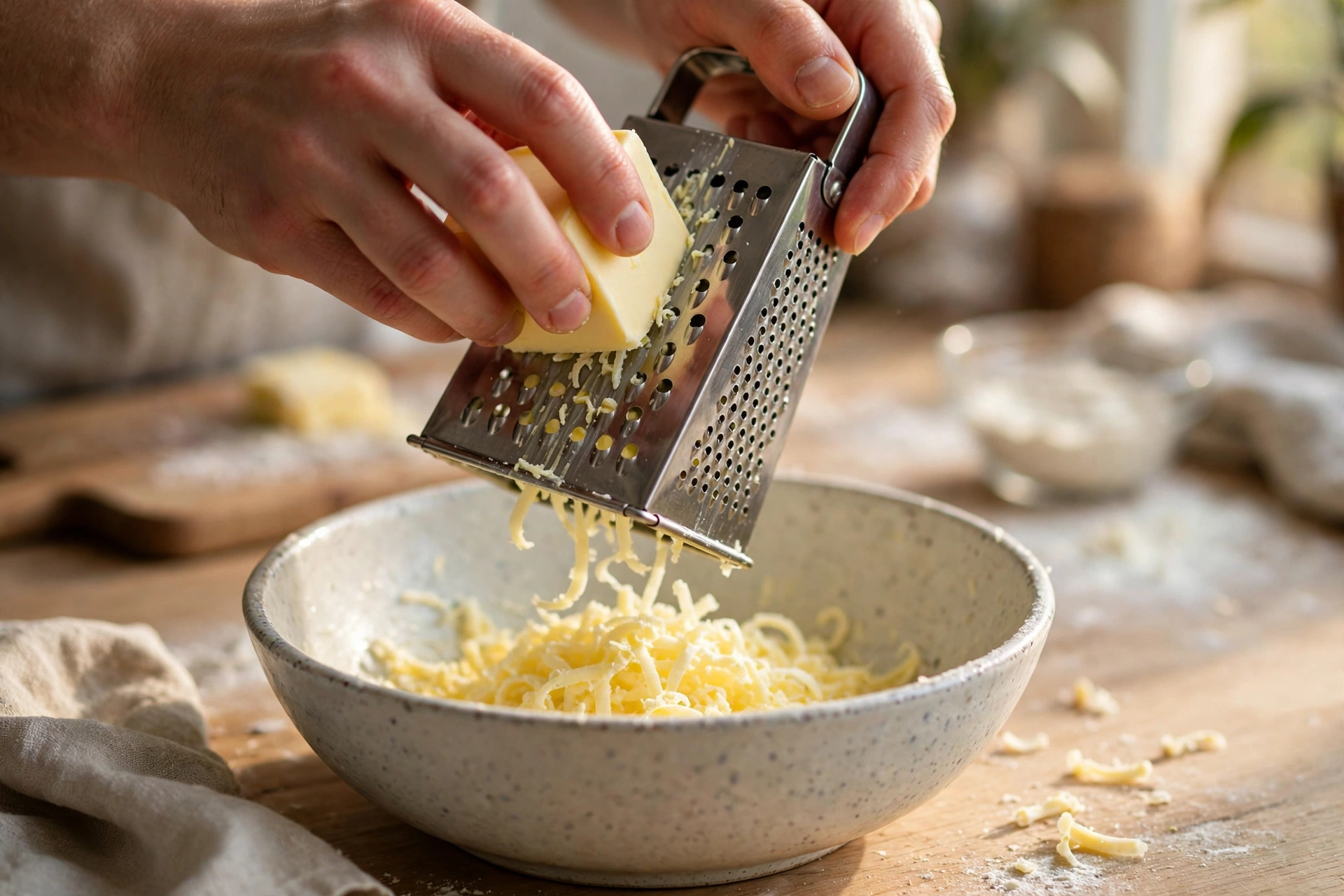
Grating is the fastest hands-on method, and it is ideal for baking. When you need to know how to soften butter for baking in a hurry, this is the trick to reach for. Hold the cold butter by the wrapper and grate it on the coarse side of a box grater into a bowl. The thin shreds soften in about two to three minutes, and you can mix them straight into your dough or batter.
This trick is especially handy for pastry and cookie dough, where you want the butter soft but still cool. It also works well when you need softened butter in a hurry and do not want to use the microwave at all.
3. Use the Microwave — Carefully
The microwave is the quickest option, but it is also the easiest to get wrong. If you are wondering how to soften butter in microwave without ruining it, the secret is short bursts and constant checking. Butter goes from solid to melted in seconds, and melted butter behaves very differently in baking. If you choose this method, use short bursts.
Cut the butter into cubes, place them in a microwave-safe bowl, and heat for just 5 seconds at a time. Check and turn the pieces between bursts. Stop as soon as the butter yields when you press it — it should be soft, not liquid. In most microwaves, 10 to 15 seconds in total is enough. Never microwave a whole stick for 30 seconds and hope for the best.
4. The Warm Water Trick
Place the cold butter in a sealed plastic bag and squeeze out the air. Then set the bag in a bowl of warm — not hot — water for about 5 minutes. The gentle warmth softens the butter evenly without melting it.
This is a good method when you want to learn how to soften butter without microwave and keep the butter clean and dry. Just make sure the bag is sealed properly so no water gets in, and use warm tap water rather than boiling water, which would melt the butter too fast.
5. Roll It Flat
Put the butter between two sheets of parchment paper and roll it flat with a rolling pin. The thin layer warms up in a minute or two, and you can scrape it up with a spatula and use it right away.
This method is quick, mess-free, and works well for spreading too — the flattened butter is easy to lift onto toast or a sandwich. It is also a neat trick when you need softened butter for frosting or a crumb topping.
6. Let It Sit Near a Warm Oven
If the oven is already on for baking, you can set the butter on a plate near the warm stove or on top of the oven. The gentle heat softens it in 10 to 15 minutes while you prepare the rest of your ingredients.
Keep the butter a little distance away from direct heat so it softens rather than melts. This is a useful passive method when you are already in the kitchen and have a few minutes to spare.
How to Tell When Butter Is Soft Enough
Softened butter should give easily when you press it with a finger, leaving a dent without your finger sinking straight through. It should still hold its shape and feel cool, not greasy or shiny. If it looks oily or has puddles, it has gone too far — melted butter will change the texture of cakes and cookies.
A simple test is to press the butter with the back of a spoon. If it spreads smoothly and holds a soft peak, it is ready. For most baking, this is exactly the texture you want.
Mistakes to Avoid When Softening Butter
- Do not melt it completely. Melted butter makes cookies spread too much and cakes turn dense. If you are learning how to soften butter for cookies, this matters most: softened butter and melted butter are not interchangeable.
- Do not leave it out all day. Butter left at room temperature for many hours can spoil, especially in a warm kitchen. Soften only what you need.
- Do not use boiling water. Very hot water melts the outside of the butter while the centre stays hard, giving you an uneven result.
- Do not microwave a whole stick at once. It melts unevenly, with liquid on the outside and a cold core. Always cut it up first and use short bursts.
How Long Does Softened Butter Keep?
Once butter is soft, use it within a couple of hours for the best results. If you softened more than you need, you can put it back in the fridge — it will firm up again and is still fine to use. Softened butter that has been sitting out for a long time, especially in a warm room, should be used quickly or discarded if it smells off.
For baking, it is best to soften butter just before you need it, so it stays at that perfect spreadable stage.
Conclusion
Knowing how to soften butter quickly turns a common kitchen frustration into a two-minute job. Cutting it into cubes, grating it, or rolling it flat are all reliable, no-fuss options, while the microwave works well if you use short bursts and check often. Whichever method you choose, the goal is the same: butter that is soft, cool, and ready to cream, spread, or mix.
Next time a recipe calls for softened butter, you will not have to wait around — or risk a melted mess. Pick the method that fits your time and your recipe, and get baking.
FAQ
How long does it take to soften butter at room temperature?
A whole stick of butter usually takes 30 to 45 minutes to soften at room temperature. Cutting it into cubes or grating it can bring that down to under 10 minutes.
Can I soften butter in the microwave?
Yes, but use 5-second bursts and check between each one. Stop as soon as the butter is soft to the touch. Overheating melts it, which changes how it behaves in baking.
What is the fastest way to soften butter?
Grating cold butter is the fastest reliable method — the shreds soften in about two to three minutes. The microwave is quicker still, but it is easy to overshoot and melt the butter.
Can I use melted butter instead of softened butter?
Not in most baking recipes. Melted butter makes cookies spread more and cakes denser, because it cannot trap air when creamed with sugar. Softened butter is the right texture for most recipes that call for it.
How do I soften butter for spreading on toast?
Cut it into thin slices or roll it flat between parchment paper. Both methods soften butter in a couple of minutes, so it spreads smoothly without tearing the bread. For more bread tips, see our guide on how to keep fresh bread fresh longer.
