
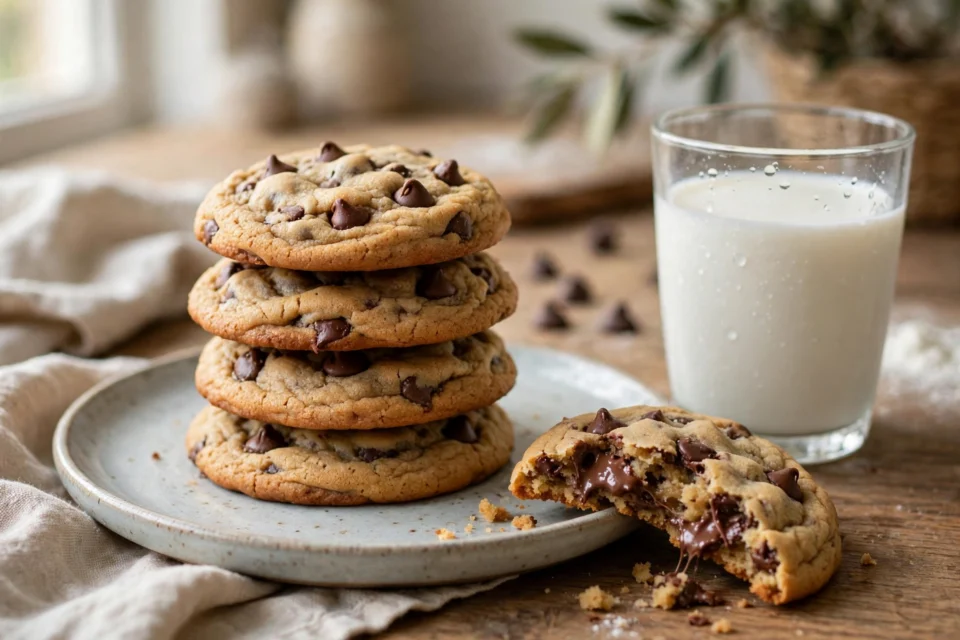
There is nothing quite like a warm cookie straight from the oven, soft in the middle with slightly crisp edges. The trouble starts a few hours later, when those same cookies turn dry and hard. If you have ever wondered how to keep cookies soft after baking, the good news is that it takes only a few small changes to how you bake, cool, and store them.
Cookies go hard mostly because they lose moisture. Air dries them out, overbaking drives out too much water, and the wrong container lets the softness escape. Once you understand that, every method below makes sense: it is all about locking moisture in and keeping air out.
1. Take Them Out of the Oven a Little Early
The single biggest reason cookies turn hard is overbaking. Cookies keep cooking on the hot tray for a few minutes after they leave the oven, so take them out when the edges look set but the centres still look slightly soft and puffy. They will firm up as they cool, and the middle will stay tender instead of drying out. If your recipe gives a time range, start checking at the earlier end.
2. Let Them Cool on the Tray First
Move hot cookies straight to a wire rack and they can dry out fast. Instead, let them rest on the baking tray for about five minutes. This lets them set without losing too much moisture. After that, move them to a wire rack so the bottoms do not go soggy, and let them cool completely before storing. Warm cookies in a sealed container create steam, which makes them damp and sticky rather than soft.
3. Store Them in an Airtight Container
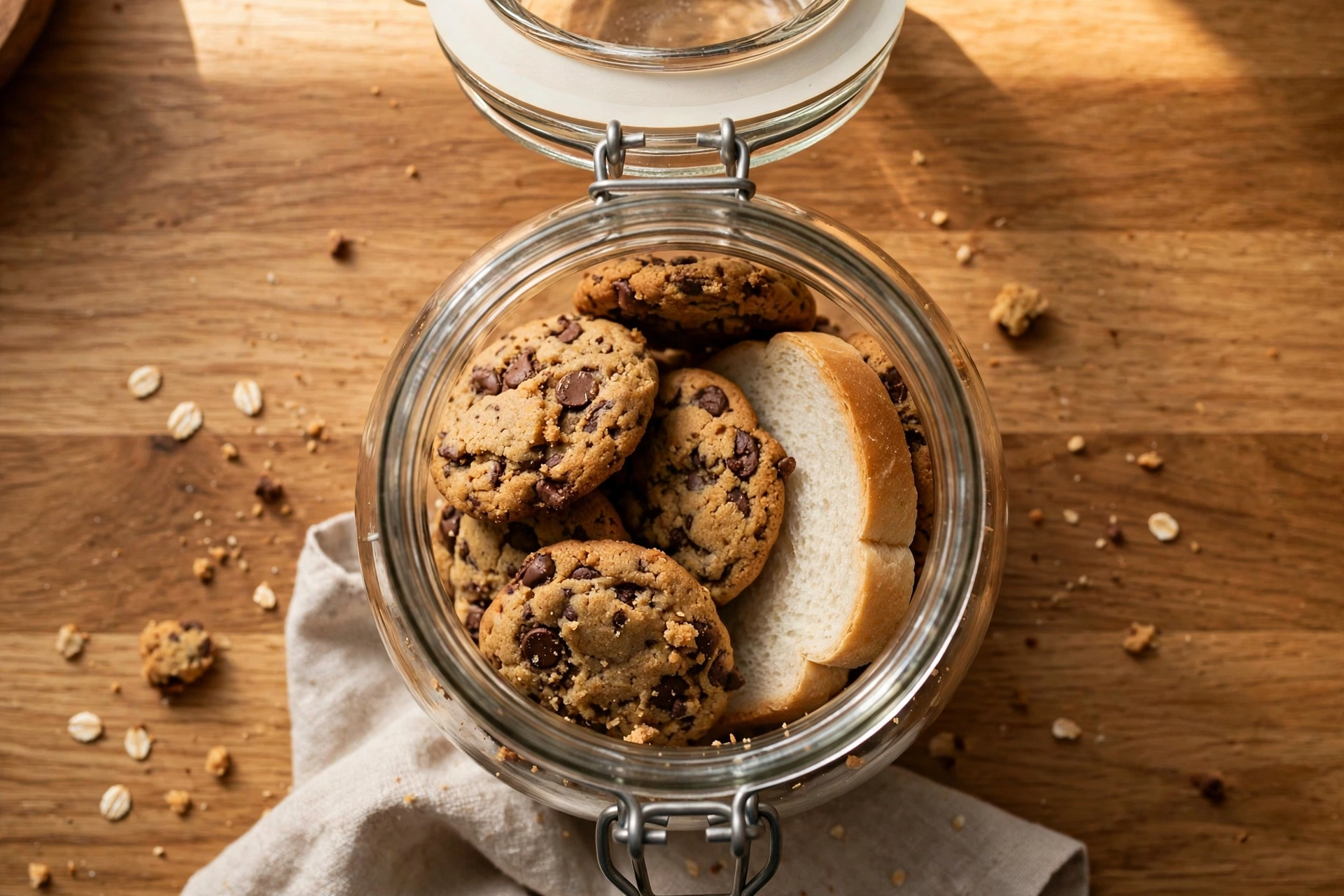
Once the cookies are fully cool, put them in an airtight container. A tin with a tight lid or a glass jar with a clamp seal works well. Keep different types apart, because crisp cookies and soft cookies stored together will swap textures: the soft ones dry out and the crisp ones go soggy. A sheet of baking paper between layers stops them sticking together and keeps them looking neat.
4. Try the Bread Slice Trick
This is the classic bakery trick for keeping cookies soft. Place a slice of plain white bread inside the container with the cookies. The bread gives off a little moisture, which the cookies slowly absorb, so they stay soft for days while the bread itself goes hard. Replace the bread slice every couple of days. A slice of apple works in a similar way, though it can add a faint flavour, so bread is the safer choice.
5. Keep Them Away from the Fridge
It is tempting to put cookies in the fridge to make them last, but cold air dries them out faster. Room temperature is best. A cool, dry cupboard is ideal. The only exception is cookies with cream cheese frosting or a filling that needs chilling, and even those should come back to room temperature before you eat them.
6. Freeze the Batch You Will Not Eat Soon
If you baked a big batch, freeze the extra cookies once they are completely cool. Put them in a freezer bag, squeeze out the air, and seal it. They keep well for up to three months. To enjoy them later, let them thaw at room temperature for about half an hour. You can also freeze raw cookie dough in balls and bake a few fresh ones whenever you like, which is the easiest way of all to enjoy soft cookies.
How to Soften Cookies That Already Went Hard
If your cookies have already turned hard, you can still rescue them. Put a cookie on a plate with a damp paper towel over it and microwave it for about ten seconds. The steam softens it up nicely. Eat it straight away, because it will firm up again as it cools. Another way is to warm them in a low oven, around 150°C (300°F), for three to five minutes. And of course, the bread slice trick works in reverse too: leave hard cookies in a sealed container with a slice of bread overnight and they will soften by morning.
Common Mistakes That Make Cookies Go Hard
A few habits work against soft cookies. Using too much flour or packing it into the measuring cup makes a dry dough. Skipping the step of creaming the butter and sugar properly leaves less air in the dough. Baking on a dark tray can brown the bottoms too fast. And storing cookies in a container that does not seal properly is the same as leaving them out on the counter. Small fixes here make a real difference, and if you are baking from scratch, starting with softened butter helps too — see our guide on how to soften butter quickly.
Conclusion
Learning how to keep cookies soft after baking comes down to three simple habits: bake them a touch less, cool them properly, and store them airtight with a slice of bread. These small steps keep homemade cookies soft and chewy for days, and even a batch that went hard can be saved. Bake a batch this weekend, try the bread trick, and enjoy cookies that stay soft right down to the last one.
