
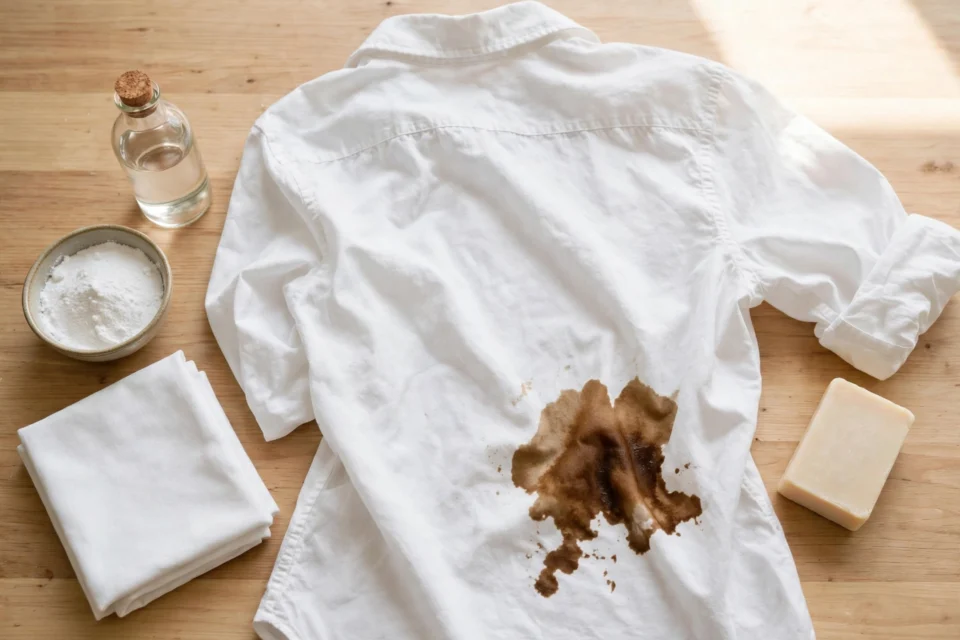
A cup of tea spilled on your favourite shirt is annoying, but a tea stain is not a lost cause. Tea leaves behind tannin, the natural compound that gives it colour, and tannin binds to fabric fibres — which is why the mark looks brown and stubborn. The good news is that you can remove tea stains from clothes with things you already have at home. Act fast for the best result, but even an old, dried stain can usually be lifted with the right method. Here is how to remove tea stains from clothes, step by step.
Act Fast: Blot, Don’t Rub
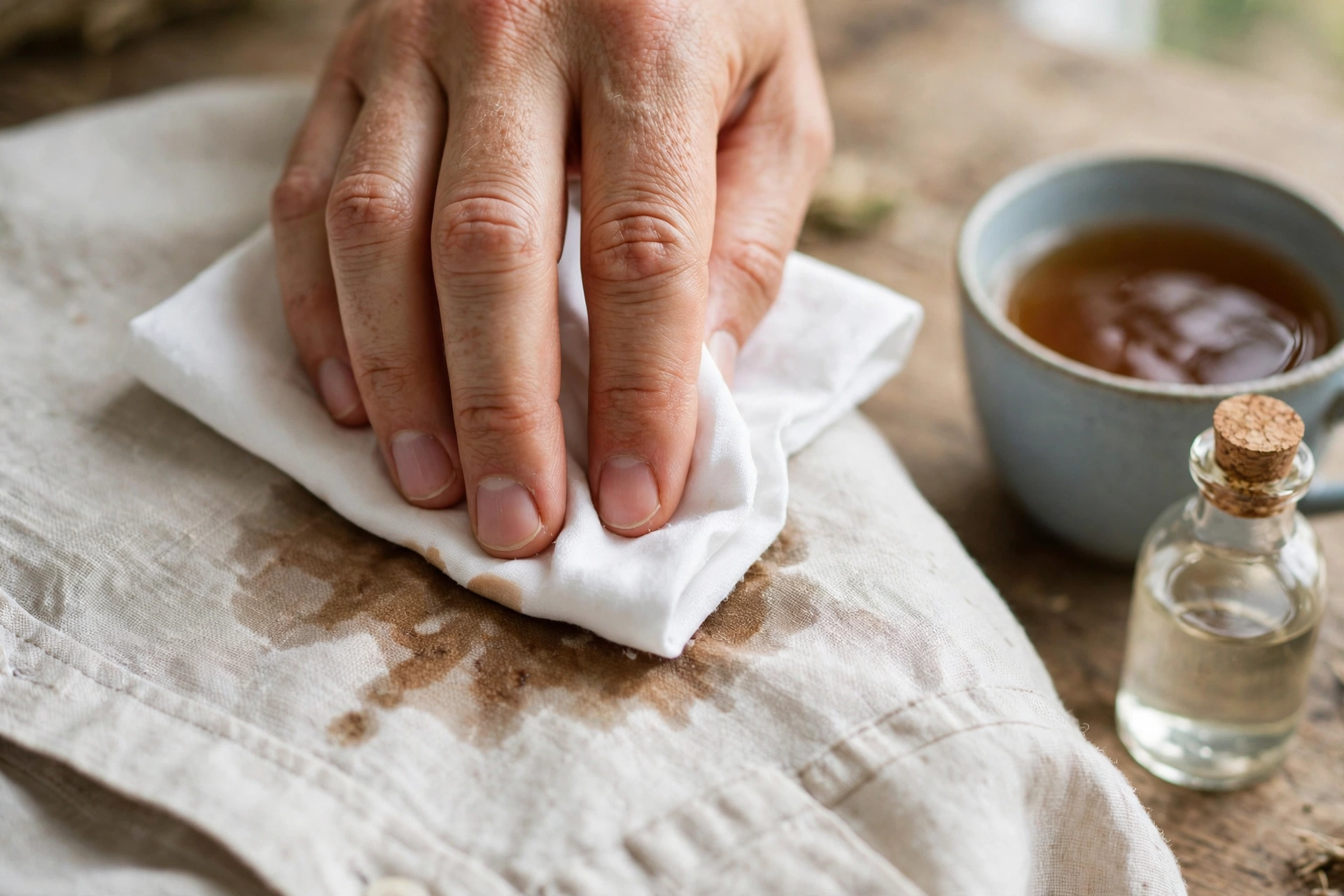
The first minute matters most. As soon as tea spills, grab a clean white cloth or paper towel and blot the stain gently from the outside in. Pressing lifts the tea out of the fibres; rubbing pushes it deeper and spreads the mark. Keep turning the cloth to a clean area and keep blotting until no more colour transfers. If you are out, a damp napkin works for this first step — just do not rub the fabric, and deal with the stain properly when you get home. Never put a tea-stained garment in the dryer before treating it, because heat sets tannin stains and makes them much harder to remove.
Method 1: Cold Water and Dish Soap
For a fresh stain, this is the simplest place to start. Rinse the stained area under cold running water for a minute, holding the fabric so the water flows through the stain from the back. Then apply a few drops of plain dish soap directly onto the mark and rub it in gently with your fingers. Leave it for 10 to 15 minutes, then rinse again with cold water. In many cases the stain fades completely at this stage. If a faint mark remains, repeat the soap treatment once more before washing the garment as usual. Dish soap works well because it breaks down the oils in the tea without damaging most fabrics.
Method 2: White Vinegar Solution
White vinegar is one of the most reliable home remedies for how to get tea stains out of clothes. Mix one tablespoon of white vinegar with one tablespoon of dish soap in two cups of cold water. Soak the stained part of the garment in this solution for about 30 minutes. The vinegar helps loosen the tannin while the soap lifts it away. After soaking, rinse with cold water and check the stain. If it is gone, wash the garment normally. If a shadow remains, move on to the baking soda method below. Do not use coloured vinegar or apple cider vinegar for this — only clear white vinegar, so you do not add a new stain.
Method 3: Baking Soda Paste
For stains that have dried, or for a white shirt where every mark shows, baking soda is a gentle but effective option. Make a thick paste with three parts baking soda and one part water, then spread it over the stain and leave it for 30 minutes. The paste draws the tannin out of the fibres as it dries. Brush off the dried paste, rinse the area with cold water, and then wash as usual. This method is safe for cotton and most washable fabrics, and it also helps with the faint brown ring a tea stain sometimes leaves behind. To remove a tea stain from a white shirt, you can follow the paste with a short soak in oxygen-based stain remover before washing — check the garment label first.
Method 4: Boiling Water for White Cotton
White cotton can take a stronger approach. Stretch the stained part of the fabric over a bowl, secure it with a rubber band, and pour boiling water from a height of about 30 centimetres directly onto the stain. The force of the water pushes the tannin through the fibres. This old-fashioned method works surprisingly well on plain white cotton shirts and tea towels. Use it only on sturdy white cotton — never on silk, wool, or coloured fabrics, which heat and hot water can damage.
How to Remove Old Tea Stains from Clothes
An old tea stain that has already been washed and dried is harder, but not hopeless. Start by soaking the garment in cold water with a scoop of oxygen-based stain remover for four to six hours, or overnight for a heavy stain. Then treat the area with the vinegar solution from Method 2 and wash in the warmest water the care label allows. If the stain survives that, repeat the soak once more. Patience matters here: two gentle rounds beat one harsh one, and bleach should be a last resort only on white cotton. Never use chlorine bleach on coloured fabric, and never mix bleach with vinegar.
Tea Stains on Delicate Fabrics
Silk, wool and dry-clean-only garments need a softer touch. For silk, blot the stain, then dab it with a solution of one part white vinegar to two parts cold water, using a clean cloth. Rinse by dabbing with plain cold water and let the garment air dry. For wool, use cold water and a tiny amount of gentle wool wash, and never rub — wool felts easily when it is wet and agitated. If the stain does not lift, or the label says dry clean only, take the garment to a professional cleaner and point out the stain. Tell them it is tea, so they can choose the right treatment.
What Not to Do
A few common mistakes make tea stains worse. Do not use hot water on a fresh stain before treating it, because heat sets tannin. Do not rub the stain with a coloured towel or tissue, which can transfer dye onto the fabric. Do not put the garment in the dryer until the stain is completely gone — check it after washing, and if any mark remains, treat it again first. And do not reach for bleach as a first step; it can yellow white fabric and ruin colours, while the gentler methods above usually work.
More Stain Guides
Tea is far from the only stain that lands on clothes. If you have dealt with lipstick stains, grass stains or cooking oil stains before, you will recognise the same rule: blot first, treat with something gentle, and wash only once the mark is gone. The methods above work on the same principle, so keep vinegar, baking soda and dish soap on hand and most everyday stains become a ten-minute job.
Frequently Asked Questions
Does tea stain clothes permanently?
No, not usually. A fresh tea stain comes out easily with cold water and dish soap. Even an old stain can be removed with an oxygen-based soak and a vinegar treatment, though it may take two rounds.
How do I get a tea stain out of a white shirt?
Blot the stain, apply the vinegar and dish soap solution for 30 minutes, then use a baking soda paste if a mark remains. For white cotton, the boiling water method also works well. Finish with a normal wash and check before drying.
Can I remove a tea stain without bleach?
Yes. White vinegar, baking soda and dish soap remove most tea stains without any bleach. Oxygen-based stain remover is a safe bleach alternative for white and coloured clothes.
Will tea stain clothes if it dries?
Dried tea leaves a brown tannin mark, but it is still removable. Soak the garment in cold water with oxygen-based stain remover for a few hours, then treat with vinegar solution and wash as usual.
Conclusion
Learning how to remove tea stains from clothes is mostly about speed and patience: blot the spill straight away, treat the tannin with cold water, dish soap, vinegar or baking soda, and wash only when the mark is gone. Fresh stains usually lift in minutes, and even old, dried stains come out with an overnight soak. Keep a bottle of white vinegar and a box of baking soda in the cupboard, and the next spilled cup of tea will be a small chore instead of a ruined shirt.
