
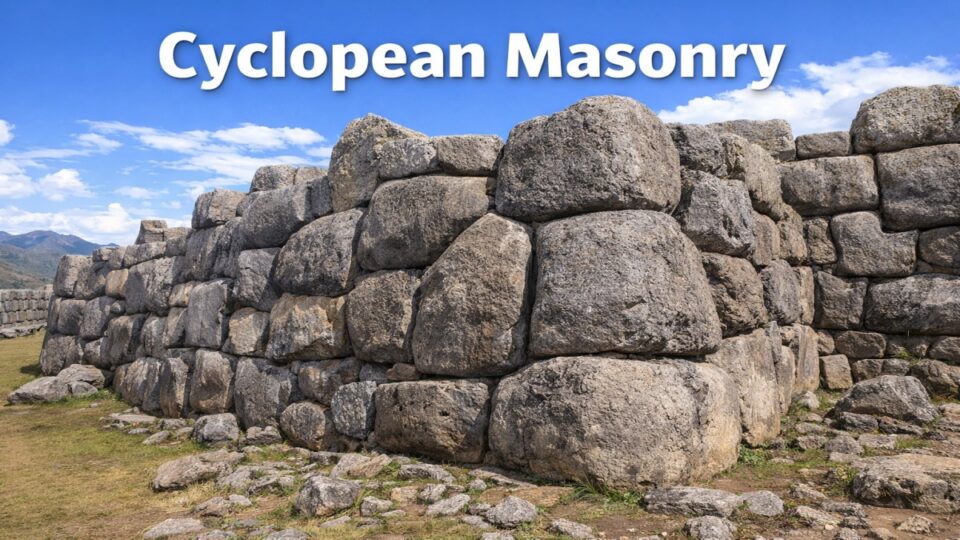
Cyclopean Masonry. Imagine standing in front of a wall so massive that it looks like it was stacked by giants rather than humans. That sense of awe is exactly what cyclopean masonry delivers. This ancient building technique, known for its enormous stone blocks fitted together without mortar, has puzzled architects, historians, and travelers for centuries.
Let’s explore what cyclopean masonry really is, where it came from, how it was built, and why it still amazes us today.
What Is Cyclopean Masonry?
Cyclopean masonry is a construction method that uses huge, irregular stone blocks fitted together tightly without mortar. The stones are often so large and heavy that ancient Greeks believed only the mythical Cyclopes—one-eyed giants—could have built them.
The name “cyclopean” comes directly from this legend.
Key Features of Cyclopean Masonry
Cyclopean walls have several distinctive characteristics:
- Massive stone blocks, often weighing several tons
- Irregular shapes fitted together like a puzzle
- No cement or mortar between stones
- Incredible durability lasting thousands of years
These walls rely purely on gravity, craftsmanship, and perfect fitting.
Historical Origins
Cyclopean masonry dates back to the Bronze Age (around 1600–1200 BCE). It appeared in multiple ancient civilizations, especially around the Mediterranean.
Famous Ancient Sites
- Mycenae (Greece) – The Lion Gate is the most iconic example
- Tiryns (Greece) – Massive fortification walls
- Hattusa (Turkey) – Capital of the Hittite Empire
- Peru (Inca Civilization) – Though technically different, Inca stonework shares cyclopean traits
These structures have survived earthquakes, wars, and centuries of weathering.
How Was Cyclopean Masonry Built?
This is the question that still amazes researchers.
Stone Quarrying
Ancient builders cut stones using:
- Bronze or iron tools
- Stone hammers
- Fire and water cracking techniques
The stones were roughly shaped at the quarry.
Transportation of Massive Stones
Without modern cranes, builders used:
- Wooden rollers
- Ramps made of earth and rubble
- Human and animal labor
Some blocks weighed over 10 tons, yet they were moved across hills and valleys.
Precision Fitting
Each stone was carefully shaped so it would interlock with its neighbors. Even today, you can’t slide a knife blade between many of these joints.
Types of Cyclopean Masonry
1. True Cyclopean
Irregular, massive stones fitted closely without courses.
2. Polygonal Masonry
Stones are cut into polygon shapes, fitting together perfectly.
3. Ashlar Masonry
Rectangular stones arranged in neat rows (a later refinement).
Engineering Brilliance Behind the Technique
Cyclopean walls are more than just big rocks piled together.
They are:
- Earthquake-resistant due to flexible joints
- Extremely stable because of weight distribution
- Long-lasting because no mortar can decay
This technique was ahead of its time by thousands of years.
Myths and Legends
Ancient Greeks truly believed that giants built these walls. According to legend, the hero Perseus brought Cyclopes from Asia to build Mycenae’s fortifications.
Even today, standing before these structures makes the myth feel almost believable.
Cyclopean Masonry Beyond Greece
Although the term is Greek, similar techniques appear worldwide.
- Inca Walls (Peru) – Machu Picchu stonework fits so tightly it rivals Greek examples
- Sardinia (Italy) – Nuraghe towers built with huge stones
- Japan – Early castle foundations using massive irregular stones
This suggests that many ancient cultures independently mastered this art.
Why Cyclopean Masonry Still Matters
Modern engineers still study these walls because:
- They outlast concrete structures
- They resist natural disasters
- They demonstrate sustainable construction without chemicals
In an age of steel and cement, these ancient stones quietly remind us that human ingenuity never needed machines to be magnificent.
Preservation Challenges Today
Despite their strength, cyclopean structures face threats:
- Urban development
- Pollution
- Tourism damage
- Neglect
Preserving them is crucial for understanding human history.
Cyclopean Masonry in Modern Architecture
Some architects today borrow inspiration from cyclopean design:
- Stone facades
- Irregular block patterns
- Gravity-based construction
While we no longer build entire cities this way, the spirit of the technique lives on.
Conclusion
Cyclopean masonry is more than an ancient building method—it is a message carved in stone from our ancestors. With simple tools, immense patience, and brilliant skill, they built walls that still stand after 3,000 years.
These silent giants of architecture remind us that true greatness doesn’t need concrete, machines, or steel—only vision, determination, and a deep understanding of nature.
FAQs
1. Why is it called cyclopean masonry?
Because ancient Greeks believed only Cyclopes (giants) could lift such massive stones.
2. Did builders really use no mortar?
Yes. The stones were shaped so precisely that they locked together naturally.
3. How heavy were the stones?
Some blocks weighed over 10 tons.
4. Where can I see cyclopean masonry today?
Mycenae and Tiryns in Greece are the best examples.
