
Introduction to Doom and the Mac Touch Bar
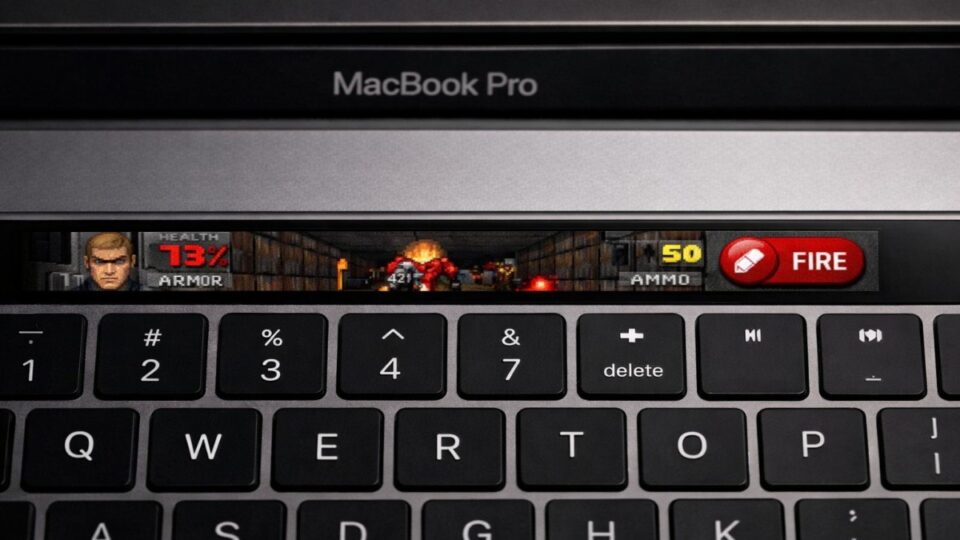
Doom on Mac Touch Bar. If there’s one rule the internet never breaks, it’s this: If it has a screen, someone will try to run Doom on it. From ATMs to smart refrigerators, Doom has become more than a game—it’s a cultural experiment. So when developers managed to run Doom on the MacBook Touch Bar, the internet did what it does best: lose its mind.
What Is Doom?
Released in 1993, Doom is a legendary first-person shooter that defined PC gaming. Its fast-paced action, mod-friendly engine, and relatively simple system requirements turned it into the perfect candidate for endless ports.
Understanding the Mac Touch Bar
The Touch Bar was Apple’s OLED strip introduced on certain MacBook Pro models. It replaced physical function keys with a dynamic, context-aware touch interface. While innovative, it never fully caught on—and Doom gave it a strange second life.
Why Running Doom on the Mac Touch Bar Went Viral
The Tech Community’s Love for “Can It Run Doom?”
Running Doom on unconventional hardware is like a badge of honor for developers. It’s not about comfort—it’s about proving what’s possible.
Doom as a Benchmark for Creativity
Doom’s open-source nature makes it a playground for programmers. If Doom runs, it means you’ve successfully mastered rendering, input handling, and optimization—even on bizarre hardware.
How Doom Was Ported to the Mac Touch Bar
Technical Challenges
The Touch Bar was never meant to be a gaming display.
Hardware and Software Constraints
- Extremely small resolution
- Limited refresh rate
- Touch input instead of physical buttons
Creative Workarounds Used by Developers
Developers mapped movement and actions to touch gestures and buttons, compressing the Doom experience into a thin OLED strip. Think of it as playing Doom through a keyhole—awkward, but impressive.
Gameplay Experience on the Touch Bar
Controls and Responsiveness
Movement is usually mapped to virtual buttons, while firing or turning may rely on taps or swipes. Is it ideal? Not at all. Is it functional? Surprisingly, yes.
Visual Quality on a Tiny OLED Display
Despite the size, the OLED screen delivers sharp contrast. Doom’s pixelated art style actually works in its favor here.
Tools and Technologies Behind Doom on Touch Bar
Programming Languages and APIs
Most projects rely on:
- C or C++
- macOS Touch Bar APIs
- Custom rendering pipelines
macOS and Touch Bar Frameworks
Apple’s NSTouchBar framework allows developers to push custom visuals and handle user input—exactly what Doom needs to survive in this tiny space.
Step-by-Step Concept: How Developers Make It Happen
Capturing Input
Touch gestures are translated into movement commands—forward, backward, shoot, strafe.
Rendering Graphics
The Doom engine renders frames scaled down to fit the Touch Bar resolution.
Optimizing for Performance
Every pixel counts. Developers strip down effects to keep frame rates playable.
Is Doom on the Touch Bar Actually Playable?
Practical Gameplay vs Experimental Fun
Let’s be honest: this isn’t how you should play Doom. It’s more like riding a bike with square wheels—it moves, but it’s not smooth.
Who Would Enjoy This Setup?
- Developers
- Retro gaming enthusiasts
- People who enjoy tech experiments
Comparison With Other Unusual Doom Ports
Doom on Calculators
Yes, it exists. And yes, it’s painful to play.
Doom on Smart Fridges and Pregnancy Tests
At this point, Doom ports are digital performance art. The Touch Bar fits right in.
What Doom on the Touch Bar Says About Apple Hardware
Flexibility of macOS
macOS allows deep customization if you know what you’re doing.
Missed Potential of the Touch Bar
Projects like this highlight what the Touch Bar could have been—a creative, interactive canvas.
Educational Value of Doom Touch Bar Projects
Learning Embedded Graphics
Developers learn about scaling, rendering, and optimization.
Inspiring New Developers
Nothing motivates like seeing a 1993 game run where it absolutely shouldn’t.
Conclusion
Doom on the Mac Touch Bar isn’t about practicality—it’s about possibility. It’s a reminder that creativity often lives in the most unnecessary places. While the Touch Bar may be fading into Apple history, projects like this ensure it won’t be forgotten. Doom didn’t just run on the Touch Bar—it immortalized it.
FAQs
1. Can I install Doom on my Mac Touch Bar today?
Yes, if you have a compatible MacBook Pro and access to the project files.
2. Is Doom on the Touch Bar officially supported by Apple?
No, it’s a community-driven experiment.
3. Does it affect Mac performance?
Minimal impact, as it’s a lightweight application.
4. Is the Touch Bar version of Doom open source?
Most projects are available on GitHub.
5. Why do developers keep porting Doom everywhere?
Because it’s fun, challenging, and a symbol of technical creativity.
