
If you have spotted small grey-brown moths fluttering around your kitchen, or found tiny webbing inside a bag of flour, you probably have pantry moths. Learning how to get rid of pantry moths is not difficult, but it does take a proper clean-out — killing the moths you can see is only half the job. The larvae hide in dry food, so the real fix is finding the source, throwing away infested food, cleaning the shelves properly, and storing everything in sealed containers. This guide walks you through each step, including natural methods and a simple homemade pantry moth trap.
What Are Pantry Moths and How Do You Spot Them?
Pantry moths, most often Indian meal moths, are small moths with grey wings and a bronze or copper band. They lay their eggs in dry foods such as flour, rice, pasta, cereals, dried fruit, nuts, spices and even pet food. The eggs hatch into tiny cream-coloured larvae that spin fine silk webbing and leave small clumps in the food. You may also see adult moths resting on ceilings or walls in the evening, and larvae crawling up the sides of cupboards looking for a place to pupate. If you are unsure whether you have them, check the oldest packets at the back of the pantry first — that is where an infestation usually starts.
Step 1: Inspect Every Packet and Throw Away Infested Food
Start by taking everything out of the pantry, shelf by shelf. Open every packet of dry food and look for webbing, clumps, tiny caterpillars or live moths. Throw away anything that shows signs of infestation, and seal it in a bag before it goes in the bin so the moths cannot escape into the house. Do not try to save a half-used bag of flour with a few webs in it — the eggs are too small to see, and keeping it means the problem will come back. As a rule, if a packet has been open for months and you are not sure, it is safer to throw it away. This is the single most important step when you want to know how to get rid of moths in kitchen cupboards for good.
Step 2: Vacuum and Clean the Shelves Properly
Once the pantry is empty, vacuum every shelf, corner and crack, including the joints and the undersides of shelves where larvae hide. Empty the vacuum straight away into a sealed bag and take it outside. Then wipe all surfaces with hot water mixed with white vinegar — about one part vinegar to one part water. Vinegar cuts through grease and removes the scent trails that attract moths, and it is a safe cleaner to use where food is stored. Pay attention to the gaps between shelves and the wall, and leave the cupboard doors open for a while so everything dries fully before you put food back.

Step 3: Use a Pantry Moth Trap to Catch the Adults
A pantry moth trap catches the adult male moths and breaks the breeding cycle. You can buy pheromone traps, which use a scent that attracts male moths onto a sticky surface, or you can make a simple homemade version: pour a little apple cider vinegar into a small bowl, add a drop of washing-up liquid, and cover it with cling film with a few small holes poked in it. The moths are drawn to the vinegar, slip through the holes and cannot get out. Place one or two traps on the pantry shelves and one near the ceiling. A trap on its own will not solve an infestation, but combined with cleaning it tells you whether moths are still active — if the trap stays empty for two or three weeks, the problem is likely gone.
Step 4: Try Natural Repellents
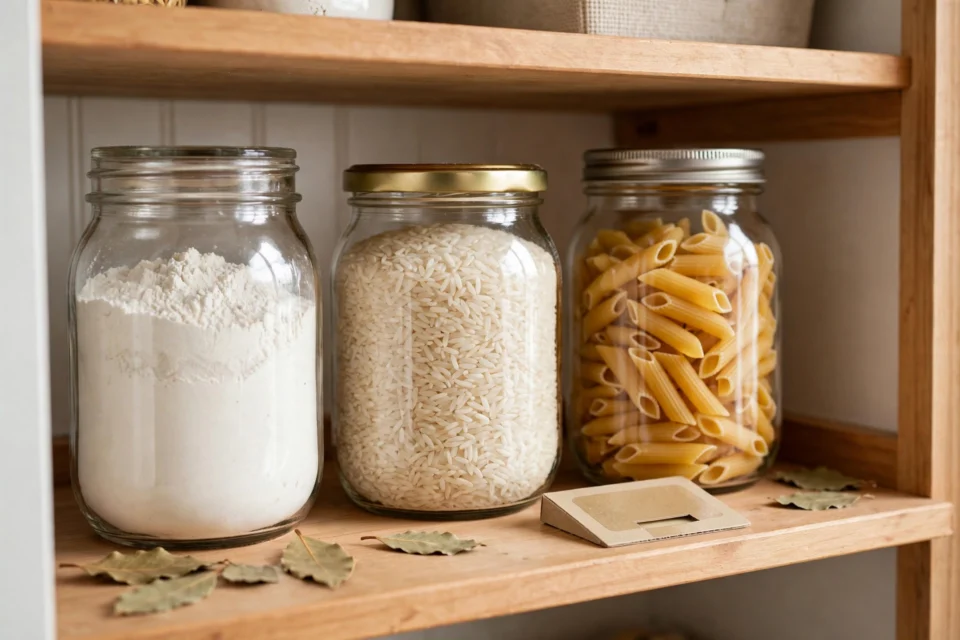
If you prefer to avoid chemicals in the kitchen, there are natural options that help once the pantry is clean. Many people place dried bay leaves on shelves and inside containers of flour and rice — moths dislike the smell, and bay leaves are cheap and safe around food. Cedar blocks or dried lavender sachets also work as mild repellents in cupboards. These will not kill an existing infestation, so use them as a second line of defence after cleaning, not instead of it. This is the simplest way to learn how to get rid of pantry moths naturally without spraying anything near your food.
Step 5: Store Food in Airtight Containers
Pantry moths can chew through paper bags, cardboard boxes and thin plastic, so the only reliable storage is glass jars or hard plastic containers with tight-fitting lids. Transfer flour, rice, pasta, cereals and nuts into sealed containers as soon as you bring them home. This does two things: it stops moths from getting into clean food, and it contains any eggs that may already be inside a new packet, so one bad bag cannot spread to the whole pantry. Clear jars also make it easy to spot webbing or larvae early, before the problem grows.
Step 6: Freeze New Dry Goods Before Storing Them
As an extra precaution, put new bags of flour, rice or grains in the freezer for three to four days before moving them to the pantry. Freezing kills any eggs or larvae that came home from the shop. It costs nothing, takes no effort, and is one of the most reliable ways to keep a clean pantry clean. Just make sure the packet is sealed so moisture cannot get in.
How to Prevent Pantry Moths from Coming Back
Once the moths are gone, a few habits will keep them away. This is how to prevent pantry moths long term: buy dry goods in smaller amounts so nothing sits open for months, use older packets first, and wipe shelves every few weeks. Check new packets before you put them away, and keep pet food in sealed containers too, since it is a common hiding place. If you bring home bulk grains or flour, freeze them first as described above. A quick monthly check of the back of the pantry takes a minute and catches any new problem while it is still small. If you are dealing with other kitchen pests as well, our guide on how to keep ants out of the kitchen covers simple natural methods for that problem too.
Frequently Asked Questions
Are pantry moths harmful to eat?
Pantry moths do not bite or spread disease, but food they have infested should not be eaten. The larvae, webbing and droppings contaminate the food, so throw infested packets away.
How long does it take to get rid of pantry moths?
With a full clean-out and traps in place, most infestations clear within two to four weeks. The life cycle from egg to adult takes several weeks, so keep the traps up and keep checking until no moths appear for at least two weeks.
Do pantry moths come from the shop?
Often, yes. Eggs and larvae frequently arrive in packets of flour, rice or dried goods bought from the shop, especially packets that have been on the shelf for a long time. That is why freezing new dry goods and using sealed containers helps so much.
Can I use insect spray in the pantry?
It is best to avoid spraying insecticide where food is stored. Cleaning, traps and sealed storage are safer and usually enough. If an infestation is very severe, consider calling a pest-control professional rather than spraying the shelves yourself.
Conclusion
Getting rid of pantry moths comes down to three things: remove the infested food, clean the shelves properly, and store everything in sealed containers. A simple pantry moth trap helps you catch the adults and check whether the problem is truly gone, while bay leaves and regular checks keep it from coming back. It takes one thorough afternoon of work, but once it is done, your pantry stays clean and your food stays safe.
