
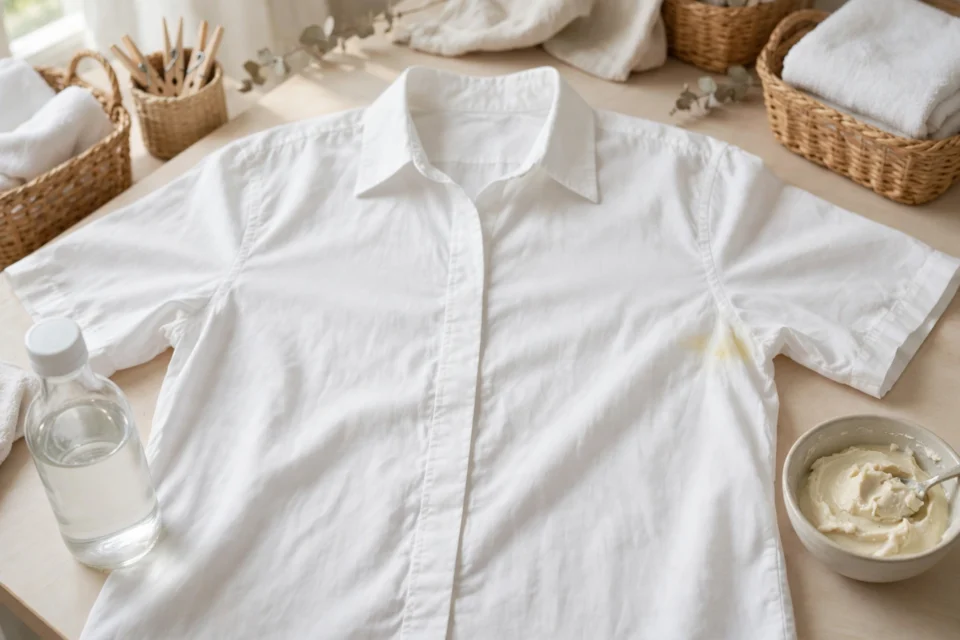
Few things are as annoying as putting on a favourite shirt only to find white marks under the arms or yellow stains that will not wash out. Learning how to remove deodorant stains from clothes is easier than most people think, and you probably already have everything you need at home. The white marks and the yellow stains are different problems with different fixes, so this guide covers both — plus how to stop the stains coming back.
Why Deodorant Stains Clothes in the First Place
Most stains come from the aluminium compounds in antiperspirants, which react with sweat and fabric over time. On dark clothes this shows up as white, chalky marks. On white clothes it builds into yellow stains, especially around the underarms and collar. The longer the residue sits, the harder it is to shift, which is why a stain that has been through the dryer several times can feel permanent. It rarely is — the right pre-treatment before washing usually lifts it.
Start with Plain Water and a Soft Cloth
For fresh white marks on dark clothes, the simplest fix often works. Dampen a clean cloth with plain water and gently rub the mark — many fresh marks are just surface residue and lift straight off. A pair of clean nylon tights or a dry terry-cloth towel also works well for rubbing marks off dark fabric without water. Do this before the shirt goes in the wash, because heat from the dryer can set a stain that water alone would have removed.
Use White Vinegar for White Marks
White vinegar is one of the best tools for removing deodorant stains from clothes. Mix equal parts white vinegar and water, dab it onto the stained area with a cloth, and leave it for 15 to 30 minutes. Then rub the fabric gently against itself and wash the garment as normal. Vinegar dissolves the mineral residue that causes the white marks, and it is safe for most washable fabrics. Avoid using it on silk or other delicates — check the care label first.
Try a Baking Soda Paste for Yellow Stains
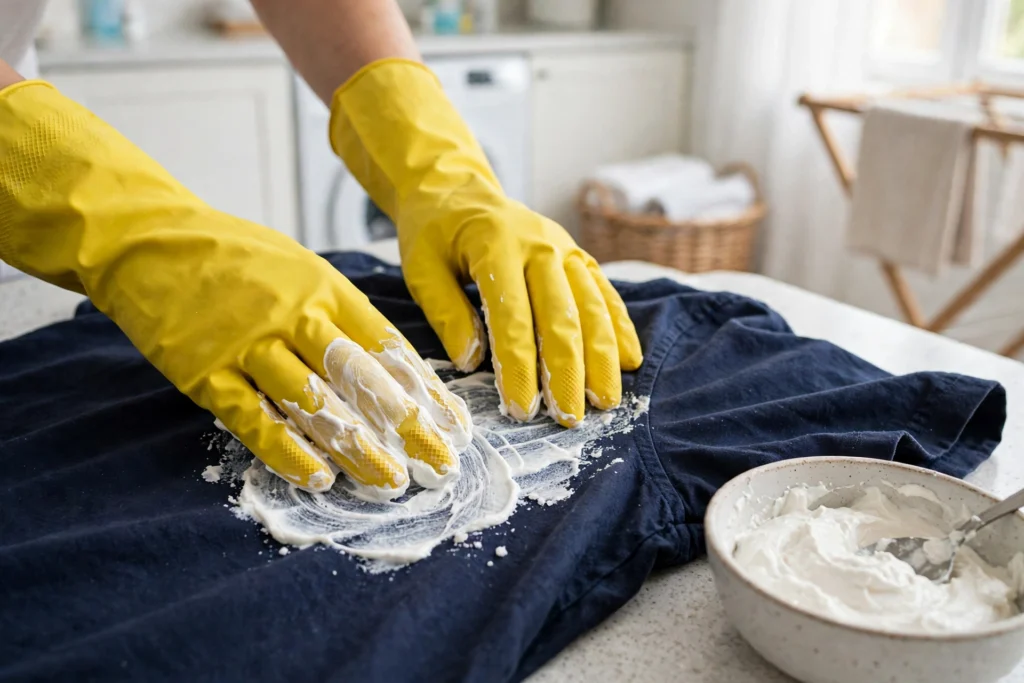
Yellow stains on white shirts need something stronger. Make a paste from three parts baking soda to one part water, spread it over the stain, and leave it for 30 minutes. For older stains, add a little white vinegar to the paste so it fizzes gently into the fibres, and leave it for up to an hour. Scrub lightly with an old toothbrush, then wash in the warmest water the care label allows. Repeat once if the stain has faded but not gone — two gentle treatments beat one harsh one.
Lemon Juice and Sunlight for White Cotton
Lemon juice is a natural lightener that works well on white cotton. Squeeze fresh lemon juice onto the yellowed area, rub it in, and leave the garment in sunlight for an hour or two before washing. The combination of citric acid and UV light lifts yellowing that detergent alone cannot shift. Use this only on white fabrics — lemon juice can lighten coloured clothes too, which is the last thing you want on a dark shirt.
Use an Oxygen-Based Stain Remover
For stubborn stains, an oxygen-based stain remover (the kind sold as a powder or soak, not chlorine bleach) is the safest strong option. Dissolve it in warm water, soak the garment for one to six hours, then wash as normal. It is colour-safe, works on both white and coloured fabrics, and is far gentler than chlorine bleach, which can yellow white fabric further and damage coloured clothes. Never mix stain removers, and always follow the product instructions.
Wash Correctly After Pre-Treating
Pre-treatment only works if the wash that follows is right. Use the warmest water the care label allows, because heat helps dissolve the loosened residue — but only after the stain has been treated, never before. Check the stain before the garment goes in the dryer: heat sets any stain that is still there, so if you can still see it, treat and wash again instead of drying. Air-drying is the safe choice until the stain is fully gone.
Mistakes to Avoid
Do not put a stained shirt in the dryer before treating it — heat sets the stain and makes it much harder to remove. Avoid chlorine bleach on deodorant stains, as it can react with the aluminium residue and make yellowing worse. Do not scrub delicate fabrics hard with a brush; dab and soak instead. And do not assume a stain is permanent after one failed wash — most deodorant stains lift with a second treatment.
How to Prevent Deodorant Stains
Prevention is simpler than removal. Let deodorant dry completely before you dress — a minute or two is enough. Use a smaller amount than you think you need, and consider switching to a clear gel or a deodorant without aluminium compounds if stains keep appearing. Wearing a thin undershirt under smart shirts also protects them, and washing shirts promptly after wearing stops residue building up in the first place. Like static cling on clothes, most of these marks are easier to prevent than to fix once they have set.
Conclusion
Deodorant stains look stubborn, but they are one of the easiest laundry problems to fix. Fresh white marks often come off with water and a cloth, while older yellow stains respond to vinegar, a baking soda paste, or an oxygen soak before washing. Treat the stain before it meets the dryer, check it before you dry, and let your deodorant dry before you dress — and your shirts will stay clean far longer.
FAQ
Can deodorant stains be removed after drying?
Yes, but it takes more work. Soak the stain in white vinegar or an oxygen-based remover for a few hours, then treat with a baking soda paste and wash again. Repeat if needed.
Does baking soda remove deodorant stains from black clothes?
Yes. A paste of baking soda and water lifts white residue from dark fabrics without bleaching them. Rub gently, leave for 30 minutes, then wash as normal.
Why do white shirts turn yellow under the arms?
The aluminium compounds in antiperspirants react with sweat and build up in the fabric over time. Heat from washing and drying sets the yellow colour, which is why early treatment works best.
What is the fastest way to remove a fresh deodorant mark?
Rub the mark with a damp cloth or a dry terry towel. Most fresh white marks are surface residue and come off in under a minute without any products.
