
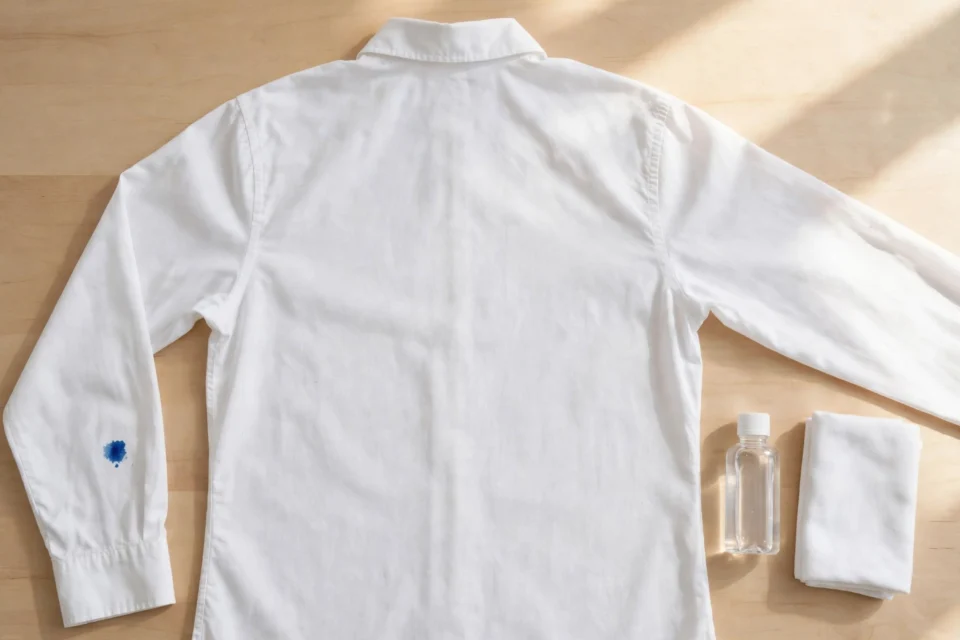
A pen leaking in a pocket or a careless scribble can leave a dark mark on a favourite shirt in seconds. The good news is that learning how to remove ink stain from clothes is easier than most people think, as long as you act quickly and use the right method for the type of ink. Ballpoint pen ink, gel ink and fountain pen ink all respond to different treatments, but none of them means the garment is ruined.
The most important rule is simple: do not rub the stain, and do not put the garment in hot water or the dryer until the ink is gone. Heat sets ink into fabric, and rubbing only spreads it further. Blot gently, work from the outside of the stain inward, and always test any product on a hidden part of the fabric first, especially on coloured or delicate clothes.
Before You Start: Know Your Ink
Before you try any ink stain removal from clothes, take a moment to work out what kind of ink you are dealing with. Ballpoint pen ink is oil-based and usually responds best to rubbing alcohol. Gel and rollerball inks are water-based and often lift with soap and water. Fountain pen ink is also water-based but can be stubborn on cotton. Permanent marker ink is the hardest of all and may only fade, not disappear completely.
Place a clean white towel or a few paper towels underneath the stained area. This stops the ink from transferring to the other side of the garment while you work. Keep a few clean cloths or cotton balls ready, because you will need to switch to a clean one as the ink lifts off.
Method 1: Rubbing Alcohol for Ballpoint Pen Ink
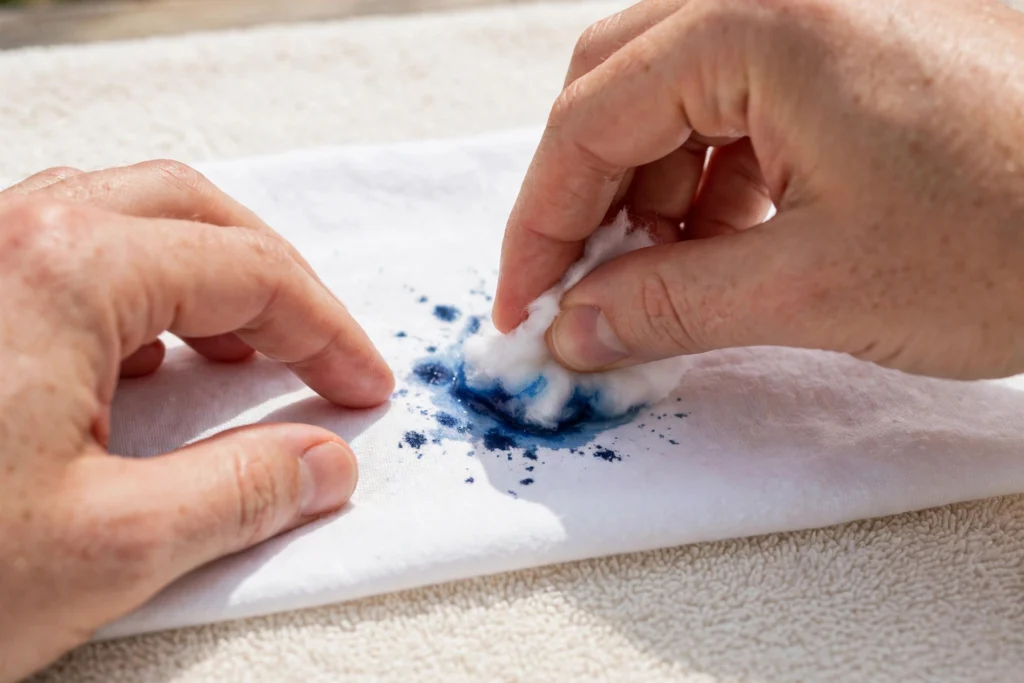
Rubbing alcohol is the most reliable way to remove pen ink from clothes, especially ballpoint ink. Dampen a cotton ball or a clean white cloth with rubbing alcohol and dab it gently onto the stain. Do not pour alcohol directly on the fabric, and do not rub. As the ink dissolves, you will see it transfer onto the cotton ball. Replace the cotton ball with a fresh one as soon as it picks up colour, and keep dabbing until no more ink comes off.
Once the stain has faded, rinse the area with cold water and wash the garment as usual with laundry detergent. Check the stain before drying: if any mark remains, repeat the alcohol treatment. Never put the item in the dryer while the stain is still visible, because the heat will set whatever ink is left.
Method 2: Soak the Stain in Milk
If you do not have rubbing alcohol at home, milk is a gentle alternative that works surprisingly well on fresh ink stains. Pour enough cold milk into a bowl to cover the stained area and leave the garment to soak for a few hours, or overnight for a dried stain. The milk helps loosen the ink from the fibres without damaging most fabrics.
After soaking, rinse the garment in cold water, apply a little laundry detergent or dish soap to the stain, and wash it normally. This method is mild enough for many delicate fabrics, but always check the care label first and test on a hidden spot.
Method 3: Dish Soap and White Vinegar
For gel or water-based ink, a mix of dish soap and white vinegar can lift the stain without harsh chemicals. Mix one tablespoon of dish soap with one tablespoon of white vinegar in a cup of cold water. Dab the solution onto the stain with a clean cloth, leave it for about 15 minutes, then blot with cold water and repeat if needed.
This is also a useful first step when you are not sure what kind of ink caused the stain. It is gentle, the ingredients are already in most kitchens, and it works well on cotton and polyester blends. Rinse thoroughly and wash the garment as usual once the stain has faded.
Method 4: How to Remove Ink Stains from White Clothes
White clothes give you one extra option: oxygen-based stain remover or a diluted hydrogen peroxide solution. These are safe for most white cotton fabrics and can fade ink that other methods leave behind. Apply the product to the stain, leave it for 15 to 30 minutes, then rinse and wash in cold water. For a very stubborn mark, you can soak white cotton in an oxygen-based stain remover solution for a few hours before washing.
Do not use chlorine bleach on coloured clothes, and do not use it on wool or silk. On white clothes, only use bleach if the care label allows it, and only after the other methods have had a try. If the stain is on a dry-clean-only garment, take it to a professional cleaner and point out the stain instead of treating it at home.
Mistakes That Make Ink Stains Worse
A few common mistakes can turn a small ink mark into a permanent one. Never rub the stain with a towel, because rubbing pushes ink deeper into the fibres and spreads it across clean fabric. Never use hot water on a fresh ink stain, and never iron or tumble dry a stained garment before the ink is fully gone. Avoid hairspray as a stain remover: older formulas contained alcohol, but most modern hairsprays do not, and they can leave a sticky residue on fabric.
If the first method does not fully work, do not give up after one try. Ink stain removal from clothes often takes two or three rounds, especially on older or dried stains. Repeat the treatment, switch to a fresh cloth each time, and check the stain in good light before washing.
Conclusion
Knowing how to remove ink stain from clothes saves favourite shirts, school uniforms and work clothes from the bin. Start by blotting, not rubbing, pick the method that matches your ink type, and be patient enough to repeat it. Rubbing alcohol handles most ballpoint pen ink, milk works gently on fresh marks, dish soap and vinegar cover water-based inks, and oxygen-based products help with white clothes. With a little care, most ink stains come out completely.
If you deal with stubborn marks on clothes often, our guide on how to remove crayon from clothes uses the same blot-first approach for another common stain.
