
Introduction
A home workout routine without equipment is one of the simplest ways to start exercising regularly. You do not need a gym membership, weights, or fancy gear — just a little floor space, comfortable clothes, and a plan you can repeat. For beginners, the goal is not to train hard on day one. It is to build a habit that feels doable, so you keep coming back to it week after week.
Why a No-Equipment Routine Works
Bodyweight exercises use your own weight as resistance, which makes them easy to start and easy to adjust. A squat can be made easier by holding a chair for balance, and harder by slowing it down. Because there is no travel time and no equipment to set up, a short session at home is much easier to fit into a busy day than a trip to the gym.
Set Up Your Space and Time
Choose a clear spot where you can stretch your arms out without hitting furniture. A living room corner, a bedroom floor, or a balcony all work well. Pick a regular time, such as before breakfast or after work, and keep your sessions short at first — 15 to 20 minutes is plenty for a beginner. Put your phone on silent so the session is not interrupted.
Warm Up First
Spend three to five minutes warming up. Walk in place, roll your shoulders, circle your arms, and do gentle leg swings. A warm-up prepares your muscles and joints, and it helps you notice how your body feels that day. If anything hurts sharply, skip that movement and choose a gentler one. Remember to drink more water before and after your session to stay hydrated.
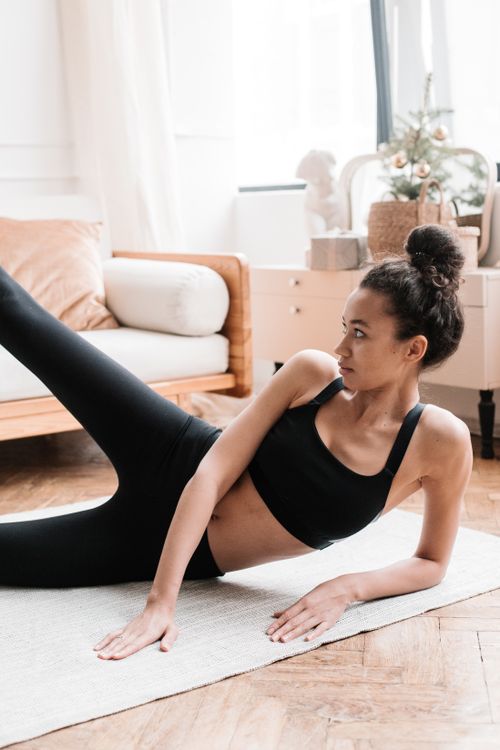
Five Simple No-Equipment Exercises
- Squats: Stand with feet shoulder-width apart, bend your knees as if sitting into a chair, then stand back up. Keep your chest up and your knees in line with your toes.
- Wall or knee push-ups: For a wall push-up, place your hands on a wall and bend your elbows to bring your chest closer, then push back. For a knee push-up, do the same movement on the floor with your knees down.
- Glute bridges: Lie on your back with knees bent and feet flat, lift your hips until your body forms a straight line from shoulders to knees, pause, then lower slowly.
- Marching in place: Lift your knees one at a time, swinging your arms gently. This is a low-impact way to raise your heart rate without jumping.
- Plank: Rest on your forearms and toes with your body in a straight line. Start with 15 to 20 seconds and build up gradually. Stop if your lower back sags.
A Simple 20-Minute Beginner Plan
Warm up for 3 minutes. Then do each exercise for 30 seconds, rest for 30 seconds, and repeat the circuit twice. Finish with 3 minutes of gentle stretching for your legs, arms, and back. Do this plan two or three times a week, with at least one rest day between sessions.
Staying Consistent
Consistency matters more than intensity. Track your sessions on a calendar, even with a simple tick mark, so you can see your streak grow. If you miss a day, do not try to make up for it with a double session — just return to the plan the next day. Pairing your workout with an existing habit, such as exercising right after your morning tea, makes it easier to remember.
Common Mistakes to Avoid
Skipping the warm-up, rushing through exercises with poor form, and jumping straight to advanced moves are the most common beginner mistakes. Slow, controlled movements are safer and more effective than fast, sloppy ones. Rest is also part of training: muscles recover and grow stronger on rest days, so a daily intense routine is not necessary at the start.
Conclusion
Starting a home workout routine without equipment does not require perfection, only a simple plan and a regular time to follow it. Begin with short sessions, focus on good form, and increase the time or repetitions slowly as you get stronger. Over a few weeks, those small, steady sessions can become a lasting part of your daily routine.
