
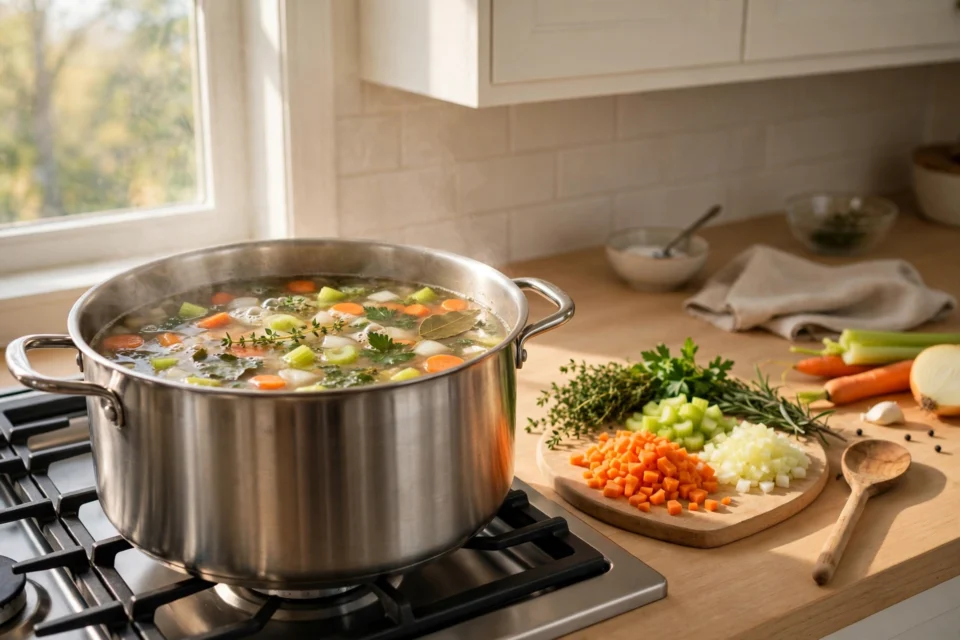
If you want to know how to make homemade vegetable stock, the good news is that it is one of the easiest kitchen basics you can learn. You do not need special equipment, rare ingredients, or hours of attention. A pot, some everyday vegetables, water, and a little patience are enough to make a rich, golden stock that lifts soups, rice, sauces, and stews.
Store-bought stock cubes and cartons are convenient, but they are often very salty and taste much the same whatever you cook. Homemade vegetable stock tastes fresher, you control the salt, and you can use up vegetables that might otherwise go to waste. Once you make it a few times, it becomes a simple habit — and a very useful one.
Why Make Vegetable Stock at Home?
There are a few clear reasons to make your own. First, flavour: fresh vegetables, herbs, and a slow simmer give a clean, savoury taste that dried cubes rarely match. Second, control: you decide how much salt goes in, which matters if you are cooking for children or watching your salt intake. Third, value: vegetable stock is a brilliant way to use carrot tops, onion skins, celery leaves, and the ends of vegetables you would normally throw away. Finally, it is flexible. You can make a light stock for rice and delicate soups, or a deeper, darker one for hearty stews.
What You Need
You do not need a long shopping list. A good basic vegetable stock uses:
- 2 onions, quartered (skins on, if clean, for colour)
- 3 carrots, roughly chopped
- 3 celery sticks, roughly chopped
- 1 leek, washed and sliced, or an extra onion
- 4 garlic cloves, lightly crushed
- a small bunch of parsley stems
- 2 bay leaves
- 1 teaspoon of whole black peppercorns
- about 3 litres (12 cups) of cold water
- optional mushroom stems, a parsnip, a tomato, or a few sprigs of thyme
Avoid vegetables that turn bitter or cloudy when simmered for a long time, such as cabbage, broccoli, cauliflower, and beetroot, unless you want their strong flavour and colour in the finished stock. Potatoes can also make stock starchy, so leave them out for a clear result.
How to Make Homemade Vegetable Stock, Step by Step
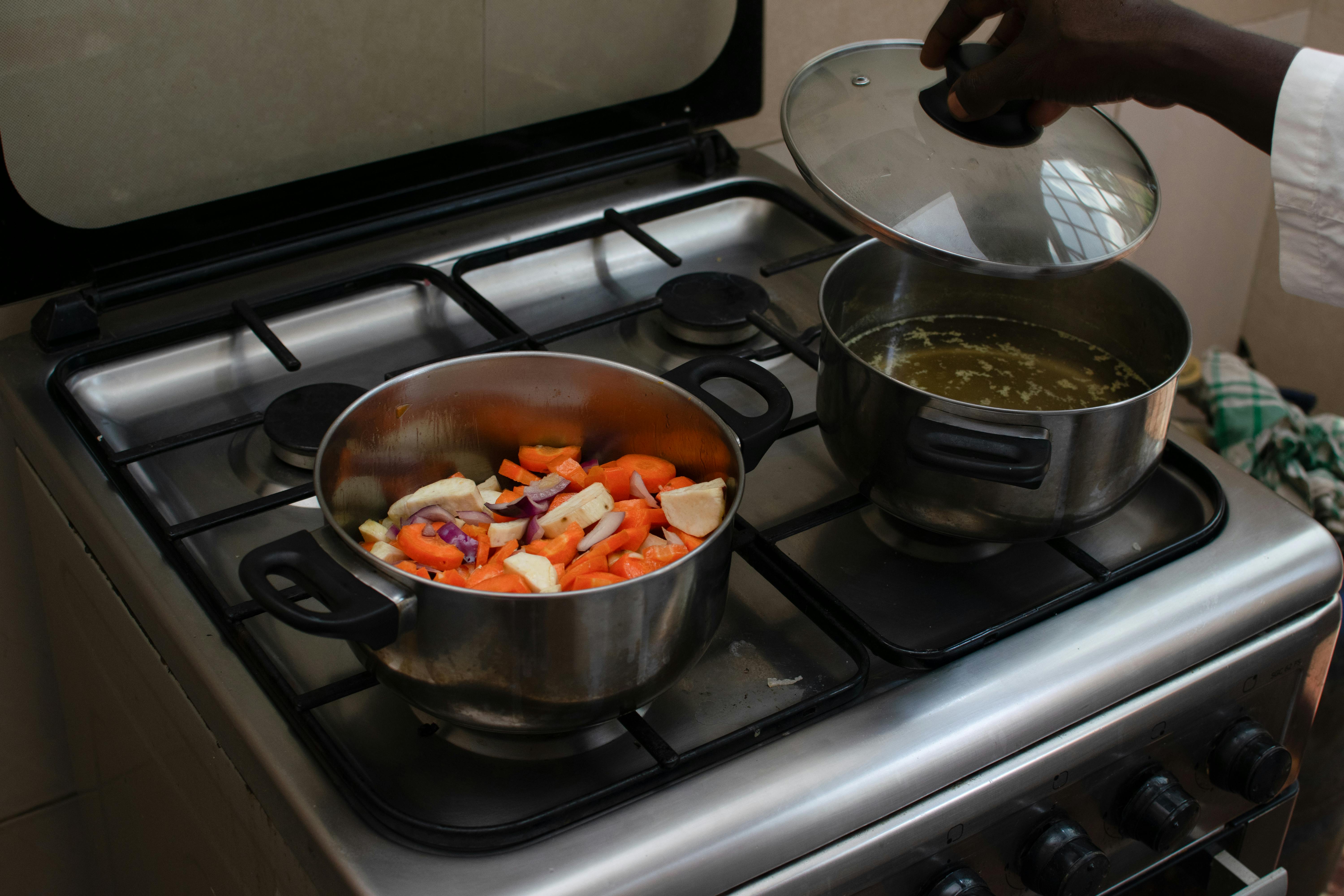
- Prepare the vegetables. Wash everything well. There is no need to peel carrots or onions neatly — just trim off any damaged parts. Rough chopping is fine, because the vegetables will be strained out at the end. Larger pieces are actually better, as they hold their shape during simmering and keep the stock clear.
- Add water and bring to a gentle simmer. Put the vegetables, herbs, bay leaves, and peppercorns in a large pot and cover with cold water. Bring it slowly to a gentle simmer over medium heat. Do not boil it hard: a rolling boil makes stock cloudy and can give it a harsh taste. If any foam rises to the surface in the first few minutes, skim it off with a spoon.
- Simmer for 45 to 60 minutes. Leave the pot partly covered and simmer gently for 45 to 60 minutes. That is enough time for the vegetables to give up their flavour. Longer is not always better — after about an hour, some vegetables start to taste tired and bitter, so there is no need to simmer all afternoon.
- Strain carefully. Remove the pot from the heat and let it cool slightly. Place a fine strainer or a colander lined with a clean cloth over a large bowl or jug, and pour the stock through it. Press the vegetables gently with a spoon to get the last of the liquid, then discard the cooked vegetables — they have given all their flavour to the stock.
- Cool, taste, and store. Taste the stock once it has cooled a little. It should taste savoury and clean, not salty, because you will season the dish you cook with it later. If it tastes weak, simmer it uncovered for 10 to 15 minutes more to concentrate it slightly. Then cool it quickly and store it as described below.
How to Make Vegetable Broth at Home: Is It the Same Thing?
People often use the words stock and broth as if they mean the same thing, and in home cooking they are very close. Traditionally, stock is made mainly from vegetables (or bones) and simmered for flavour, while broth is a lighter liquid that is often seasoned and served on its own. In practice, if you are learning how to make vegetable broth at home, this same recipe works beautifully. Just season a cup of it lightly and taste it — if it is pleasant to sip on its own, you have a broth; if it is a little plain, it is still a perfect stock for cooking.
Vegetable Stock Uses: What to Cook With It
Once you have a jug of homemade stock in the fridge, you will find uses for it all week. Here are some of the best vegetable stock uses:
- Soups and stews — use it as the base instead of water for a deeper flavour.
- Rice and grains — cook rice, quinoa, or barley in stock instead of water.
- Sauces and gravy — a splash of stock loosens a sauce and adds savouriness without extra salt.
- Steamed vegetables and beans — simmering beans or lentils in stock makes them taste seasoned from the inside.
- Risotto — a good risotto depends on good stock, added a ladle at a time.
Because homemade stock is low in salt, it works in almost any savoury dish without overpowering it.
For more ideas, see our guide to weekly meal planning.
Vegetable Stock vs Broth: What Is the Difference?
The vegetable stock vs broth question comes up often, and the answer is mostly about seasoning and use. Stock is usually unseasoned and made to be an ingredient, while broth is usually seasoned and pleasant to sip on its own. In home cooking the line is blurry, and the same pot can serve both purposes — season a cup for sipping, and leave the rest unseasoned for cooking.
Slow Cooker Option
A slow cooker vegetable stock is an easy hands-off variation. Put the same vegetables, herbs, and water in the slow cooker, cover, and cook on low for 6 to 8 hours or on high for 3 to 4 hours. Strain it just as you would the stovetop version. It is a good option when you want stock ready at the end of the day without watching a pot.
How to Store Vegetable Stock
Fresh stock keeps in the fridge for 4 to 5 days in a clean, covered container. Cool it before refrigerating, and do not leave it sitting at room temperature for hours. For longer storage, freezing is the best option. Pour cooled stock into freezer-safe containers, ice-cube trays for small amounts, or zip-lock bags laid flat. Label each one with the date. Frozen stock keeps well for up to 3 months, and ice cubes of stock are perfect for deglazing a pan or adding flavour to a quick sauce.
Common Mistakes to Avoid
- Boiling too hard — a fierce boil clouds the stock and can make it bitter.
- Adding too much salt early — season the finished dish, not the stock, so you stay in control.
- Using the wrong vegetables — strong vegetables like cabbage and broccoli can dominate the flavour.
- Simmering for too long — after about an hour, the flavour starts to fade rather than improve.
- Skipping the strain — even small bits of vegetable can make the stock gritty, so strain it well.
A Simple Habit Worth Keeping
Learning how to make homemade vegetable stock is a small skill with a big payoff. It saves money, reduces food waste, and makes everyday cooking taste noticeably better. Keep a bag in the freezer for vegetable ends and peels during the week, and when it is full, make a pot of stock. In about an hour, with very little hands-on work, you will have a fresh, versatile base for the week ahead — and once you taste the difference, store-bought cubes will be hard to go back to.
