

Sitting down to study is easy. Actually staying focused is the hard part. If you have ever opened your books with good intentions and found yourself scrolling your phone ten minutes later, you are not alone. Learning how to stay focused while studying is a skill, and like any skill, it improves with the right methods and a little practice.
The good news is that you do not need superhuman willpower. Small changes to how you plan, where you sit, and how you handle distractions can make a real difference from the very first session.
1. Start With a Clear, Small Goal
A vague plan like “study biology today” gives your brain nothing to hold on to. Instead, pick one clear, small goal for each session, such as “finish chapter 4 and write ten summary points.” A clear finish line keeps your attention on the task and gives you a small win when you reach it. Write the goal at the top of your page before you begin, and check it off when you are done.
2. Study in Short, Focused Blocks
Long, open-ended study sessions invite wandering. The Pomodoro technique is one of the simplest ways to learn how to focus while studying: set a timer for 25 minutes, work on one thing only, then take a five-minute break. After four rounds, take a longer break of 20 to 30 minutes. Short blocks feel manageable, and the timer creates a gentle sense of urgency that keeps your mind on the page.
3. Remove Distractions Before You Begin
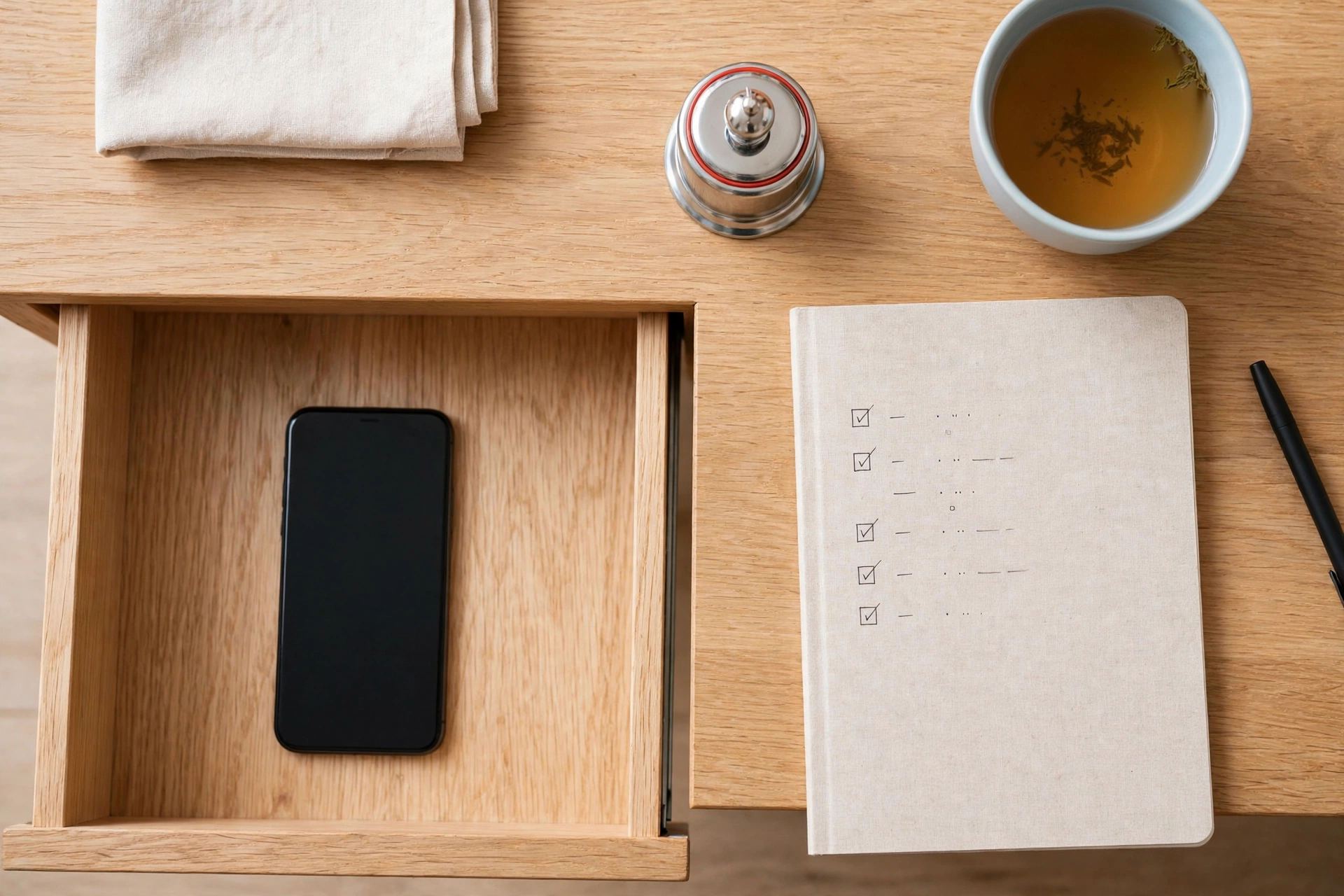
Willpower is unreliable, so design your environment instead. Put your phone in another room or in a drawer, face down and on silent. Close extra browser tabs and log out of social media before you start. If noise distracts you, try earplugs or soft instrumental music. The fewer decisions you have to make about ignoring distractions, the easier it is to learn how to study without getting distracted.
4. Create a Study Space That Helps You Focus
Your brain links places with habits. Studying in the same tidy spot each day — a desk, a library corner, a quiet table — trains your mind to switch into focus mode as soon as you sit down. Keep the space clean, well-lit, and stocked with everything you need: water, pens, notes, and your books. Avoid studying on your bed, because your brain associates it with rest, not work.
5. How to Focus While Studying When Your Mind Wanders
Your mind will wander. That is normal, and fighting it usually makes it worse. When a stray thought appears, write it on a small “later” list and return to your work. If you keep losing the thread, read the last paragraph aloud or explain the idea to yourself in your own words. Talking through a concept out loud is one of the fastest ways to pull your attention back and check whether you really understand it.
6. Take Breaks That Actually Refresh You
A break is not a reward for failing to focus — it is part of focusing well. Step away from your desk, stretch, walk around, or get a glass of water. Avoid picking up your phone during breaks, because a “quick check” often turns into twenty lost minutes. Real breaks restore your attention; screen breaks usually drain it further.
7. Learn Actively Instead of Just Re-reading
Passive reading feels productive but rarely sticks. To truly concentrate on your studies, make your brain work: write questions as you read, quiz yourself from memory, draw a simple diagram, or summarise each section in one sentence. Active learning forces attention, because you cannot do it on autopilot. Even ten minutes of self-testing beats an hour of re-reading the same page.
8. Sleep, Food and Movement Matter More Than You Think
Focus is physical. A tired, hungry brain cannot concentrate, no matter how strong your intentions are. Aim for seven to eight hours of sleep, eat a light meal or snack before a long session, and move your body between study blocks — even a short walk helps. If you want to improve your concentration while studying over the long term, regular sleep and movement matter more than any single study trick.
9. How to Avoid Distractions While Studying on Your Phone
Your phone is usually the biggest distraction, so give it a job instead of a free pass. Use it only as a timer, or switch it to a focus mode that blocks social apps during study hours. Some students find it helps to leave the phone charging in another room entirely. If you need your phone for notes or a dictionary, keep it on airplane mode with notifications off, and return it to the drawer as soon as the task is done.
10. Build a Simple Daily Routine
Motivation comes and goes, but routine stays. Pick a regular study time, start with your hardest subject while your energy is fresh, and keep sessions short at first — even 30 focused minutes a day builds the habit. Over a few weeks, staying focused becomes less of a struggle and more of a routine, and that is how to stay motivated while studying for the long run.
Frequently Asked Questions
How long should a focused study session be?
For most people, 25 to 50 minutes of focused work followed by a short break works best. Start with 25-minute blocks and extend them gradually as your focus improves.
What should I do when I keep getting distracted?
Write the distracting thought on a “later” list, remove the source of the distraction, and return to your work. If it keeps happening, shorten your study blocks and take more frequent breaks.
Does music help you focus while studying?
It depends. Soft instrumental music or background sounds help some people, while songs with lyrics usually hurt focus. Try a session with and without music and keep what works for you.
How can I study for long hours without losing focus?
Break long study days into short blocks with real breaks, switch subjects every couple of hours, stay hydrated, and stop when your focus drops sharply — rest is part of the work.
Is it normal to lose focus quickly at first?
Yes. Focus is a skill that builds slowly. Short, regular sessions train your attention far better than one long, frustrating marathon.
Conclusion
Knowing how to stay focused while studying is less about discipline and more about design: clear goals, short blocks, a tidy space, fewer distractions, and real breaks. Start with just one or two of these methods today, and add more as they become habits. Your focus will not change overnight, but with steady practice, sitting down to study will start to feel easier — and your results will show it.
