
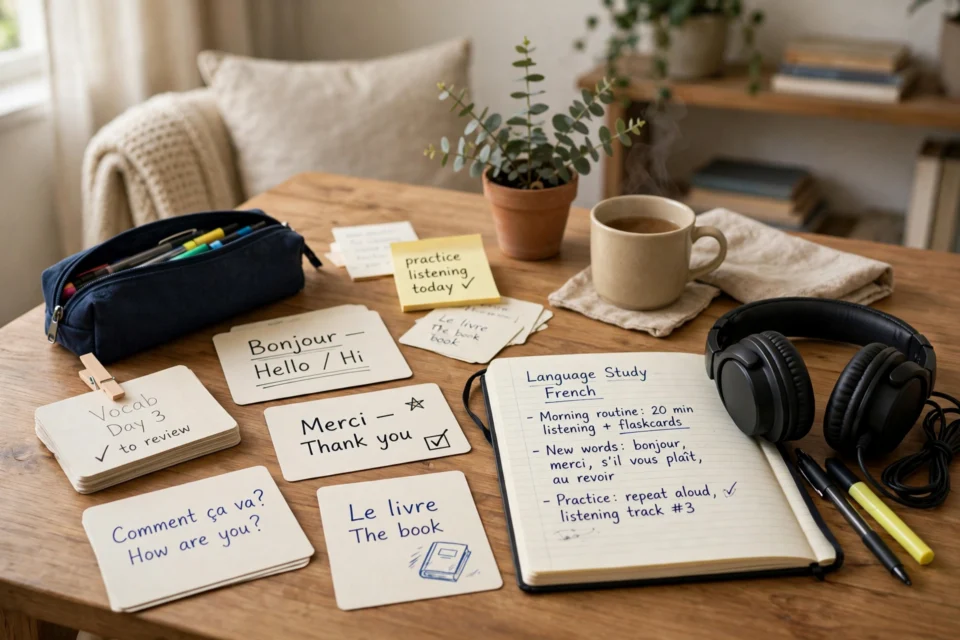
Learning a new language can feel exciting and a little overwhelming at the same time. New words, unfamiliar sounds, and grammar rules can make the first week feel harder than it needs to be. The good news is that you do not need to move abroad, hire an expensive tutor, or study for hours every day to make real progress. When you learn a new language at home, small daily habits matter far more than occasional long study sessions. This guide shares a simple daily routine for beginners that fits around work, family, and everyday life.
Why a Daily Routine Works Better Than Occasional Study
Learning a language is a skill, much like learning to play an instrument. Short, regular practice helps your brain remember words and recognise patterns. A routine also removes the daily decision of what to study. When you know exactly what to do each day, it is easier to start, and easier to keep going on busy days. Even twenty to thirty minutes a day, practised consistently, can build a strong foundation over a few months.
Step 1: Start With Everyday Words and Phrases
Beginners often try to learn too much grammar before they can say anything useful. Instead, start with words and phrases you would actually use: greetings, numbers, food, directions, and simple questions. Learn how to introduce yourself, ask for help, and order a drink. These everyday phrases give you early wins, and early wins keep motivation high. Keep a small notebook or a note on your phone for new words, and review it often.
Step 2: Listen a Little Every Day
Listening is one of the best ways to learn a language by yourself. Listen to a short podcast, a song, or a slow news clip in your target language each day. At first, you may only catch a few words, and that is normal. Over time, your ear will start to recognise common sounds, rhythms, and sentence patterns. Try listening to the same short clip twice: once just to enjoy it, and once while following along with a transcript or subtitles if they are available.
Step 3: Speak From Day One, Even If It Feels Awkward
Many learners wait until they feel ready before speaking, but speaking is how you learn to speak. Practise out loud, even if you are alone. Repeat phrases after a recording, describe what you see around your home, or talk through your daily plans in the new language. If you use a language learning app for beginners, use its speaking exercises regularly. Mistakes are part of the process, not a sign of failure. The goal is communication, not perfection.
Step 4: Use Language Learning Apps Wisely
Language learning apps for beginners can be a helpful part of your routine, especially for vocabulary and daily reminders. Choose one main app and stick with it, rather than switching between five different ones. Use the app for ten to fifteen minutes a day, then move on to listening or speaking practice. Apps work best as a supplement to real listening and speaking, not as a replacement for them.
Step 5: Build a Simple Daily Language Practice Routine
Here is a simple routine you can follow: spend five minutes reviewing yesterday’s words, ten minutes on new vocabulary or a short lesson, ten minutes listening to something in the language, and five minutes speaking out loud. That is about thirty minutes in total. You can split it across the day if that suits you better — a few minutes in the morning, a few at lunch, and a few in the evening all count. The best routine is the one you will actually follow. For another simple daily habit, see Morning Journaling for Beginners: A Simple 10-Minute Routine to Start Your Day Calmly.

How to Stay Motivated When Progress Feels Slow
Progress in language learning is rarely a straight line. Some weeks you will feel fluent in simple conversations, and other weeks familiar words will slip away. That is normal. Keep a simple record of what you learn, celebrate small milestones such as your first full conversation or your first book page read in the new language, and connect with other learners online if that helps. If you miss a day, do not give up — just return to the routine the next day.
Common Beginner Mistakes to Avoid
Try not to translate every word in your head, as this slows you down and makes speaking harder. Avoid spending all your time on grammar exercises before you can hold a simple conversation. Do not compare your progress with other learners, since everyone starts from a different place. And do not wait for the perfect course or the perfect time. A simple routine started today will take you further than a perfect plan started next month.
Conclusion
You do not need perfect conditions to learn a new language at home. You need a simple routine, a little daily practice, and patience with yourself. Start with everyday phrases, listen a little each day, speak from the start, and review what you learn regularly. With steady habits, you will be surprised how much you can understand and say in just a few months. Pick your language, set aside thirty minutes, and begin today.
