
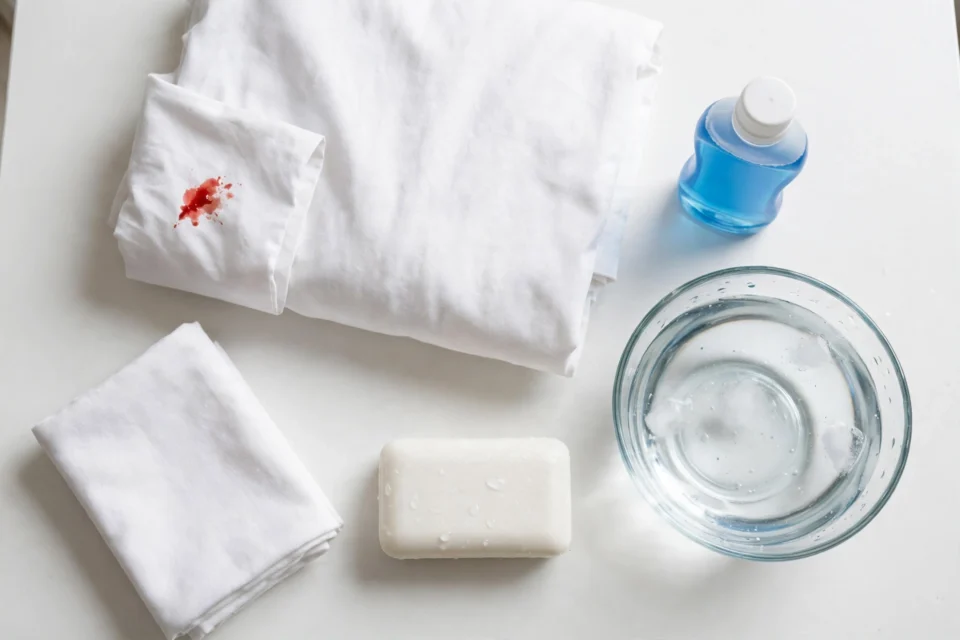
Blood on a favourite shirt feels like a disaster, but it is one of the most fixable stains in the laundry basket — if you start the right way. To remove blood stains from clothes, reach for cold water first and keep heat away until the mark is completely gone. Blood is a protein stain, and hot water cooks that protein into the fibres the way heat firms up an egg white. This guide covers the cold-water method for fresh stains, the longer soak dried stains need, and last-resort steps for marks already through the wash.
Why Blood Stains Need Cold Water, Not Hot
The single rule behind this guide is simple: cold water lifts blood, hot water locks it in. The American Cleaning Institute advises soaking fresh blood in cold water, never hot, because hot water sets the stain. Iowa State University Extension says the same about protein stains — they set when exposed to hot water, an iron, or a dryer. Every step below starts cold, and the dryer stays off until you can no longer see the mark.
Speed helps, but it is not everything. A fresh stain rinsed within minutes usually comes out with soap and water alone, while a dried stain needs an enzyme soak and more time. Only stains washed hot and tumble-dried while the blood was still there rarely come out fully.
What You Will Need
You do not need a special stain remover. Gather these first:
- Cold running water, or a basin of cold water
- Liquid laundry detergent or a bar of soap
- A clean white cloth or a soft toothbrush
- An enzyme-based laundry detergent or pre-soak, for dried stains
- 3% hydrogen peroxide, only as a last step on white or colourfast fabric
- Oxygen bleach, only if the care label allows bleach
- Disposable gloves, if the blood is not your own
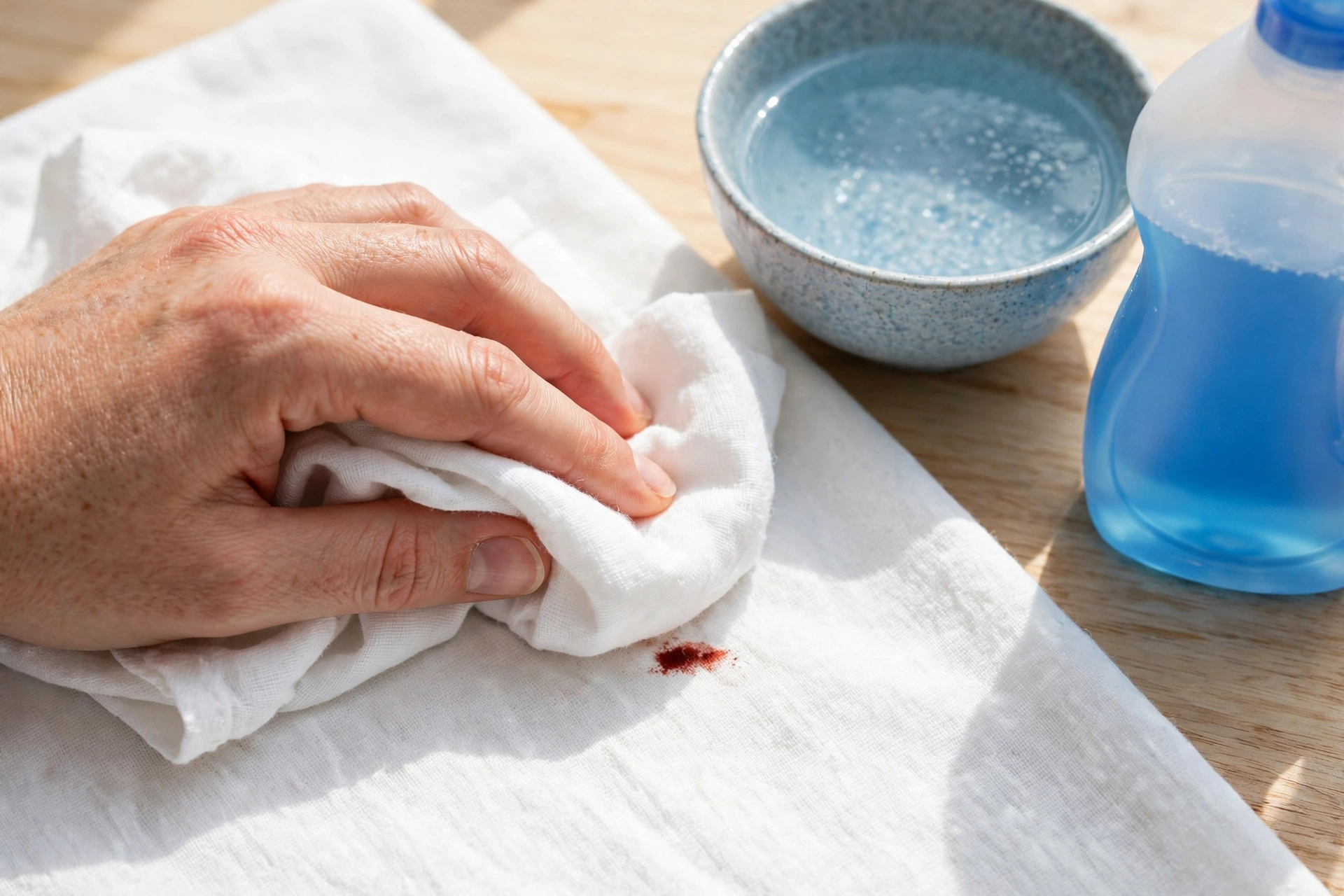
Check the care label first — it decides what is safe at every later step. Silk, wool, and dry-clean-only garments need a different approach, covered near the end of this guide.
Remove Fresh Blood Stains in 5 Steps
Fresh blood is the easiest kind to deal with. Work through these steps in order, checking the fabric after each one.
Step 1: Rinse With Cold Water From the Back
Hold the stained area under cold running water, with the water hitting the back of the fabric. Texas A&M AgriLife Extension recommends flushing from the wrong side, so blood is pushed out of the weave instead of driven deeper. Keep rinsing until the water runs mostly clear — this alone removes much of a fresh stain.
Step 2: Work In Detergent and Let It Sit
Rub in a little liquid detergent or bar soap, then let it sit about 10 minutes — the University of Georgia Extension rubs in soap, rinses, and repeats, while Consumer Reports works detergent in with fingers or a soft toothbrush. Work gently: hard scrubbing spreads the stain and can damage fibres.
Step 3: Rinse and Repeat
Rinse in cold water again and look at the stain in good light. If a faint mark remains, repeat Step 2 once more — two gentle rounds beat one aggressive scrub.
Step 4: Wash on a Cold Cycle
Wash the garment on a cold cycle with your usual detergent. Do not add fabric softener to the stained area, and do not turn the temperature up “just this once”.
Step 5: Inspect Before Any Heat
Take the garment out and inspect it before the dryer or iron. If the stain is gone, dry it as normal. If a shadow remains, go back to Step 2 or move on to the soaking method below. The dryer is the point of no return: once a blood stain has been heat-dried, it may never come out.
How to Get Dried Blood Out of Clothes
Dried blood needs more time than fresh blood, but the cold-water rule still governs the first move. Gently brush off any loose, flaky residue with a soft brush.
Soak the garment in cool water for 30 minutes or longer — the University of Georgia Extension’s first move on a dried stain. If the stain remains, move to a lukewarm enzyme pre-soak or enzyme detergent: the American Cleaning Institute recommends enzyme products for dried stains because enzymes break down the protein residue plain soap leaves behind. Keep the water under roughly 100°F.
One warning: enzyme products are not for every fabric — protein enzymes can damage silk and wool, so check both labels first. After the soak, work a little detergent into any remaining mark, wash cold, and inspect before drying, exactly as with a fresh stain. Denim takes this treatment well: if you are wondering how to remove blood stains from jeans, use the same cold soak and enzyme method — sturdy cotton handles a long soak without damage.
How to Remove Old Blood Stains from Clothes
An old stain — one sitting for days, or one already washed — is harder, but not always hopeless. The approach is the same as for dried blood, with more patience and one extra step.
Soak the garment in cool water with an enzyme detergent for at least an hour; for a stubborn mark, leave it several hours or overnight. Enzyme cleaners need contact time to break down set protein — rushing this step is the most common reason old stains survive.
If a faint mark still remains on white or colourfast fabric, this is the point for 3% hydrogen peroxide — and only now, as the last step. Test it first on a hidden seam: a few drops on the stain, wait 1 to 3 minutes, rinse thoroughly, as the University of Georgia Extension advises. If the colour holds, use it on the stain itself. Never use peroxide on silk or wool, and never mix it with bleach, vinegar, or ammonia.
How to Remove Blood Stains from White Clothes
White cotton is the most forgiving fabric for blood stains — you can use every tool in the kit. Follow the fresh or dried method above, then use oxygen bleach in the wash if the care label allows it — gentler than chlorine bleach and safe on most whites. A 3% hydrogen peroxide test after the enzyme soak is also worth doing, since there is no dye to damage.
The rules that still apply on white: cold water first, no dryer until the stain is gone, and no chlorine bleach unless the label clearly allows it — it can yellow whites and weaken the fibres. For keeping the rest of your whites bright once the stain is out, see our guide on how to keep white clothes white.
How to Remove Blood Stains from Sheets
Sheets follow the same method, with two differences. First, the stain is often found in the morning, so it has already dried — start with the cool soak and enzyme step rather than the quick rinse. Second, sheets are usually cotton or a cotton blend, which takes an enzyme soak well.
Soak the stained area in a basin of cool water with enzyme detergent for at least 30 minutes, then wash the whole sheet on a cold cycle. Check the stain before the dryer and air-dry if unsure. A white sheet with a faint mark left can take oxygen bleach in a second wash, if the label allows it.
What Does Not Work on Blood Stains
A few common instincts make blood stains worse:
- Hot water. The single biggest mistake — hot water, warm rinses, and hot washes all set protein stains.
- The dryer or iron. Heat-drying a stain you have not fully removed can make it permanent — air-dry until you are sure.
- Hard scrubbing. Aggressive rubbing spreads the stain and frays the fabric. Dab gently instead.
- Mixing chemicals. Do not mix hydrogen peroxide, bleach, vinegar, ammonia, or commercial stain removers. Use one treatment at a time and rinse between them.
- Chlorine bleach on colours. It can strip dye and leave a worse mark than the blood. Oxygen bleach is safer, and only when the label allows it.
- Skipping the care label. Delicate and dry-clean-only fabrics have their own rules, and guessing can ruin them.
Stains behave differently — how to remove tea stains from clothes and our coffee stain guide both allow warm water, while blood never does. Oil-based marks such as lipstick need a different treatment again — see how to remove lipstick from clothes. Sweat marks on white shirts yellow rather than set with heat, as explained in how to remove sweat stains from white shirts.
When to Take It to a Professional
Take the garment to a dry cleaner instead if it is silk, wool, leather, or labelled dry-clean-only, valuable or sentimental, or largely stained. Tell the cleaner what the stain is and what you have tried — especially if you have used heat.
Frequently Asked Questions
Can you remove blood stains from clothes after washing?
Sometimes. If the garment was washed cold and air-dried, the enzyme soak above still works in many cases. If it was washed hot or tumble-dried with the stain still in it, the stain may be set permanently — try the long soak and a peroxide test on white fabric, but expect only partial success.
Does cold water really remove blood stains?
Yes. Cold water is the foundation of every reliable blood-stain method, because heat sets the protein in blood. Rinsing from the back in cold water, then working in detergent, removes most fresh stains before any stronger product is needed.
Can hydrogen peroxide remove blood stains from coloured clothes?
Only with caution: use 3% hydrogen peroxide only after a hidden-area colourfastness test, and only as a last step after the enzyme soak. If the test spot lightens, do not use it. Never use peroxide on silk or wool.
How long should you soak a dried blood stain?
At least 30 minutes in cool water; several hours or overnight in an enzyme soak for a stubborn or old stain. Enzyme cleaners need contact time, so patience matters more than a stronger product.
Will blood stains come out in a normal wash?
A fresh stain often comes out in a normal cold wash if you rinse and pretreat it first. A dried stain usually needs the soak and enzyme step first. Either way, check the stain before the dryer.
Conclusion
To remove blood stains from clothes, remember one rule above all: cold water first, heat never until the stain is gone. Rinse from the back, work in detergent, soak dried stains with an enzyme cleaner, and save hydrogen peroxide for a tested last resort on white or colourfast fabric. Most blood stains come out with patience.
Sources: University of Georgia Extension; Texas A&M AgriLife Extension; American Cleaning Institute; Iowa State University Extension.
