
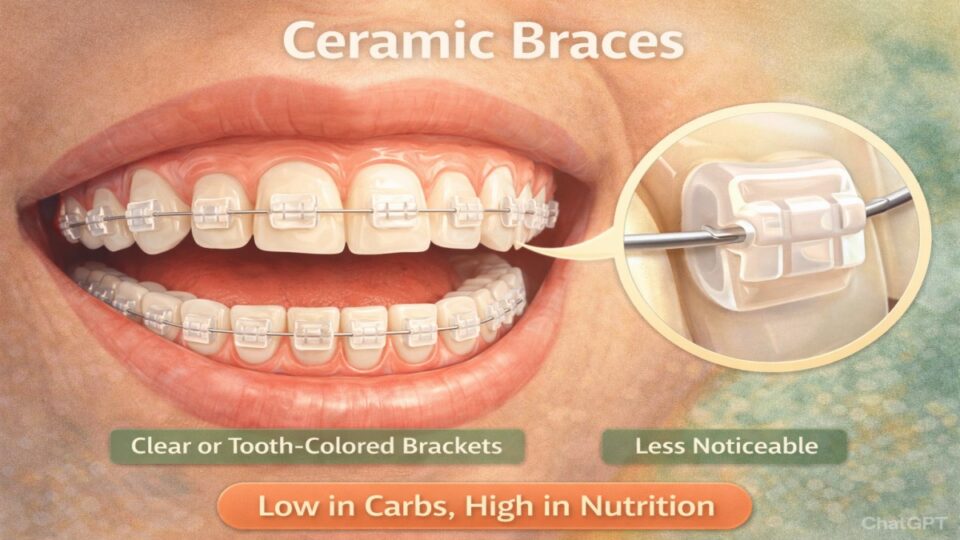
Let’s face it the idea of braces can feel intimidating. Metal brackets. Wires. A mouth full of silver. Not exactly the look most adults or teens are going for.
That’s where ceramic braces come in.
They’re like the quieter, more subtle cousin of traditional braces. Same mission. Same results. Just less noticeable.
So, are they the right choice for you? Let’s break it down.
What Are Ceramic Braces?
Ceramic braces work just like traditional metal braces. They use brackets and wires to gently move your teeth into proper alignment over time.
The big difference? The brackets are made from clear or tooth-colored ceramic material.
How Ceramic Braces Work
Brackets are bonded to each tooth. A thin wire runs through them. Over time, adjustments apply controlled pressure that shifts your teeth into place.
It’s like steering a ship slowly toward its destination. Gradual, steady movement.
Materials Used in Ceramic Braces
The brackets are typically made of polycrystalline alumina — a strong ceramic material. The wires may be metal or tooth-colored for added discretion.
How Ceramic Braces Differ from Metal Braces
They look similar in structure, but the experience can feel different.
Appearance
This is the biggest advantage. Ceramic braces blend in with your teeth. From a distance, they’re barely noticeable.
Metal braces? Not so much.
Comfort Level
Ceramic brackets are smooth and often feel slightly more comfortable against the cheeks. However, the difference is minor.
Durability
Metal braces are tougher. Ceramic brackets can be slightly more fragile and may chip if handled roughly.
Cost Comparison
Ceramic braces usually cost more than traditional metal braces due to the material and aesthetic appeal.
Who Should Consider Ceramic Braces?
Not everyone chooses braces for the same reason.
Teenagers
Teens who feel self-conscious about metal braces often prefer ceramic options.
Adults
Adults love ceramic braces because they’re less noticeable in professional and social settings.
Professionals
If you work in a client-facing role, ceramic braces allow you to straighten your teeth discreetly.
Benefits of Ceramic Braces
Let’s talk advantages.
Discreet Look
The biggest win. They’re subtle. They don’t scream “I’m wearing braces.”
Effective Teeth Alignment
They’re just as effective as metal braces for most orthodontic cases.
Confidence Boost
When you feel less self-conscious during treatment, you smile more. And that matters.
Drawbacks of Ceramic Braces
No treatment is perfect.
Higher Cost
Expect to pay more compared to metal braces.
Potential Staining
The ceramic brackets resist stains, but the elastic bands can discolor if you consume coffee, tea, or curry frequently.
Slightly More Fragile
They require a bit more care to avoid damage.
Treatment Process with Ceramic Braces
Here’s what to expect.
Initial Consultation
Your orthodontist examines your teeth, takes X-rays, and creates a treatment plan.
Placement Procedure
Brackets are bonded to your teeth. The wire is attached. The process typically takes 1–2 hours.
Adjustment Appointments
Every 4–8 weeks, your orthodontist tightens or adjusts the wire.
Removal and Retainers
Once alignment is complete, braces are removed. You’ll wear a retainer to maintain results.
Ceramic Braces vs Clear Aligners
Clear aligners are removable trays. Ceramic braces are fixed.
Aligners are nearly invisible but require discipline. Ceramic braces work continuously because they’re always on.
If you’re worried about forgetting to wear aligners, ceramic braces might be a better choice.
Care and Maintenance Tips
Taking care of ceramic braces is essential.
Brushing Techniques
Brush after every meal. Use a soft-bristled toothbrush and fluoride toothpaste.
Flossing with Braces
Use floss threaders or water flossers to clean between teeth.
Foods to Avoid
Avoid:
- Sticky candy
- Hard nuts
- Ice
- Chewy foods
These can damage brackets.
Cost of Ceramic Braces
The price varies depending on location and treatment complexity.
On average, ceramic braces cost more than metal braces but less than some premium invisible options.
Many dental clinics offer payment plans.
Conclusion
Ceramic braces offer a powerful combination of effectiveness and aesthetics. They straighten teeth just like metal braces but do it more discreetly.
If you want reliable results without the noticeable shine of metal, ceramic braces might be your perfect middle ground.
A confident smile doesn’t happen overnight — but with the right treatment, it’s closer than you think.
FAQs
1. Are ceramic braces more painful than metal braces?
No. Discomfort levels are similar, especially during adjustments.
2. Do ceramic braces stain easily?
The brackets resist stains, but elastic bands may discolor if not properly cared for.
3. How long does treatment with ceramic braces take?
Treatment time is usually similar to metal braces — often 18–24 months.
4. Are ceramic braces suitable for severe alignment issues?
In most cases, yes. However, your orthodontist will determine the best option.
5. Can adults get ceramic braces?
Absolutely. Many adults choose ceramic braces for their discreet appearance.
