

Introduction to Flowers and Daisies
Flowers have a magical way of making life feel lighter. A single bloom can brighten a dull room, lift a heavy mood, or say what words can’t. Among all flowers, daisies stand out like sunshine with petals—simple, cheerful, and timeless.
Why Flowers Matter in Human Life
Flowers are woven into our lives from birth to farewell. We celebrate with them, grieve with them, and decorate our spaces with them. They’re nature’s way of reminding us to pause and smile.
Understanding Flowers
What Defines a Flower?
A flower is the reproductive part of a plant, but calling it just that feels unfair. It’s color, fragrance, and form working together. Petals attract pollinators, while the center handles reproduction—a perfect blend of beauty and purpose.
The Role of Flowers in Nature
Flowers support ecosystems by attracting bees, butterflies, and birds. Without them, pollination would slow, and food chains would suffer. Think of flowers as tiny engines keeping nature running.
Daisies Explained
What Is a Daisy?
A daisy is a flowering plant from the Asteraceae family. Its classic look—white petals with a yellow center—is instantly recognizable. But beneath that simplicity lies surprising resilience.
Unique Features of Daisies
Daisies aren’t one flower; they’re a cluster. The yellow center is made of many tiny flowers, surrounded by petal-like rays. It’s teamwork at its finest.
History and Symbolism
Flowers in Ancient Cultures
Ancient civilizations used flowers in rituals, medicine, and art. Egyptians linked them to gods, Greeks associated them with myths, and Romans used them for celebrations.
Symbolism of Daisies
Daisies symbolize innocence, purity, and new beginnings. Ever heard of “fresh as a daisy”? That phrase exists for a reason. Daisies feel like a clean start.
Types of Flowers
Seasonal Flowers
Some flowers bloom only in certain seasons—tulips in spring, sunflowers in summer, chrysanthemums in autumn. Each season has its own floral personality.
Wildflowers vs Garden Flowers
Wildflowers grow freely, adapting to nature’s rhythm. Garden flowers are nurtured, shaped, and guided by humans. Both have their own charm—like wild laughter versus polished smiles.
Popular Daisy Varieties
Shasta Daisy
Shasta daisies are tall, bright, and long-lasting. They’re garden favorites thanks to their strong stems and classic look.
Gerbera Daisy
Bold, colorful, and expressive—Gerbera daisies are the extroverts of the flower world. Perfect for bouquets and celebrations.
Growing Flowers and Daisies
Soil and Sunlight Requirements
Most flowers, including daisies, love well-drained soil and plenty of sunlight. Think of sunlight as their daily motivation.
Watering and Care Tips
Water regularly, but don’t drown them. Flowers prefer balance—too much care can be as harmful as too little.
Uses of Flowers and Daisies
Decorative and Aesthetic Uses
From home décor to weddings, flowers transform spaces instantly. Daisies, in particular, add a relaxed, joyful vibe.
Emotional and Cultural Uses
Flowers speak emotions fluently—love, apology, gratitude, sympathy. Daisies often say, “Life is simple, enjoy it.”
Flowers and Mental Well-Being
Psychological Benefits
Studies show flowers reduce stress and boost mood. Daisies, with their bright faces, feel like nature smiling back at you.
The Meaning Behind Daisies
Daisies have carried meaning for centuries, which is part of why they appear in so many bouquets. In the Victorian language of flowers, a daisy meant innocence and purity, and a white daisy given to someone said “I am thinking of you” without needing more words. In Norse mythology the daisy was linked to Freya, the goddess of love and beauty. Gerbera daisies, the big colourful ones in flower shops, are usually read as cheerfulness and celebration, which makes them a safe choice for birthdays and thank-you gifts. Knowing the meaning does not change the flower, but it changes the gift: a bunch of daisies chosen with their meaning in mind says more than flowers picked at random.
Best Daisy Varieties for Your Garden
Not all daisies are the same plant. The classic common daisy is small and tough, happy in lawns and poor soil, but rarely grown as a showpiece. Shasta daisies are the tall white garden favourite, growing to around 60 centimetres with large clean flowers through summer. Gerbera daisies give the brightest colours — pink, orange, yellow, red — but need warmth and shelter and are best grown in pots in cooler climates. African daisies open wide in sun and close at dusk, which makes them charming in a sunny border. For a beginner, Shasta daisies are the easiest start: they are hardy, need little care, and come back year after year with almost no effort.
How to Grow Daisies From Seed
Daisies from seed are cheap and satisfying, and they need less skill than most gardeners fear. Sow seeds indoors in early spring in trays of moist seed compost, barely covering them, because daisy seeds need light to germinate. Keep the trays warm and damp, never soaking, and seedlings should appear within two weeks. When they have two pairs of true leaves, move them into small pots, and plant them outside after the last frost, spacing them about 30 centimetres apart in a sunny spot with well-drained soil. Water them in well and keep them damp for the first two weeks, then water only in dry spells. Most daisies grown this way flower in their first summer, and the plants will often self-seed for next year.
Daisies in Bouquets and Home Decor
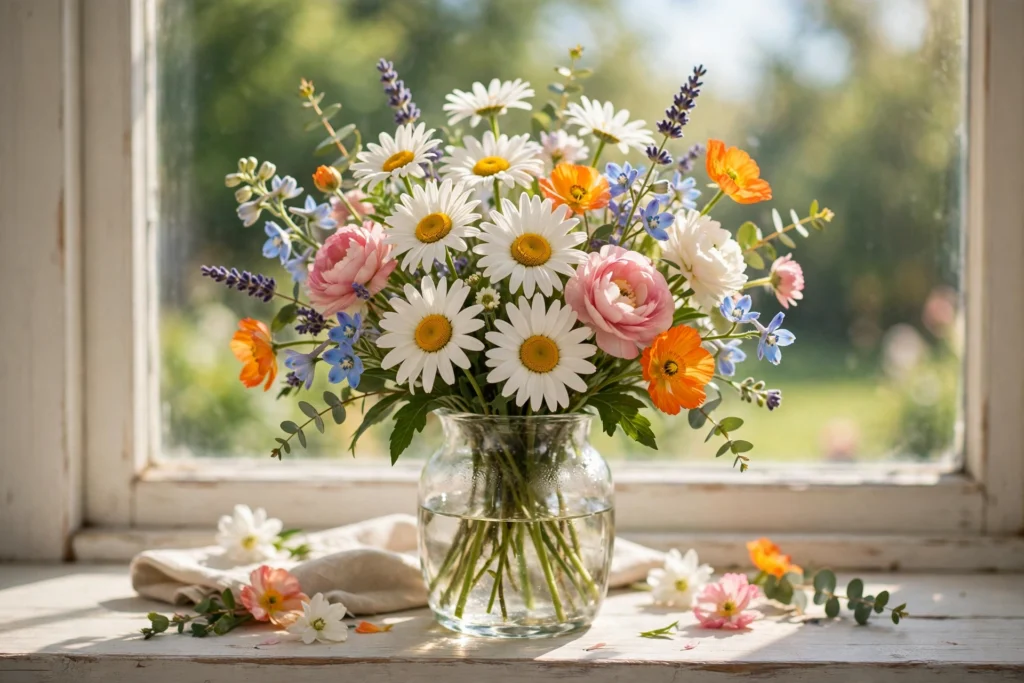
Daisies work beautifully indoors because they are bright without being formal. A simple glass jar of white Shasta daisies suits a kitchen table, while a mixed bunch of gerbera daisies lifts a dull living room in seconds. Cut stems at an angle, remove any leaves that would sit below the waterline, and change the water every two days to keep them fresh for a week or more. Daisies pair well with simple greenery and with other cottage flowers such as lavender or cornflowers, but they also hold their own alone. For a rustic look, tie a small bunch with garden twine and place it in a jam jar; for a smarter table, use a tall vase and let the stems stand straight. Their cheerful shape does the decorating for you.
Conclusion
Flowers and daisies are more than decorations—they’re storytellers of nature. They connect us to emotions, seasons, and moments we cherish. Daisies remind us that beauty doesn’t need to be complicated. Sometimes, a few white petals and a golden heart are enough to make the world feel warmer.
Frequently Asked Questions (FAQs)
1. What do daisies symbolize?
They symbolize innocence, purity, and fresh beginnings.
2. Are daisies easy to grow?
Yes, they’re low-maintenance and beginner-friendly.
3. Can daisies grow indoors?
With enough sunlight, some varieties can thrive indoors.
4. What is the best season for daisies?
Spring and early summer are ideal.
5. Why are flowers important for mental health?
They reduce stress, improve mood, and create positive emotional responses.
