
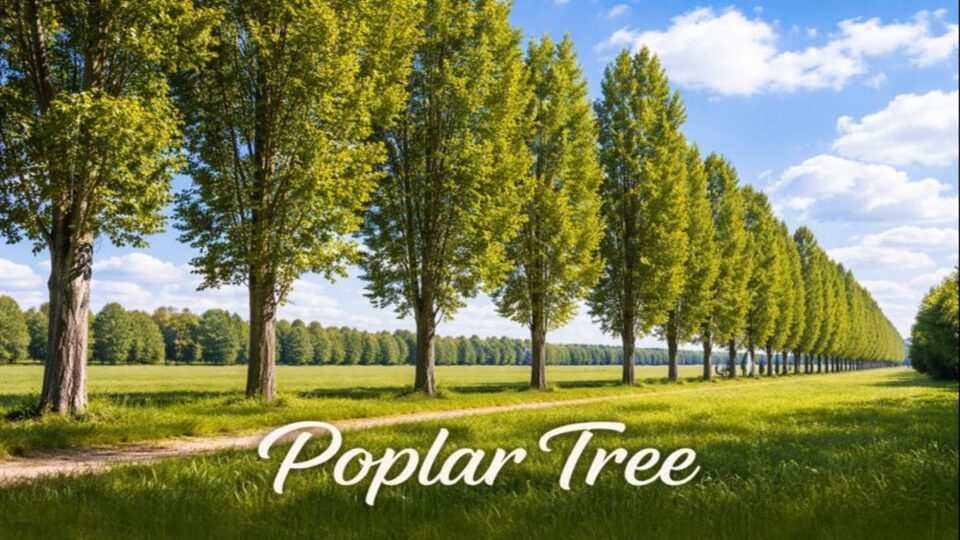
Introduction to the Poplar Tree
Poplar trees are among the fastest-growing hardwoods in the world. Known for their tall trunks, fluttering leaves, and lightweight timber, they play a major role in both nature and human industries. If you’ve ever spotted slim, towering trees lining roads or farmland, those were likely poplars.
What is a Poplar Tree?
A poplar tree belongs to the genus Populus, which includes aspens and cottonwoods. These trees are widely appreciated for their speed of growth, economic value, and ecological benefits.
Where Poplar Trees Are Commonly Found
Poplar trees grow across North America, Asia, and Europe. They thrive in temperate climates and often appear near rivers, lakes, and fertile plains where the soil stays moist.
Characteristics of Poplar Trees
Appearance & Leaf Structure
Poplar trees are easy to recognize with their tall, straight trunks and triangular or heart-shaped leaves. When the wind blows, the leaves shimmer and rustle, creating a calming sound.
Growth Rate & Lifespan
One of the most remarkable features of poplars is their growth speed. They can grow several feet a year, making them a top choice for reforestation, timber supply, and landscaping. However, they usually have a shorter lifespan, averaging 50–70 years.
Varieties of Poplar Trees
Common species include:
- Lombardy Poplar
- Eastern Cottonwood
- White Poplar
- Black Poplar
- Hybrid Poplar
Each variety comes with its own advantages in appearance, growth, and usage.
Ecological Benefits of Poplar Trees
Soil Improvement & Land Restoration
Poplars are known to restore damaged land. They help control erosion, stabilize riverbanks, and absorb pollutants from soil, making them helpful in environmental cleanup projects.
Carbon Absorption & Air Purification
Poplar trees absorb large amounts of carbon dioxide because of their rapid growth. They help improve air quality, making them beneficial in polluted or industrial areas.
Uses of Poplar Trees
Timber & Construction
Their lightweight yet sturdy wood makes poplar a popular choice for building materials, packing crates, and plywood.
Paper & Pulp Industry
Poplar wood is ideal for making paper due to its softness, fiber structure, and fast regeneration.
Furniture & Carving
Poplar is often used in furniture frames, cabinets, and craft carving. Its smooth texture makes it easy to shape and finish.
Poplar Trees in Agriculture & Landscaping
Windbreaks & Farmland Protection
Farmers plant poplar trees around fields to reduce wind damage and protect crops. These windbreak lines can significantly minimize soil erosion.
Landscaping & Shade Purposes
In parks and along roadsides, poplars offer shade and aesthetic beauty. Their tall, narrow form makes them perfect for lining pathways and property borders.
Challenges & Concerns
Short Lifespan & Fragile Wood
Poplar wood is softer and more prone to decay compared to other hardwoods, meaning it doesn’t last as long in harsh conditions.
Pest and Disease Issues
They can be affected by fungal infections and insect attacks, especially if not properly maintained.
How to Grow and Care for Poplar Trees
Ideal Climate and Soil Conditions
Poplars prefer moist, well-drained soil and full sunlight. They grow best in areas that receive regular rainfall or near water sources.
Watering, Maintenance & Pruning
Young trees need consistent watering to establish roots. Regular pruning ensures healthy structure, prevents breakage, and keeps pests away.
Conclusion
The poplar tree is more than just a common landscape plant — it is a fast-growing, versatile, and eco-friendly asset to both nature and industry. With its impressive growth speed, environmental benefits, and commercial value, it plays a vital role in forestry, agriculture, and sustainable development. Even though it comes with challenges like a shorter lifespan and vulnerability to pests, proper care can allow poplars to thrive beautifully.
FAQs
1. How fast does a poplar tree grow?
Poplar trees can grow several feet each year, making them one of the fastest-growing hardwood species.
2. Why are poplar trees used for paper?
Their fiber structure and rapid growth make them ideal for paper and pulp production.
**3. growth make them ideal for paper and pulp production.
3. Are poplar trees good for the environment?
Yes, they absorb carbon dioxide, prevent soil erosion, and help restore damaged land.
4. Can poplar trees be used for furniture?
Yes, although lightweight, poplar wood is commonly used for furniture framing and cabinetry.
5. What is the lifespan of a poplar tree?
Most poplars live around 50–70 years depending on conditions and care.
