
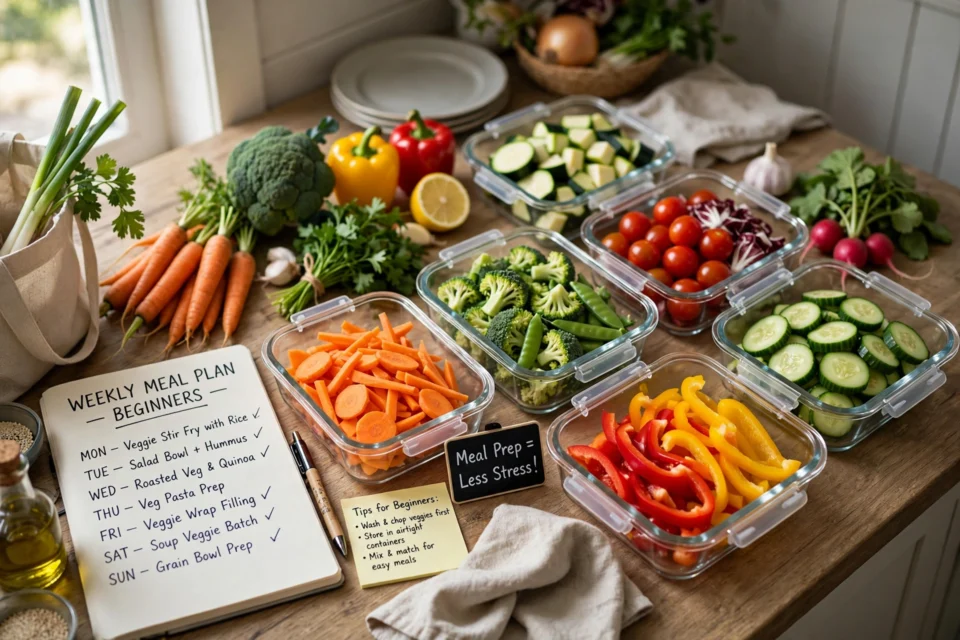
Weekly meal planning for beginners does not have to mean strict diets, fancy recipes, or hours in the kitchen. It simply means deciding, once a week, what you will eat — so weeknights stop turning into last-minute takeaways and half-empty fridges.
If you have ever stood in front of an open fridge wondering what to cook, this guide is for you. With a simple, flexible plan, you can save time, waste less food, spend less money, and eat healthier without giving up the meals you enjoy.
Why Plan Your Meals for the Week?
Planning ahead removes the hardest part of cooking: deciding what to make. When the decision is already made, you shop once, prep once, and cook with far less stress. A healthy weekly meal plan also makes it easier to balance your meals, use up ingredients before they go off, and avoid impulse buys that push up your grocery bill.
Meal planning is not about perfection. A plan that covers most of your meals, most of the time, is already a big win.
Step 1: Take Stock Before You Shop
Before you plan anything, spend five minutes checking what you already have. Look in the fridge, freezer, and cupboards, and note ingredients that need using up. Build your plan around those first — this is one of the simplest beginner meal planning tips, and it cuts waste straight away.
Also note your week ahead: busy evenings, late workdays, and days when you will eat out. Plan quicker meals for busy nights and save longer recipes for days with more time.
Step 2: Use Theme Nights to Make Decisions Easy
Theme nights are a shortcut that makes planning fast. For example: Monday pasta, Tuesday stir-fry, Wednesday soup or salad, Thursday tacos or wraps, Friday a favourite comfort meal, and the weekend for trying something new or using leftovers. Themes narrow your choices without making every week identical, and they are ideal for simple meal prep ideas for beginners.
Step 3: Write a Short, Realistic Menu
Aim for five dinners to start, not seven. Leave room for leftovers, eating out, or a simple backup meal such as eggs on toast or a quick soup. For each dinner, write down the main dish and one or two sides — nothing more detailed is needed.
Then turn the menu into a shopping list, grouped by section of the shop: vegetables, protein, dairy, grains, and pantry items. Shopping from a list is what keeps meal planning on budget, because it stops the extra items that quietly add up at the checkout.
Simple Meal Prep Ideas for Busy Weekdays
Meal prep for busy weekdays does not mean cooking every meal in advance. Small steps help most: cook a double batch of rice or pasta, chop vegetables for two days at once, or prepare a big salad base to use across lunches. Keep one or two versatile ingredients ready — for example, cooked chicken, beans, or roasted vegetables — and you can turn them into wraps, salads, or grain bowls in minutes.
For more on keeping weekly spending under control, see this beginner-friendly guide to a simple monthly budget.

A Sample Healthy Weekly Meal Plan
Here is a simple example to adapt, not a rule to follow exactly: Monday, vegetable pasta with a side salad; Tuesday, chicken and vegetable stir-fry with rice; Wednesday, lentil soup with wholegrain bread; Thursday, bean tacos with rice and salad; Friday, baked fish or a favourite homemade meal with roasted vegetables. Swap any dish for one your family prefers — the structure matters more than the exact menu.
Common Mistakes to Avoid
Do not plan complicated new recipes for every night, do not buy ingredients you have never used for several meals at once, and do not throw the plan away if one day goes differently. Flexibility is part of good planning: swap days, use a leftover, or fall back on a simple backup meal and carry on.
Conclusion
Weekly meal planning for beginners works best when it stays simple: check what you have, pick a few meals you enjoy, shop from a list, and prep a little ahead. Start with five dinners this week, keep the plan flexible, and adjust it as you learn what suits your routine. In a few weeks, planning will feel less like a chore and more like a habit that quietly saves you time, money, and weeknight stress.
