
Introduction
Learning how to meal prep for beginners does not mean cooking twenty identical boxes of food on a Sunday. At its simplest, meal prep means preparing some of your food ahead of time so that healthy meals are ready when you are busy, tired, or short on time. When dinner is already half-made, you are far less likely to order takeout, skip a meal, or snack on whatever is nearest.
This guide keeps it small and realistic. You will plan a few meals, cook a few simple components in one session, and store them safely. Once that feels easy, you can build from there.
What Meal Prep Really Means
Meal prep is not one rigid system. Beginners usually start with one of three styles, and many people end up combining them:
- Ingredient prep: Wash and chop vegetables, cook a grain and a protein, then mix and match them during the week.
- Full meals: Cook complete meals and portion them into containers, ready for packed lunches and busy evenings.
- Batch cooking: Make a large pot of soup, stew, or sauce and freeze portions for later weeks.
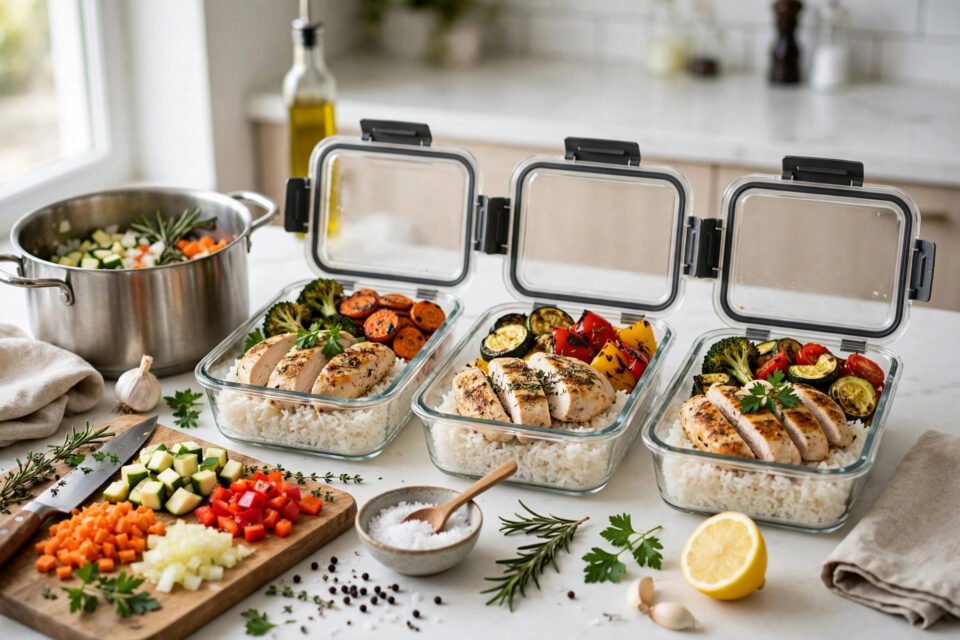
Ingredient prep is often the best place to start, because it gives you variety without locking you into eating the same meal every day. A tray of roasted vegetables, a pot of rice, and a cooked protein can become a bowl, a wrap, or a stir-fry, just by changing the sauce or seasoning.
Step 1: Plan Before You Shop
Good weekly meal planning for beginners starts with your calendar, not a recipe book. Check for late nights, meals out, and days when you will not be home. Then choose just three to five meals for the week, such as weekday lunches, rather than every meal.
Pick recipes you already know, or simple dishes that share ingredients. Two proteins, one or two grains, and two or three vegetables are usually enough for a week of varied meals. Write your shopping list from that plan, and check what you already have at home first. Planning this way also helps you spend less, as explained in our guide on how to save money on groceries without coupons.
Step 2: Choose Simple Beginner Meal Prep Ideas
Easy meal prep recipes work best when they reheat well and keep their texture. Good starting points include:
- Roasted vegetables with rice or quinoa and grilled chicken, tofu, or chickpeas
- A large pot of vegetable soup, lentil soup, or bean stew
- Cooked grains, such as rice or quinoa, ready to pair with different toppings
- Hard-boiled eggs, washed fruit, and cut vegetables with hummus for quick snacks
Foods that hold up well in the fridge for three to four days include cooked grains, roasted vegetables, and cooked chicken or beans. Delicate leafy greens and fish, on the other hand, are best eaten within a day or two, so add fresh leaves at serving time rather than prepping them days ahead.
Step 3: Cook in One Short Session
Set aside about one hour for your first prep session. Start with the longest-cooking items, such as grains or roasted vegetables, and work on other tasks while they cook. Batch similar jobs together: do all the chopping at once, then all the cooking, then all the packing.
You do not need fancy equipment to begin. For meal prep containers for beginners, a basic set of eight to ten containers with leak-proof lids is enough. Glass containers reheat well and last longer, but sturdy plastic containers work too, as long as they seal properly. Label each container with the contents and the date, so nothing is forgotten at the back of the fridge.
Step 4: How to Store Meal Prep Safely
Safe storage is what makes meal prep practical rather than risky. Follow these simple rules:
- Let hot food cool slightly, then refrigerate it within two hours of cooking.
- Keep most cooked meals in the fridge for three to four days.
- Freeze anything you will not eat within that window, rather than letting it go to waste.
- Store sauces separately when you can, so grains and vegetables do not go soggy.
- Reheat food until it is steaming hot throughout, and reheat leftovers only once.
If you are unsure whether something is still fresh, it is safer to throw it away. A clear labelling habit — what it is and when it was made — removes most of the guesswork.
A Simple One-Hour Starter Plan
Try this plan for your first week:
- Choose three lunches and two dinners to prep.
- Cook one grain, such as rice or quinoa.
- Cook one or two proteins, such as chicken and chickpeas.
- Roast one tray of mixed vegetables.
- Wash and chop vegetables for snacks and quick sides.
- Pack everything in labelled containers, and freeze any extra portions.
That is it. You do not need to prep breakfast, lunch, and dinner for seven days to benefit. Even prepping lunches for three days removes a lot of daily decision-making and saves real time.
Common Beginner Mistakes to Avoid
The most common mistake is prepping too much. Five identical meals often feel boring by Wednesday, and food can go off before you finish it. Start with three days, not seven, and learn what you actually eat.
Another mistake is choosing complicated new recipes for prep day. Save experimentation for a relaxed evening, and use familiar, forgiving dishes when you are cooking in bulk. Finally, do not skip the shopping list. A plan without a list usually leads to extra purchases, missing ingredients, and food waste.
Conclusion
Learning how to meal prep for beginners is about building a small, repeatable habit, not cooking a perfect week of food in one afternoon. Plan a few meals, cook simple components in one short session, store them safely, and mix and match them through the week. Start with lunches for three days, keep your containers labelled, and add more meals only when the routine feels easy. Done this way, meal prep saves time, reduces stress, and makes healthy eating much simpler on busy days.
