
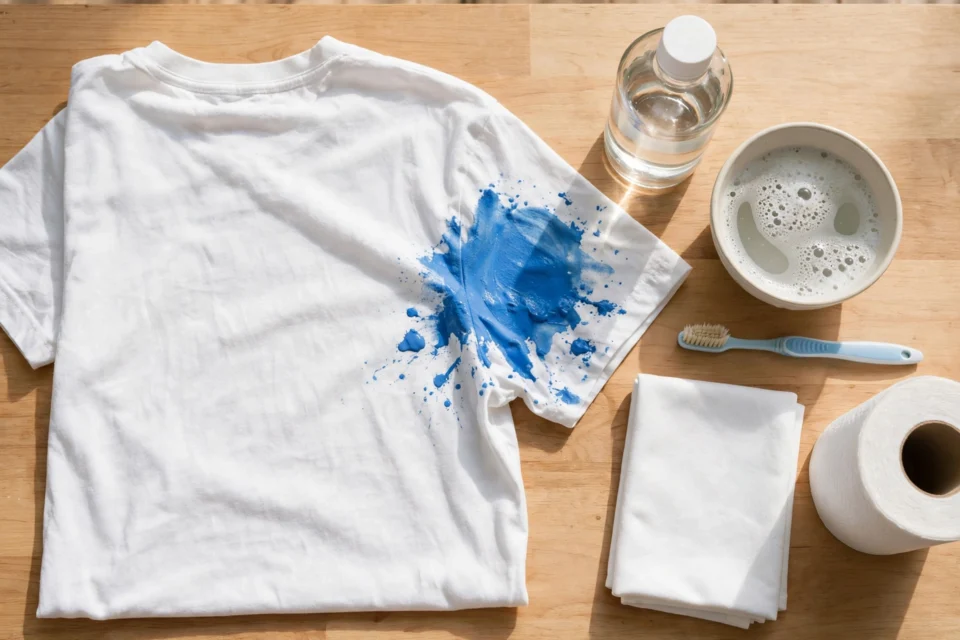
A brush slips, a sleeve brushes a freshly painted wall, and suddenly your favourite shirt has a bright streak of paint on it. Before you panic, stop. To remove paint stains from clothes, the first step is not scrubbing — it is finding out what kind of paint you are dealing with. Water-based and oil-based paint need opposite treatments, and the wrong one can set the stain for good. This guide shows how to get paint out of clothes, whether the paint is still wet, already dry, or went through the wash. Like chocolate stains, paint rewards fast action.
What You Will Need
- A dull knife, spoon or old credit card (for scraping)
- Clean white cloths or paper towels
- Liquid dish soap or laundry detergent
- Warm water and a bowl or basin
- Rubbing alcohol (isopropyl alcohol) or aerosol hairspray
- An old soft toothbrush
- White vinegar (for dried water-based paint)
- Paint thinner, mineral spirits or turpentine (oil-based paint only)
- Rubber gloves and good ventilation for solvents
Time needed: 15–30 minutes for a fresh stain, plus soaking; dried paint can take 45–60 minutes. Act fast — fresh paint comes out far more easily than paint that has dried and bonded to the fibres, and the same is true of blood stains.
Step 1: Identify the Paint Before You Touch It
If you still have the paint tin, check the label: “latex”, “acrylic latex”, “emulsion” or “water-based” all mean water-based paint, while “oil-based”, “alkyd” or “enamel” mean oil-based. No tin? If the brush washed clean with water, the paint is water-based; if it needed a solvent, it is oil-based. As a quick test, dab a cotton ball in rubbing alcohol and rub a tiny spot on the painted surface: if paint comes off, it is latex-based. Water-based paint dissolves in water and soap, so rinsing helps; oil-based paint repels water, so rinsing first only spreads it. Getting this wrong is the most common reason a paint stain becomes permanent.
Method 1: How to Remove Paint Stains from Clothes While the Paint Is Still Wet
Fresh water-based paint is the easiest stain in this guide. Scrape off as much wet paint as you can with a dull knife, working from the outside inward. Hold the stain under warm running water, stain facing down, so the paint flushes out of the fabric. Work in a few drops of dish soap or laundry detergent and let it sit for five minutes. Rinse, soak in warm water with detergent for about an hour, scrub gently with the toothbrush, rinse again, and wash as normal. Check the stain before the garment goes near the dryer — heat sets paint, just as it sets grass stains.
Method 2: How to Remove Dried Paint from Clothes
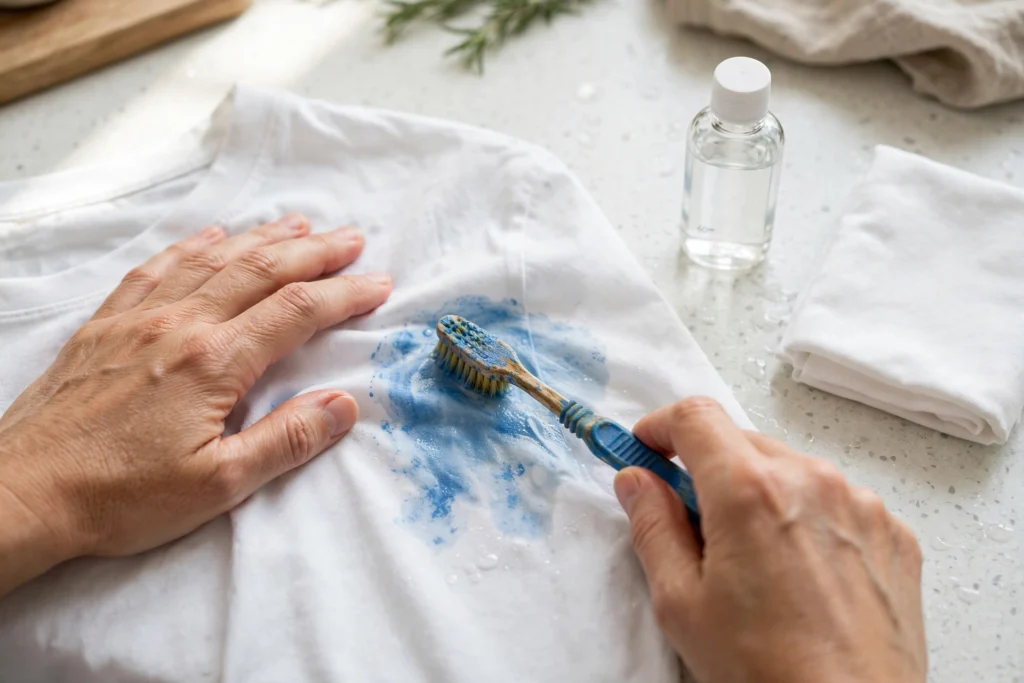
Dried paint feels hopeless, but water-based paint that has dried can still be lifted. Scrape off as much hardened paint as you can with a spoon or dull knife, without damaging the fabric. Saturate the stain with rubbing alcohol, let it sit for a few minutes so the alcohol softens the paint, then scrub with the old toothbrush from the edges inward. Rinse under warm water and repeat the saturate-and-scrub cycle until no more paint lifts. Aerosol hairspray works as a substitute because of its alcohol content: spray until soaked, then scrub the same way. Once the stain has faded, wash as normal and check it before drying.
Method 3: Removing Acrylic Paint from Clothes
Acrylic paint is the craft paint used in schools and art studios. It is water-based, but it dries into a tough plastic-like film, so it needs the alcohol method rather than soap alone. Scrape off loose, dried flakes first, then soak the stain with rubbing alcohol for five to ten minutes. Scrub with the toothbrush, rinse with warm water, and repeat — on a washable cotton shirt this usually takes two or three rounds. Hand sanitiser gel also works, because it is mostly alcohol: squirt it on, let it sit, and scrub. Wash as normal afterwards, and do not tumble-dry until the stain is gone.
Method 4: How to Remove Latex Paint from Clothes
Latex paint is the standard wall paint, and it is water-based, so the same logic applies: soap for fresh stains, alcohol for dried ones. For a fresh latex spill, scrape, rinse under warm water, and work in dish soap — most of it will come out in the first wash. For dried latex, saturate with rubbing alcohol or hairspray, scrub with a toothbrush, and rinse. Emulsion paint, the common UK name for water-based wall paint, behaves exactly the same way, so use this latex method for emulsion paint too. Latex on washable fabric is one of the most forgiving paint stains if you avoid heat until it is gone.
Method 5: How to Remove Oil Based Paint from Clothes
Oil-based paint is the hard one, and the rules change completely. Never use water first — water will not dissolve it and will only spread it. Scrape off excess paint with a dull knife. Then, wearing gloves in a ventilated area, moisten a clean white cloth with a little paint thinner, mineral spirits or turpentine and blot the stain, moving to a clean part of the cloth as paint transfers onto it. Keep blotting until no more paint comes off, then rinse and work in dish soap or laundry detergent to cut the oily residue, and wash as normal. Test the solvent on a hidden seam first: thinners can damage some fabrics and make colours run, especially on acetate, rayon and some synthetics. Dry-clean-only or delicate garments should go to a cleaner instead.
Paint Stains on Jeans
Denim can take more scrubbing than most fabrics. For water-based paint on jeans, scrape off the excess, rinse under warm water, work in dish soap, and scrub with the toothbrush — the sturdy weave holds up well. For dried paint, use the rubbing alcohol method and scrub firmly. For oil-based paint, blot with paint thinner on a cloth, then wash with detergent. One warning: solvents can lighten dark or indigo denim, so test on an inside seam first and expect some fading on raw or dark-wash jeans.
Paint on Carpet and White Clothes
The same methods work beyond clothing. If you need to know how to remove paint stains from carpet, scrape off the excess, then blot — never rub — with the right treatment: soapy water for fresh water-based paint, rubbing alcohol dabbed on with a cloth for dried water-based paint, and paint thinner blotted on for oil-based paint. For white clothes, you have one extra option: once the paint is mostly out, a soak in oxygen bleach (not chlorine bleach) can lift the last faint shadow. If you want the last faint shadow out of white clothes, check the stain in daylight before drying — a mark you miss on white fabric will show. For general care, our guide on how to keep white clothes white covers the routine that keeps them bright.
What NOT to Do
- Do not put a paint-stained garment in the dryer until the stain is completely gone — heat bonds paint to fibres permanently.
- Do not use water on oil-based paint before blotting with a solvent.
- Do not use chlorine bleach on a paint stain — it will not remove paint and can damage the fabric.
- Do not rub hard on delicate fabric; blot and dab instead, or the paint spreads and the fibres pill.
- Do not use acetone nail polish remover on acetate or triacetate fabrics — it dissolves them.
- Do not skip the hidden-seam test with paint thinner, turpentine or rubbing alcohol on coloured garments.
What It Does NOT Work On
These methods will not save every garment. Paint that has been through a hot dryer cycle is usually set for good. Oil-based paint that has fully cured over several days may only fade, not disappear, even with thinner. Paint on silk, wool, leather and suede should go straight to a professional; home solvents can ruin them. If the garment matters, stop while you are ahead and let a dry cleaner try. Stains that need a different solvent have their own fixes — rust marks need acid, not soap, as our guide on rust stains explains.
Frequently Asked Questions
Does paint come out of clothes after washing?
It can, but only if the stain was treated first. If you are wondering whether paint comes out after washing, it depends on whether the garment went through the dryer. If it was only washed and air-dried, treat it as dried paint: saturate with rubbing alcohol, scrub, rinse and repeat. If it went through a hot dryer, the paint is usually heat-set — try the alcohol method once, and if nothing lifts, the stain is likely permanent.
Can vinegar help remove a paint stain?
Yes, for dried water-based paint. White vinegar’s acetic acid helps break down dried latex and acrylic paint. Scrape off the loose paint, apply a few drops of vinegar, let it sit, scrub with an old toothbrush, and rinse.
Will dish soap shift a paint stain?
Dish soap removes fresh water-based paint well, because it cuts through the paint’s binders while the paint is still soft. Work a few drops into the stain, let it sit for five minutes, rinse and soak. It will not remove dried paint or oil-based paint on its own — those need alcohol or a solvent first.
How do you get dried acrylic paint out of clothes?
Scrape off loose flakes, saturate the stain with rubbing alcohol, let it sit for five to ten minutes, then scrub with an old toothbrush and rinse with warm water. Repeat two or three times. Hand sanitiser gel works the same way. Wash as normal and check before drying — acrylic needs the alcohol step; soap alone will not shift it.
Is paint thinner safe on clothes?
Paint thinner is safe on sturdy washable fabrics like cotton and denim if you test a hidden seam first and work in a ventilated area with gloves. It is not safe on acetate, rayon, silk, wool or dry-clean-only garments, and it can fade dark colours.
Conclusion
Paint on clothes looks like a lost cause, but most stains come out if you match the method to the paint. Check the paint type first, use soap and water for fresh water-based paint, rubbing alcohol for dried paint, and a solvent — never water — for oil-based paint. Keep the garment out of the dryer until the stain is gone, test solvents on a hidden seam, and know when to hand it to a professional. Catch it early and the shirt usually survives.
