
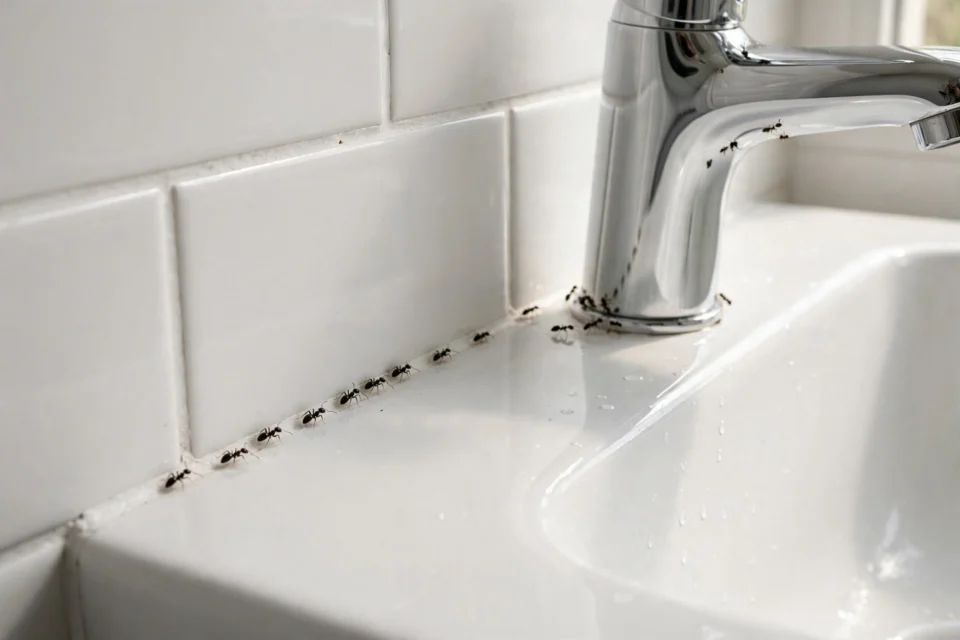
You walk into the bathroom in the morning and find a neat line of tiny ants marching across the tiles towards the sink. It feels wrong — the bathroom is supposed to be the cleanest room in the house. Learning how to get rid of ants in bathroom is usually straightforward once you know why they are there: they are not after your towels, they are after water. Here are eight simple methods that actually work, plus how to stop them coming back.
Why Ants Come into the Bathroom
Ants need water just as much as food, and a bathroom offers both. A dripping tap, a damp bath mat, condensation on cold pipes and the moisture around the shower all attract them. Sweet-smelling toiletries, toothpaste residue in the sink and even the glue behind loose tiles can draw them in too. In warm weather they may also be escaping heat outside and nesting in wall cavities near plumbing. Knowing the reason matters, because drying the room out is half the cure.
Before You Start: Find the Trail
Spend a minute watching where the ants are going before you wipe anything away. The trail tells you where they are entering — usually a gap around a pipe, a cracked tile, or the edge of the window frame — and where they are heading. Do not spray the visible ants first and stop there. Killing the ants you can see does nothing about the nest, and it wipes out the scent trail that bait needs to work. Mark the entry point, then start with the methods below.
1. White Vinegar Spray (Fastest First Step)
Mix equal parts white vinegar and water in a spray bottle and spray it directly along the ant trail, around the sink base and along skirting boards. Vinegar removes the scent trail ants follow, so the ones behind lose their way. Wipe the area clean and repeat daily for a few days. It is cheap, safe around children and pets once dry, and it works on most small bathroom ants straight away.
2. Soapy Water for Ants You Can See
A spray of water with a few drops of dish soap kills ants on contact and wipes away their scent trail at the same time. Use it to clear the ants you can see, then follow up with vinegar spray on the same path. This is a clean-up method, not a cure on its own — the nest will send more ants unless you deal with the entry point and the bait in the next steps.
3. Borax Bait (Gets Rid of the Colony)
For a lasting fix, bait beats spray. Mix one part borax with three parts sugar and a little warm water, soak cotton balls in it, and place them on small lids near the trail — but out of reach of children and pets. Worker ants carry the sweet bait back to the nest, where it reaches the colony. Do not kill ants near the bait; let them take it home. You should see numbers drop within a few days, though a large colony can take a week or two. If you have pets or small children, use a sealed bait station instead of open cotton balls.
4. Baking Soda and Powdered Sugar
If you would rather not use borax, try baking soda mixed with powdered sugar in equal parts. Place small piles near the entry point. The sugar attracts the ants and the baking soda does the rest once they carry it back. It works more slowly than borax bait, but it is a simple option using things most homes already have, and it is a good choice if you are learning how to get rid of ants in the house without strong chemicals.
5. Food-Grade Diatomaceous Earth in Dry Spots
Food-grade diatomaceous earth is a fine powder made from fossilised algae. Sprinkle a thin line along dry gaps, behind the toilet base and under the sink cabinet where ants travel. It damages their outer coating and dries them out. It only works when it stays dry, so do not use it inside the shower or on wet tiles. Wear a mask while applying it, and keep it away from damp areas.
6. Seal the Gaps They Use to Get In
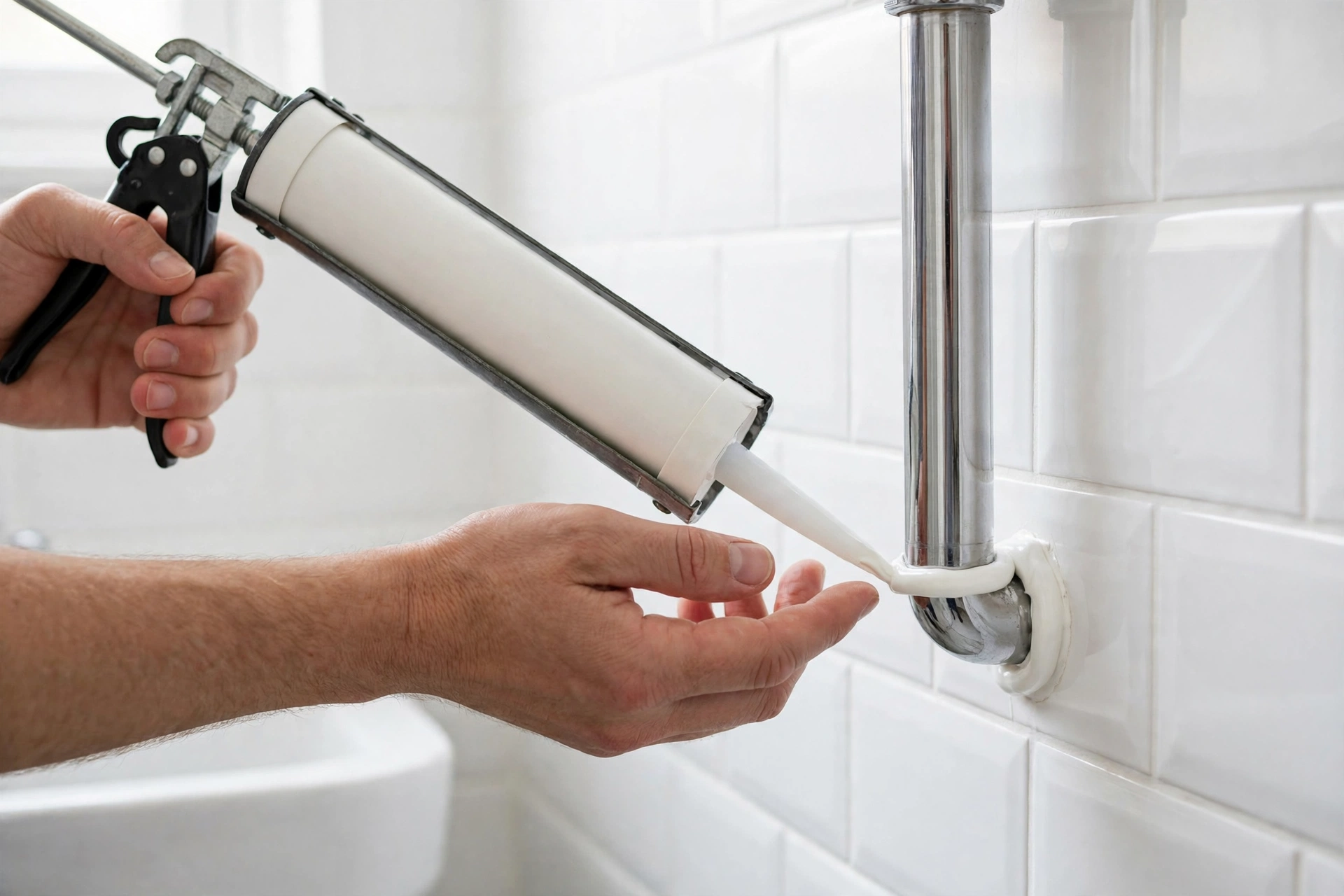
Bait and sprays clear the ants you have now, but sealing stops the next lot. Check around pipes where they pass through walls, the edges of the bath panel, window frames and any cracked grout. Fill gaps with silicone sealant or caulk, and replace crumbling grout. This single job does more than any spray to keep ants out long term, and it also stops damp getting into the wall.
7. Fix Leaks and Dry the Room Out
A dripping tap or a slow leak under the sink is an open invitation. Tighten or replace worn tap washers, fix leaking pipe joints, and check the toilet base for seepage. After showers, run the extractor fan or open a window so the room dries properly, and hang bath mats up so they dry between uses. A dry bathroom is a boring bathroom for ants. If the room also has a stale smell from the drains, our guide on getting rid of drain smell covers the simple fixes for that too.
8. Remove What Attracts Them
Rinse toothpaste and soap residue out of the sink each night, keep sweet-smelling lotions and shampoos capped, and do not leave damp towels in a heap on the floor. Empty the bathroom bin regularly, and keep the area under the sink tidy so you can spot a new trail early. Small habits like these matter as much as any treatment, especially in a flat — if you are learning how to get rid of ants in an apartment, remember the colony may be coming from a neighbour’s pipes, so sealing your own gaps is even more important.
What Not to Do
- Do not spray insecticide directly on a bait trail; it kills the workers before they can carry bait back to the nest.
- Do not block the entry hole before the bait has worked; trapped ants will find another way in.
- Do not pour boiling water into cracks in the wall or floor; it can damage seals and grout, and it rarely reaches the nest.
- Do not use outdoor ant powder inside a bathroom; it is not made for enclosed, damp rooms and can leave residue on surfaces you touch daily.
How to Keep Them from Coming Back
Once the ants are gone, keep the room dry, the gaps sealed and the sink rinsed. Check the spots they used every few weeks, especially in warm months. The same ideas apply in other rooms: if you find them near food, our guide on how to get rid of ants in the pantry covers food storage, and the methods for how to get rid of small ants in the kitchen work on the same tiny species that visit bathrooms. Ants return when water or food is easy to find, so a dry, sealed bathroom usually stays ant-free.
Ants in the bathroom are annoying, but they are also a useful warning — they usually point to damp, a leak or an open gap. Start with vinegar spray to break the trail, use borax bait to deal with the colony, then seal the gaps and fix the leaks so they cannot return — that is how to get rid of ants in bathroom for good. With those three steps, your bathroom goes back to being the clean, ant-free room it should be.
Related reading: If ants are also visiting your kitchen, see our guide on keeping ants out of the kitchen for food-safe methods that work there.
